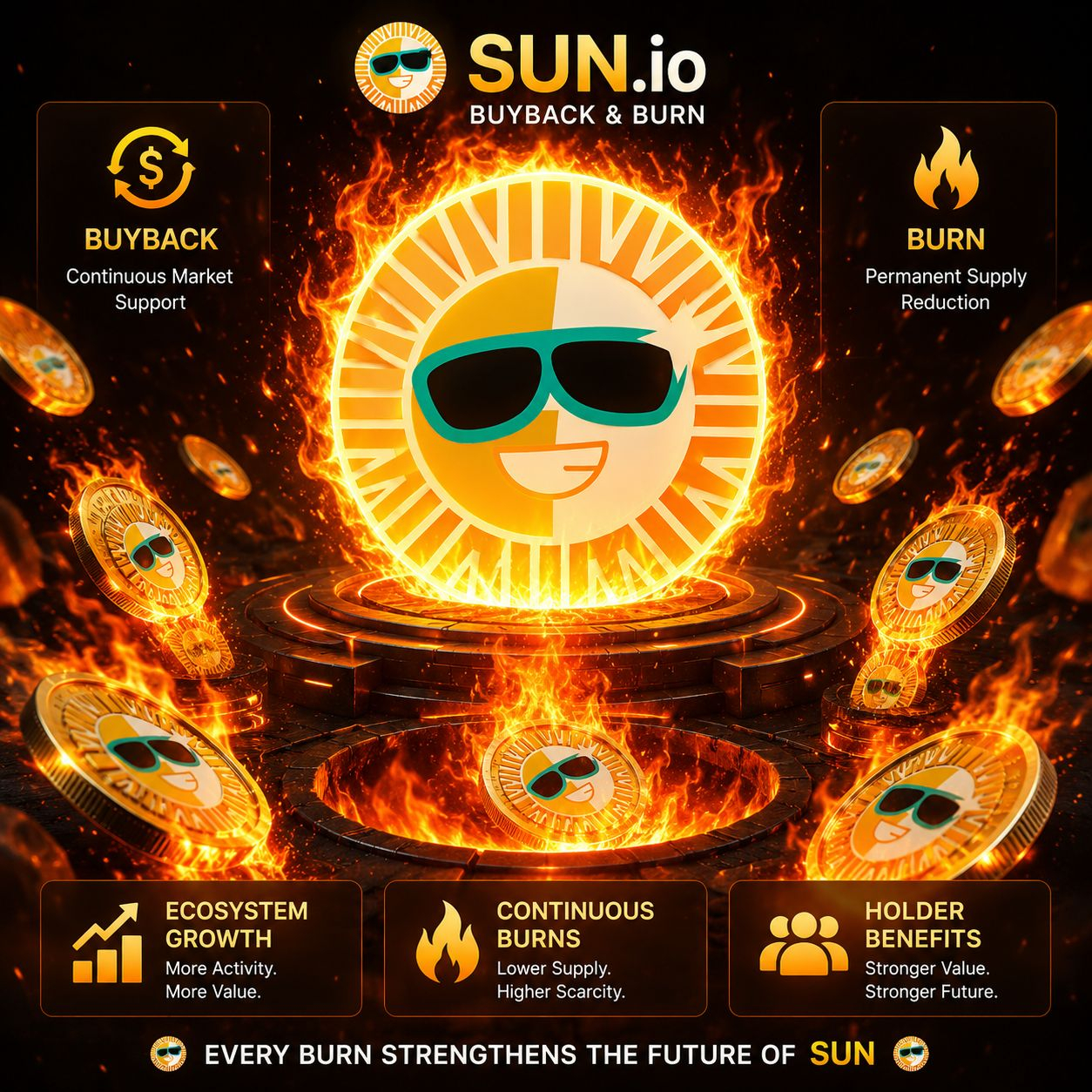
𝗦𝗨𝗡.𝗶𝗼’𝘀 𝗕𝘂𝘆𝗯𝗮𝗰𝗸 𝗔𝗻𝗱 𝗕𝘂𝗿𝗻 𝗠𝗼𝗱𝗲𝗹 𝗛𝗶𝗴𝗵𝗹𝗶𝗴𝗵𝘁𝘀 𝗛𝗼𝘄 𝗗𝗲𝗙𝗶 𝗘𝗰𝗼𝘀𝘆𝘀𝘁𝗲𝗺𝘀 𝗔𝗿𝗲 𝗜𝗻𝗰𝗿𝗲𝗮𝘀𝗶𝗻𝗴𝗹𝘆 𝗙𝗼𝗰𝘂𝘀𝗶𝗻𝗴 𝗢𝗻 𝗟𝗼𝗻𝗴-𝗧𝗲𝗿𝗺 𝗧𝗼𝗸𝗲𝗻 𝗦𝘂𝘀𝘁𝗮𝗶𝗻𝗮𝗯𝗶𝗹𝗶𝘁𝘆 𝗔𝗻𝗱 𝗘𝗰𝗼𝘀𝘆𝘀𝘁𝗲𝗺 𝗩𝗮𝗹𝘂𝗲 𝗔𝗹𝗶𝗴𝗻𝗺𝗲𝗻𝘁
Sustainable DeFi growth is not only about expanding liquidity and increasing protocol activity.
It is also about how ecosystems manage long-term token economics, supply dynamics, and value alignment between protocol growth and community participation.
That is where SUN.io’s buyback and burn model becomes particularly important.
By continuously repurchasing and permanently removing tokens from circulation, the ecosystem creates a mechanism designed to strengthen long-term sustainability while reinforcing value alignment across the network.
𝗢𝗻𝗴𝗼𝗶𝗻𝗴 𝗕𝘂𝘆𝗯𝗮𝗰𝗸𝘀 𝗖𝗮𝗻 𝗛𝗲𝗹𝗽 𝗦𝘂𝗽𝗽𝗼𝗿𝘁 𝗟𝗼𝗻𝗴-𝗧𝗲𝗿𝗺 𝗘𝗰𝗼𝘀𝘆𝘀𝘁𝗲𝗺 𝗦𝘁𝗮𝗯𝗶𝗹𝗶𝘁𝘆
One of the most important aspects of structured buyback systems is their ability to create continuous market participation directly tied to ecosystem activity.
That structure can help support:
• Long-term sustainability
• Stronger market alignment
• More resilient token economics
• Greater ecosystem confidence
• Ongoing participation incentives
As protocol activity expands, buyback systems help connect ecosystem growth with broader token value mechanisms.
𝗖𝗼𝗻𝘁𝗶𝗻𝘂𝗼𝘂𝘀 𝗧𝗼𝗸𝗲𝗻 𝗕𝘂𝗿𝗻𝘀 𝗖𝗿𝗲𝗮𝘁𝗲 𝗔 𝗗𝗲𝗳𝗹𝗮𝘁𝗶𝗼𝗻𝗮𝗿𝘆 𝗦𝘂𝗽𝗽𝗹𝘆 𝗠𝗼𝗱𝗲𝗹 𝗢𝘃𝗲𝗿 𝗧𝗶𝗺𝗲
Permanent token burns gradually reduce circulating supply across the ecosystem.
That introduces scarcity dynamics that can become increasingly important as network participation and ecosystem utility continue expanding.
Deflationary mechanisms often help reinforce:
• Supply efficiency
• Long-term holding incentives
• Ecosystem commitment
• Stronger token alignment
• Sustainable value coordination
The combination of protocol growth and supply reduction creates a structure designed around long-term ecosystem strengthening rather than short-term activity alone.
𝗦𝘂𝗻𝗦𝘄𝗮𝗽’𝘀 𝗘𝘃𝗼𝗹𝘃𝗶𝗻𝗴 𝗧𝗼𝗸𝗲𝗻𝗼𝗺𝗶𝗰𝘀 𝗥𝗲𝗳𝗹𝗲𝗰𝘁 𝗛𝗼𝘄 𝗠𝗼𝗱𝗲𝗿𝗻 𝗗𝗲𝗙𝗶 𝗣𝗿𝗼𝘁𝗼𝗰𝗼𝗹𝘀 𝗔𝗿𝗲 𝗕𝗲𝗴𝗶𝗻𝗻𝗶𝗻𝗴 𝗧𝗼 𝗧𝗵𝗶𝗻𝗸 𝗠𝗼𝗿𝗲 𝗟𝗼𝗻𝗴 𝗧𝗲𝗿𝗺
As DeFi infrastructure matures, ecosystems increasingly require models that balance:
• Growth
• Liquidity
• Sustainability
• User incentives
• Token value alignment
Buyback and burn systems are becoming one of the ways protocols attempt to reinforce those relationships over time.
𝗘𝘃𝗲𝗿𝘆 𝗕𝘂𝗿𝗻 𝗥𝗲𝗽𝗿𝗲𝘀𝗲𝗻𝘁𝘀 𝗠𝗼𝗿𝗲 𝗧𝗵𝗮𝗻 𝗔 𝗦𝘂𝗽𝗽𝗹𝘆 𝗥𝗲𝗱𝘂𝗰𝘁𝗶𝗼𝗻 — 𝗜𝘁 𝗥𝗲𝗳𝗹𝗲𝗰𝘁𝘀 𝗔 𝗟𝗼𝗻𝗴-𝗧𝗲𝗿𝗺 𝗖𝗼𝗺𝗺𝗶𝘁𝗺𝗲𝗻𝘁 𝗧𝗼 𝗘𝗰𝗼𝘀𝘆𝘀𝘁𝗲𝗺 𝗩𝗮𝗹𝘂𝗲
The strongest DeFi ecosystems are often the ones that continue refining both infrastructure and economic coordination simultaneously.
And SUN.io’s ongoing buyback and burn structure reflects how token sustainability mechanisms are becoming an increasingly important layer within modern decentralized finance.