


I used to think model deployment was mostly a technical finish line.
You train, test, push live, and then let the market decide. But after looking closer at Open Ledger Token and bonding curve model activation, that idea feels too clean now. The harder truth is this: a model should not go live just becuase it exists. It should go live when data, demand, and token pressure begin to prove the same thing.
The common misreading is that bonding curves are only price machines. They look like a way to make token value rise as more people join. Underneath, the stronger use is more quiet. A bonding curve can become a launch filter, meaning a model moves forward only when enough verified contribution and economic support build behind it.
That matters because data volume is easy to fake in spirit, even when the uploads are real. A model can have many files, many labels, many users, and still not have useful depth. Open Ledger Token changes the frame by connecting contribution with attribution, and attribution simply means tracking which data actually shaped an output. If that link is weak, rewards become noise. If it is strong, contributors recieve value for influence, not just presence.
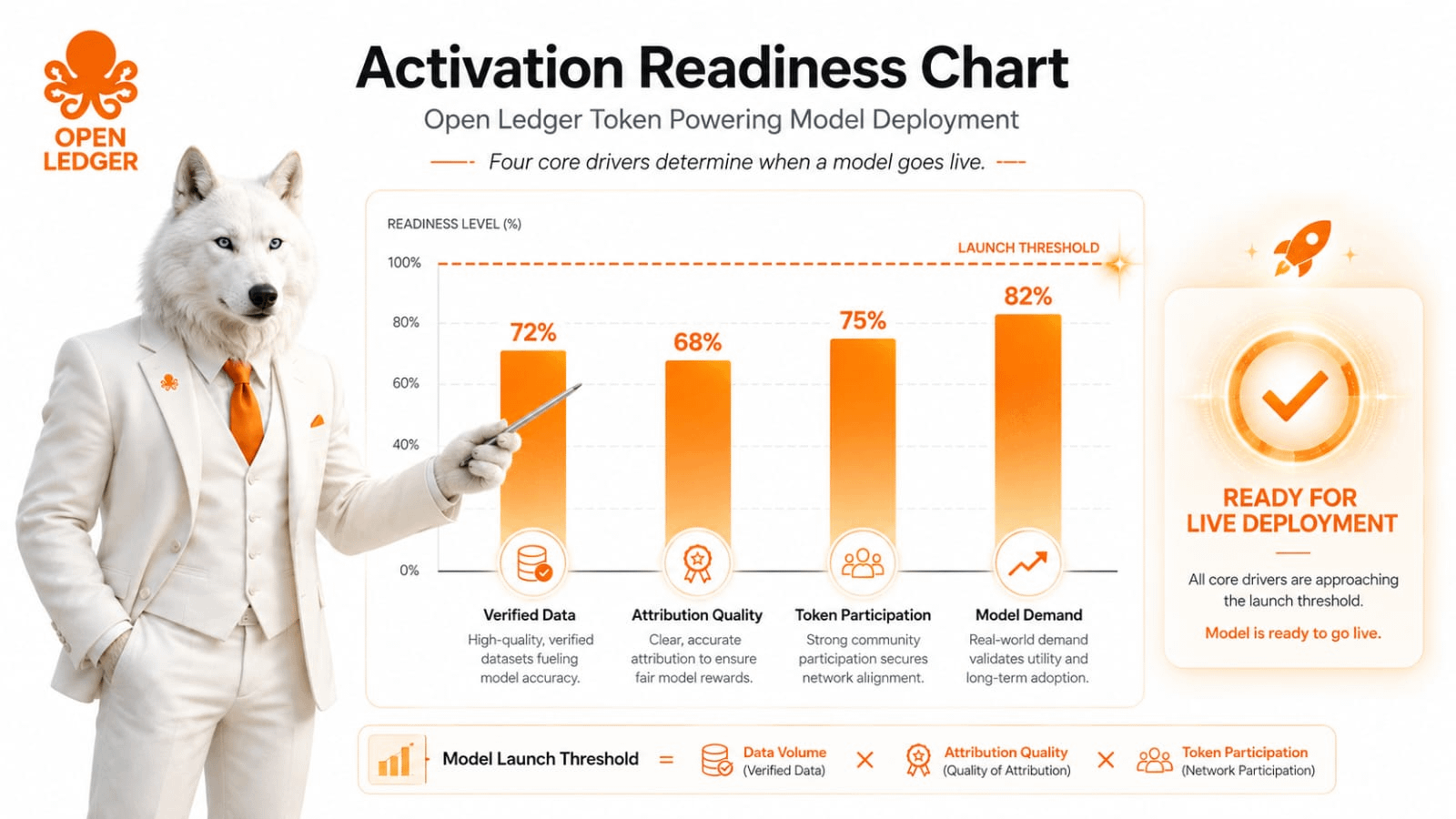
The numbers make this pressure clearer. OPEN has a fixed 1,000,000,000 supply, with 21.55% listed as initial circulation and 61.71% assigned toward community and ecosystem use. Those figures do not prove demand by themselves, but they show the system is trying to make incentives broad rather than only internal. That is important, becuase a bonding curve without distributed participation can become a thin market wearing a technical mask.
Model infrastructure adds another layer. Public research points to LoRA-style model tuning being up to 3.7x faster than some older tuning methods, and the serving layer is designed around running many specialized adapters from limited compute. On the surface, that looks like cheaper AI deployment. Underneath, it encourages more niche models to exist. The tradeoff is that more models also means more seperation work: which ones have real data, which ones have recycled attention, and which ones only look READY for launch.
This is where the live crypto environment matters. Stablecoins sit around a $300 billion market, while regulation is still arguing over what safe digital settlement should look like. That tells me the market is no longer only asking, “Can tokens move?” It is asking whether token movement represents real settlement, real usage, and real trust. Open Ledger Token sits inside that same pressure.
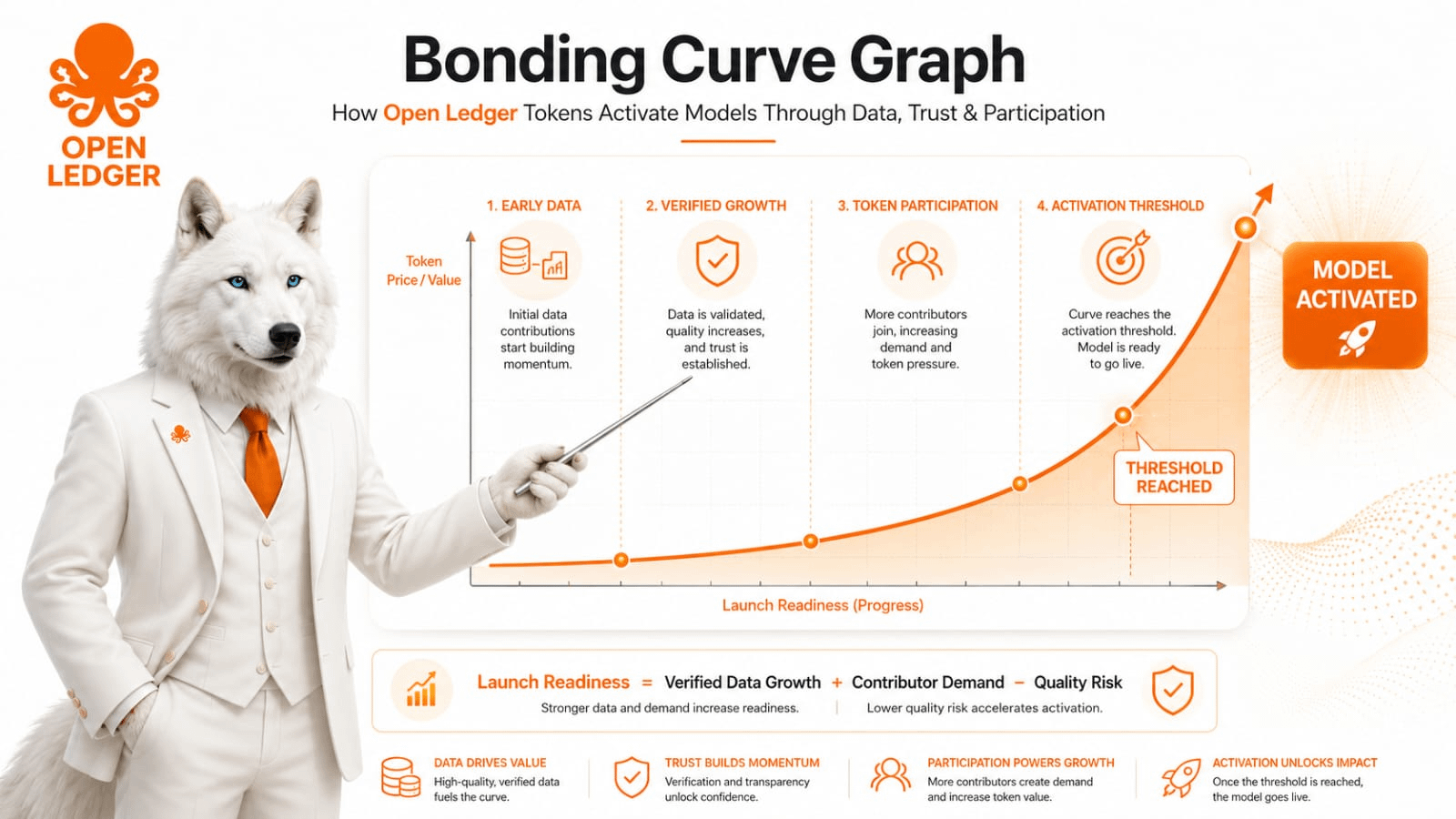
I still think the evidence is early. A bonding curve can attract real contributors, but it can also attract performence farming. Token commitment can signal belief, but it can also be rented by short term capital. The system will need slashing, reputation, and careful quality checks, or weak data may pass through as if it had weight.
The stronger interpretation may be simple: Open Ledger Token is not just helping models launch faster 🚀. It is trying to make models wait until the curve, the data, and the market all say the same thing.
In machine-shaped economies, launch is not the moment something becomes visible. Launch is the moment trust becomes hard to fake.