
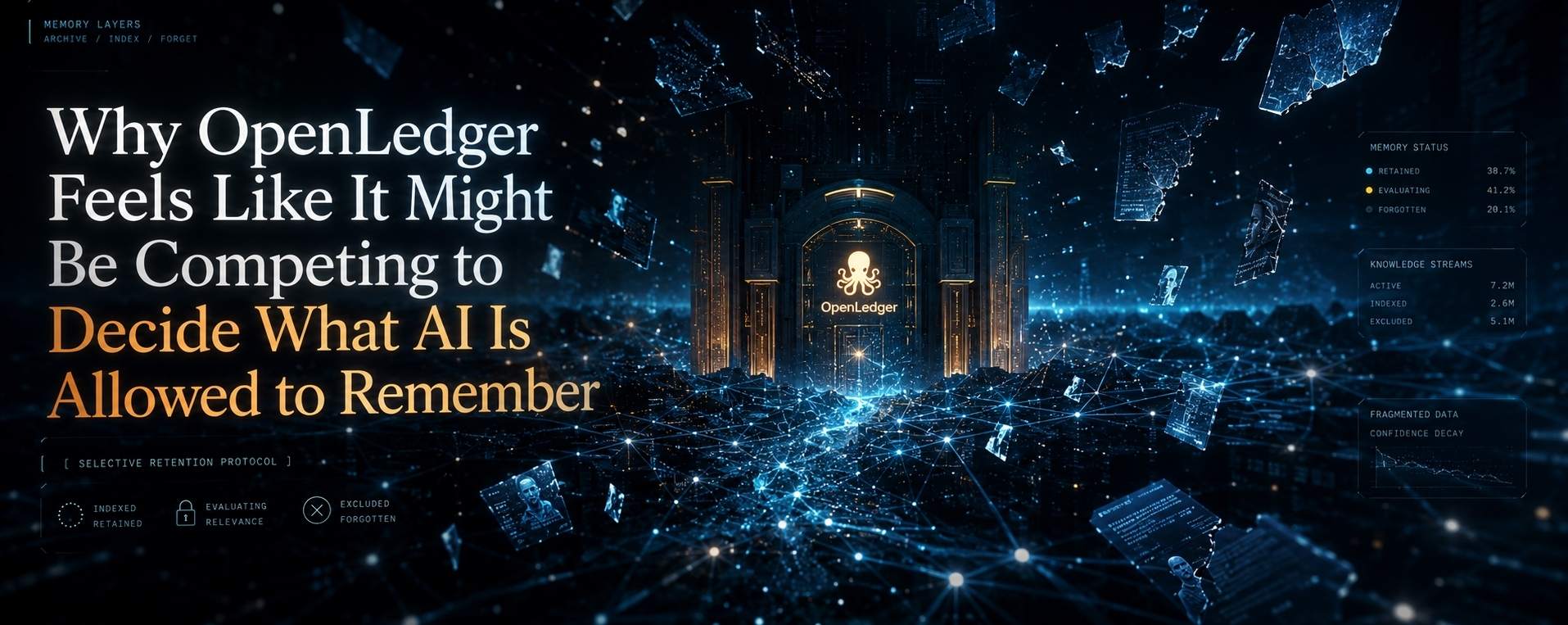
I don’t know why this thought keeps coming back… it shouldn’t matter this much, but it does.
Most AI conversations still feel too clean to me.
Bigger models. More compute. Better training.
It almost sounds like everything is already understood… like the direction is obvious.
But I’m not sure it is.
Because when I look at something like @OpenLedger , it doesn’t feel like it belongs in that clean story.
It feels slightly misaligned… like it’s pointing at something people are not naming directly yet.
And maybe I’m wrong, but I keep circling back to the same idea.
Intelligence might not be the constraint anymore.
Memory might be.
Not storage… not context size…
Something more uncomfortable.
Selection.
What stays active after everything else changes.
And I don’t know why that feels heavier the more I think about it.
Because once you start seeing systems through that lens, everything shifts slightly.
A bank doesn’t store transactions… it builds behavioral residue that quietly shapes future trust.
A search engine doesn’t just index information… it reinforces what has already survived attention loops.
Even markets… and I might be projecting here… but they feel like compressed memory systems where nothing disappears, it just changes form.
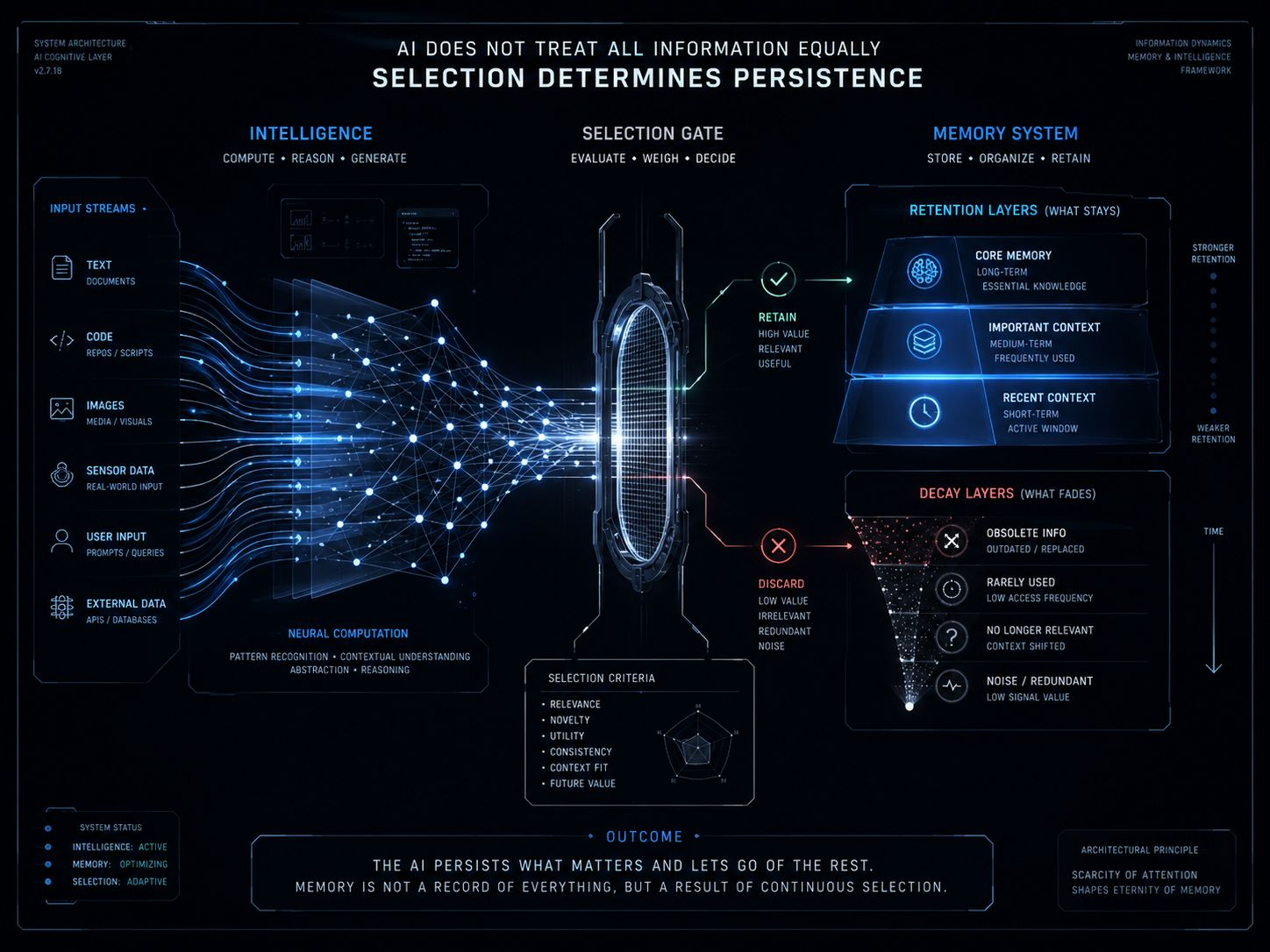
And then a strange question appears.
If all these systems already depend on selective memory… why do AI systems feel so flat?
Because right now, from what I understand, most AI systems absorb information almost equally at entry.
No real long-term weighting that feels economically meaningful.
Just input… then blending.
And that feels off.
Because in reality, information is not equal after time passes.
Some signals quietly take over future decisions.
Some disappear without resistance.
Some turn into noise even if they looked important at first glance.
But OpenLedger… or what it seems to be circling around… feels like an attempt to formalize that imbalance.
Maybe even price it.
And I don’t fully trust this thought yet, but it changes how data feels.
Because once data has a lifespan of influence… it stops being just input.
It becomes something closer to an asset competing for survival.
And that’s where things get uncomfortable.
Because survival is not neutral.
It creates pressure.
And pressure changes behavior before anyone even realizes it.
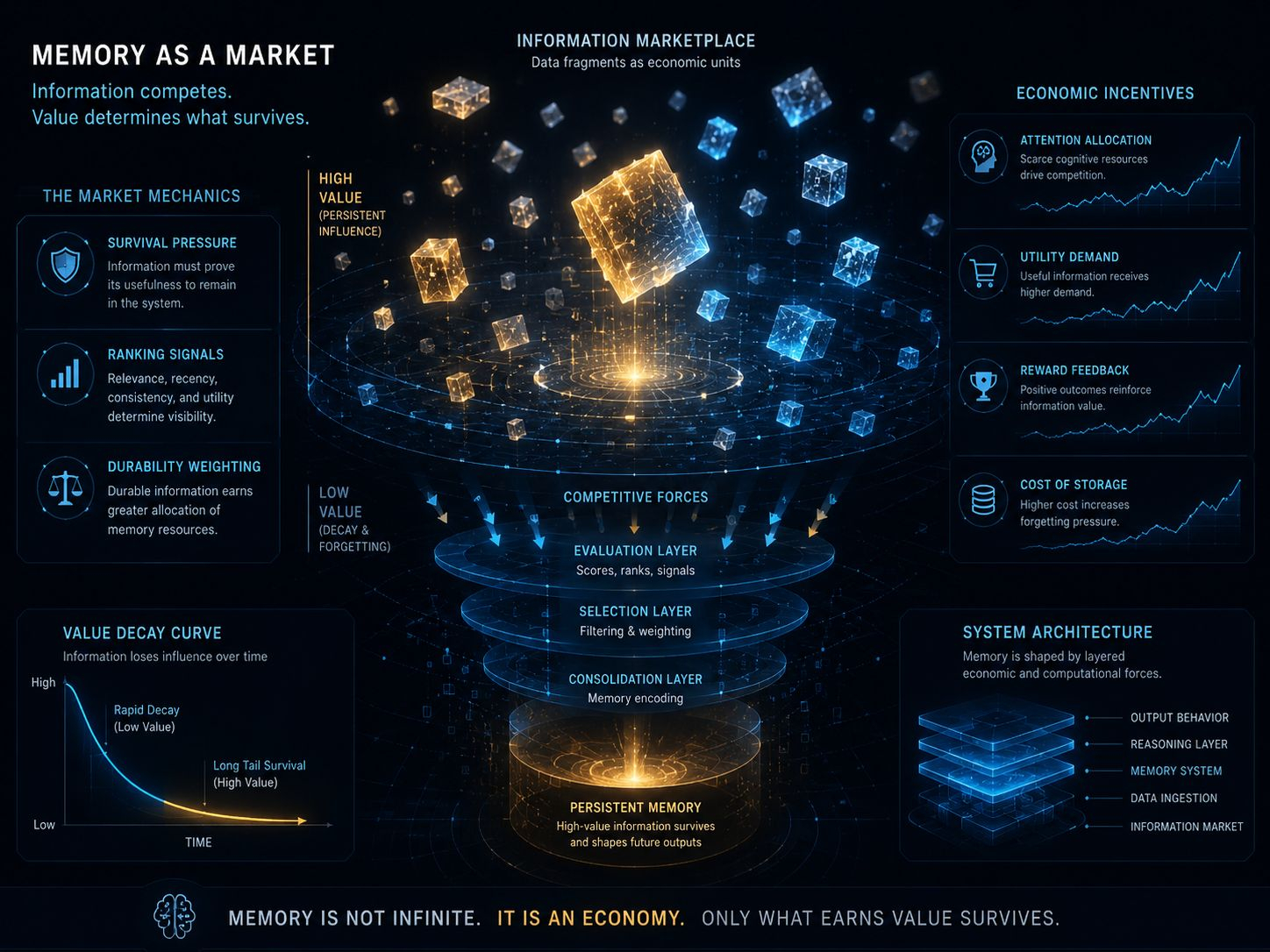
So I keep asking myself… what if AI memory becomes a market?
Not storage.
Not retrieval.
But a system where influence is continuously re-evaluated over time.
Because then the rules shift completely.
People stop competing on volume.
They start competing on durability.
And durability… honestly… feels like a different kind of difficulty.
Anyone can generate information.
Very few can generate something that still matters after the system itself has already moved forward.
And this is where @OpenLedger starts feeling slightly real in my head again.
Not because it solves anything.
But because it tries to attach structure to something that was never structured.
And I’m not even sure that structure can survive contact with reality.
Because the moment you define “lasting value,” you also define something that will be optimized.
And everything optimized eventually gets distorted.
Search did.
Social did.
Financial systems still do.
So I can’t stop wondering… if OpenLedger rewards long-term influence of data, what prevents people from simulating durability instead of producing it?
What prevents survival from becoming performance?
I don’t have an answer.
And maybe that absence is the answer.
Because once persistence becomes measurable, pressure becomes unavoidable.
And pressure never stays where it was intended.
It spreads… slowly… until the system starts behaving differently than what it was built for.
Still… I can’t ignore where this thought keeps pointing.
Because maybe the shift in AI is not toward smarter models.
Maybe it is toward systems that decide what intelligence is allowed to remain active inside future intelligence.
And I don’t know why that idea feels slightly unsettling… but it does.
Because once memory becomes competitive, intelligence stops being thinking.
It becomes survival inside something constantly rewriting what matters.
And I’m not sure anymore whether that’s progress…
or just a more sophisticated form of forgetting.