
I was sitting at my kitchen table last evening, watching my daughter struggle to explain a school project to her younger brother. She kept simplifying her words, repeating herself, trying to keep the thread consistent so he could follow. It struck me how fragile shared understanding really is—how one unclear explanation can fracture the whole conversation.
That memory followed me when I opened the CreatorPad campaign interface this morning. I clicked into the comparison module and started mapping OpenLedger against centralized AI models, side by side on the screen. The columns were clean: data transparency on one side, model control on the other. As I typed notes about ledger visibility versus proprietary training stacks, something uncomfortable settled in.
Centralized AI models may actually preserve something essential that open ledgers risk dissolving: coherent intelligence.@OpenLedger
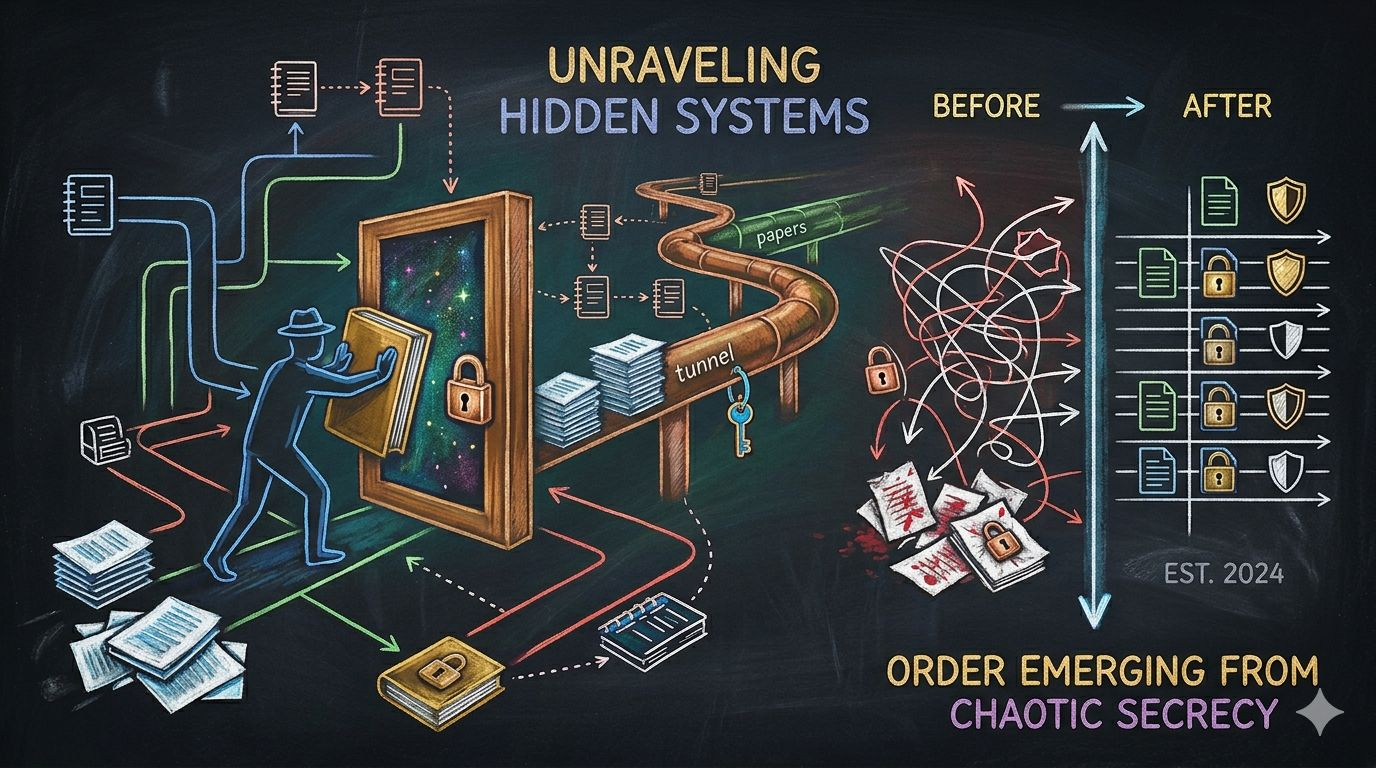
This thought disturbed me because in crypto circles we’ve been trained to believe transparency and distribution are always superior. Yet watching those comparison fields populate, I realized the opposite might be true in practice. Intelligence isn’t just information—it’s the disciplined filtering and alignment of that information. Centralized systems, for all their flaws and power concentration, maintain that discipline through controlled environments. OpenLedger, by making every layer visible and editable, invites noise, conflicting updates, and eventual dilution of any singular intelligent output.$OPEN
The realization hit hardest in that moment on the comparison screen when I had to score “consistency of reasoning” for both approaches. Centralized models can enforce a unified logic chain because someone ultimately decides what stays and what gets pruned. Open ledgers promise community governance, but the task of marking those metrics forced me to admit that community input often means fragmented authority. Suddenly the beautiful ideal of decentralized truth felt less like liberation and more like distributed confusion.
This extends beyond AI. We see similar patterns in decentralized finance where transparency reveals every flaw, every failed experiment, every conflicting upgrade proposal. The market learns, yes, but it also exhausts itself in the process. Centralized entities hide their mistakes better, iterate faster internally, and present cleaner interfaces to users. They sacrifice ideological purity for functional results. OpenLedger challenges this by forcing everything into the light, which sounds noble until you realize light can blind as easily as it illuminates.
What makes this particularly uneasy is how it undermines one of crypto’s foundational comforts—that more openness automatically equals better outcomes. The comparison exercise showed me that OpenLedger isn’t just an alternative technical stack; it’s a philosophical bet that humans can collectively maintain high-fidelity intelligence without traditional gatekeepers. The early signals suggest that bet is harder than we admit. The ledger doesn’t just record intelligence. It exposes how messy the production of intelligence truly is when no one holds final authority.
I’m not arguing we should abandon projects like OpenLedger. They serve as necessary experiments, stress-testing our assumptions about where real capability comes from. But performing that direct side-by-side task made the trade-offs impossible to ignore. Transparency reveals; it does not automatically refine.
The deeper question this leaves me with is whether we’re willing to accept less coherent intelligence in exchange for more visible systems, or if we’ll eventually crave the quiet efficiency of controlled environments again. @OpenLedger #OpenLedger $OPEN