

Every few years, a new idea emerges in the blockchain world that feels bigger than cryptocurrency itself. It is not just about moving money faster, creating another decentralized exchange, or launching a new token. Instead, it attempts to solve a problem that is becoming increasingly important in everyday life. When I first came across OpenLedger (OPEN), that was the impression I got.
We are living in a time when artificial intelligence is rapidly transforming industries. AI can write articles, generate images, analyze data, and even assist with scientific research. Behind all of these capabilities lies something incredibly valuable: data. Without data, AI models cannot learn, improve, or provide meaningful outputs. Yet the people who create, contribute, and own that data are often the ones who receive the least benefit from its value.
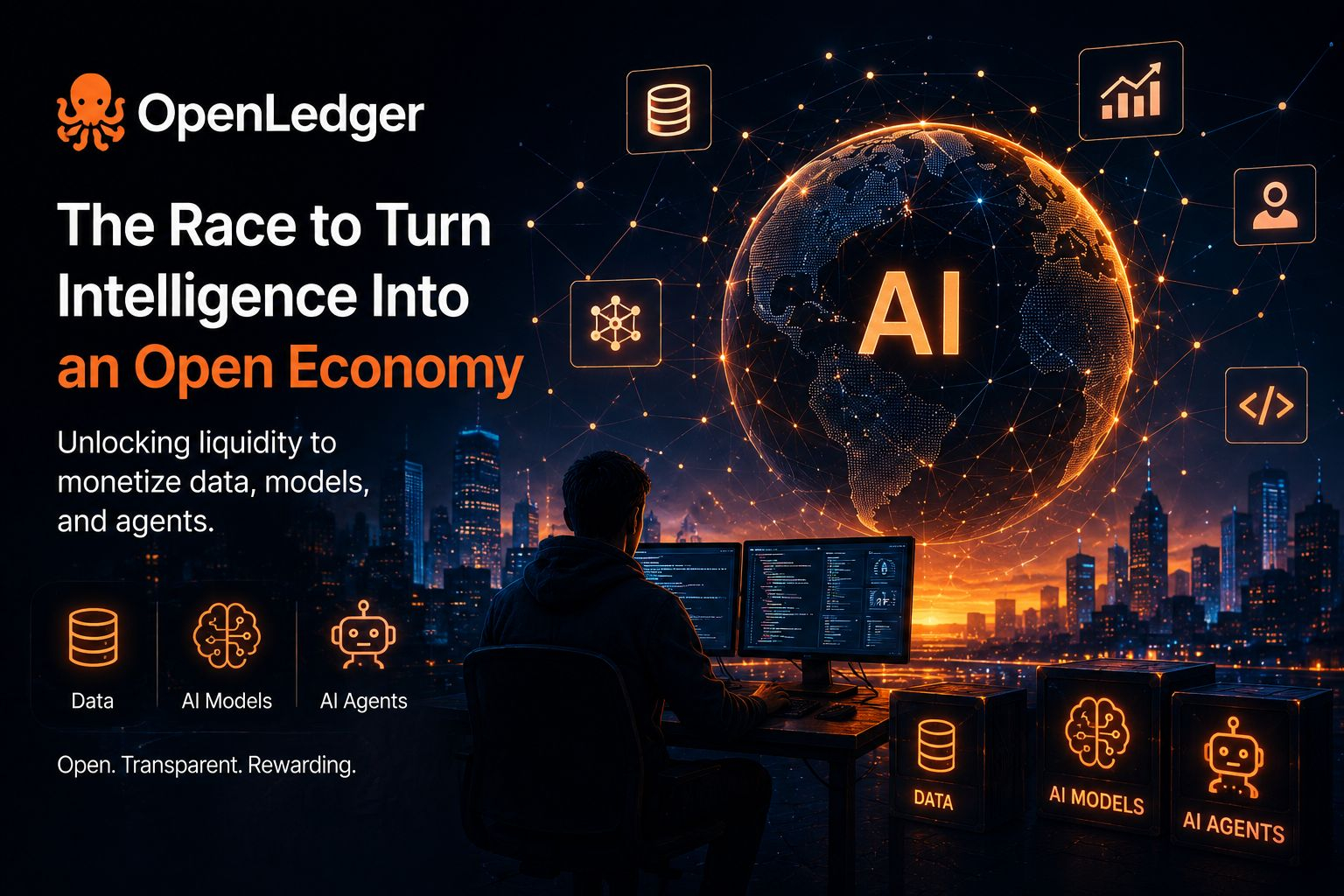
OpenLedger enters the conversation with a simple but ambitious idea. What if data, AI models, and intelligent agents could become assets within an open economy? What if contributors could be rewarded whenever their participation helps create value? Instead of intelligence being concentrated within a handful of large corporations, OpenLedger wants to create an ecosystem where ownership and rewards are distributed more broadly.
At first glance, the vision sounds almost idealistic. However, the more I explored the project, the more I understood why this concept is attracting attention. OpenLedger is positioning itself as an AI-focused blockchain designed to unlock liquidity around data, models, and AI agents. In traditional systems, these resources often remain locked within closed platforms. Companies gather user data, train models, and generate revenue while contributors have limited visibility into the process.
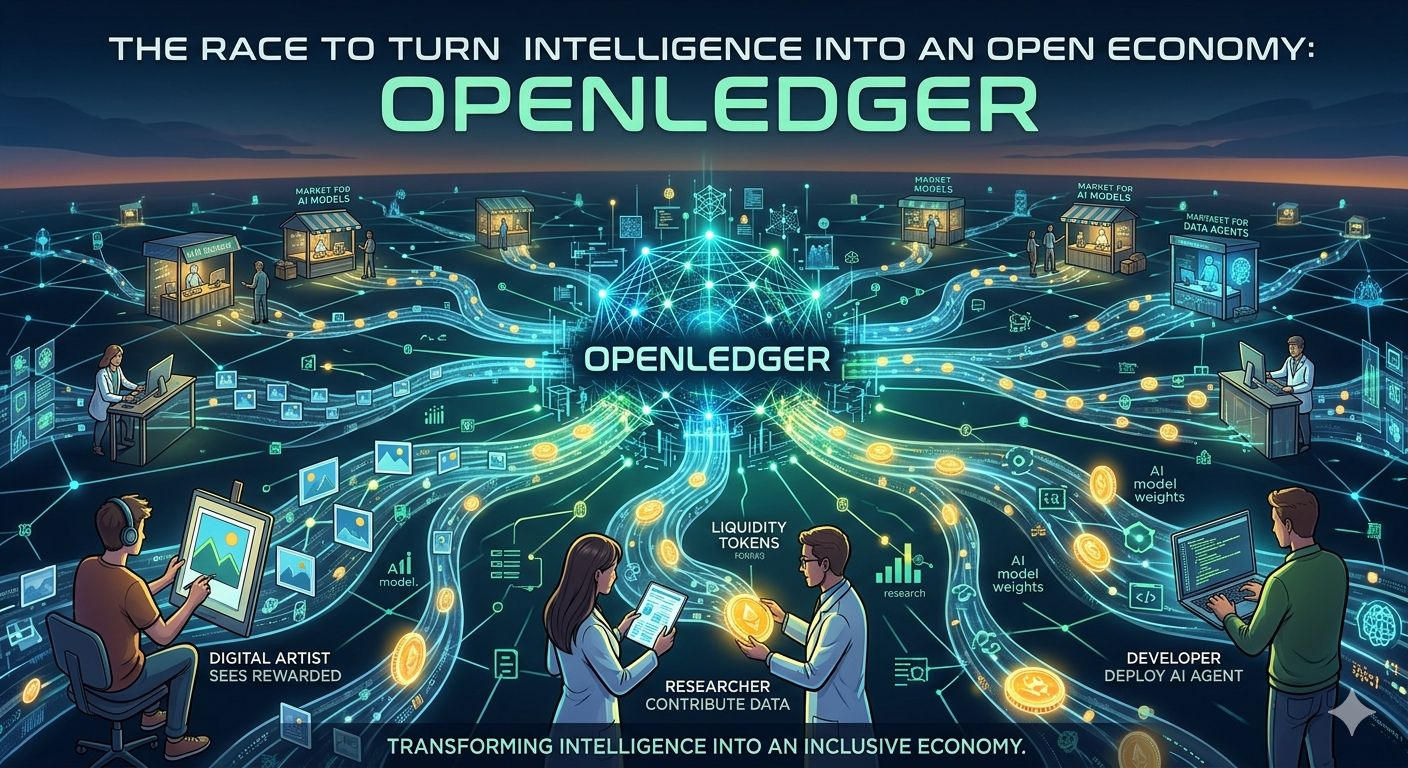
Imagine a photographer who spends years creating high-quality images online. Those images might eventually help train AI systems, but the photographer rarely receives compensation proportional to the value created. Now imagine a system where contributions can be tracked, verified, and monetized. That is the type of future OpenLedger appears to be pursuing.
The idea extends beyond data alone. AI models themselves could potentially become economic assets. Developers who create specialized models for healthcare, education, finance, or research could deploy them within a decentralized ecosystem where usage generates rewards. AI agents, which are becoming increasingly capable of performing tasks autonomously, could also participate in this economy.
This creates an interesting shift in perspective. Instead of viewing AI as something controlled exclusively by large technology companies, OpenLedger envisions intelligence as a marketplace where contributors, developers, and users all have a role. The blockchain acts as the infrastructure layer that records ownership, tracks contributions, and enables value exchange.
Of course, ambitious visions are common in both AI and crypto. The real challenge is execution.
One of the first questions that came to my mind was whether average users truly care about tokenized data ownership. Most people simply want convenient services. They are willing to trade some control for ease of use. Large technology companies became dominant partly because they removed complexity from the user experience. OpenLedger may have a compelling vision, but convincing mainstream users to engage with decentralized systems remains a difficult task.
Another challenge involves competition. The intersection of AI and blockchain has become one of the most crowded narratives in the industry. Every week seems to bring another project promising decentralized intelligence, data marketplaces, or AI-powered ecosystems. Standing out in such an environment requires more than a strong idea. It requires real adoption, active developers, and practical use cases.
There is also the question of value creation. Building an economy around data sounds attractive, but markets only function when buyers and sellers find enough incentive to participate. If there is insufficient demand for data assets, AI models, or agent services, the ecosystem could struggle to achieve sustainable growth. Liquidity is not something that appears automatically. It must be earned through genuine utility.
Still, I think the broader trend works in OpenLedger's favor. AI is becoming more important with each passing year. Businesses, governments, researchers, and consumers are increasingly dependent on intelligent systems. At the same time, concerns about ownership, fairness, transparency, and compensation are growing louder. These concerns create opportunities for projects that can offer alternative models.
Consider a future where thousands of independent contributors collectively help train specialized AI systems. Instead of value flowing primarily to a central platform, rewards are distributed across the network. A researcher contributes data. A developer improves the model. An AI agent performs useful tasks. Each participant receives compensation based on measurable contributions. Whether OpenLedger becomes the platform that enables this future remains uncertain, but the possibility itself is fascinating.
What ultimately makes OpenLedger interesting is not simply its blockchain technology. Many projects have advanced technology. What matters more is the problem it is trying to address. The project recognizes that intelligence is becoming one of the world's most valuable resources and asks an important question: who should benefit from that value?
The answer is still being written. The AI economy remains in its early stages, and no one knows exactly how it will evolve. Some projects will disappear. Others will adapt. A few may become foundational infrastructure for the next generation of digital services.
OpenLedger is betting that the future of AI should be more open, more collaborative, and more economically inclusive than the systems that dominate today. Whether that vision succeeds will depend on adoption, execution, and market demand. But in a landscape crowded with short-term hype, it is refreshing to see a project focused on a larger idea: transforming intelligence itself into an economy where more people can participate in the value they help create.
