
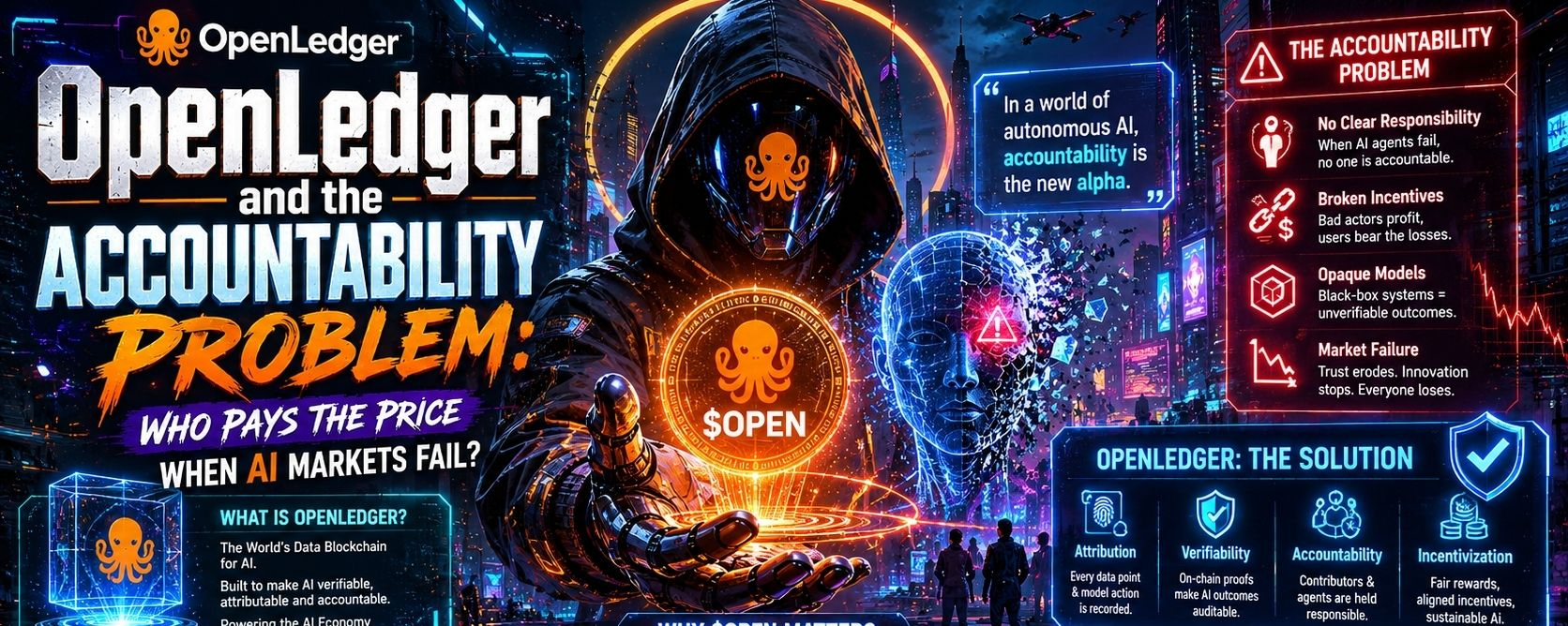
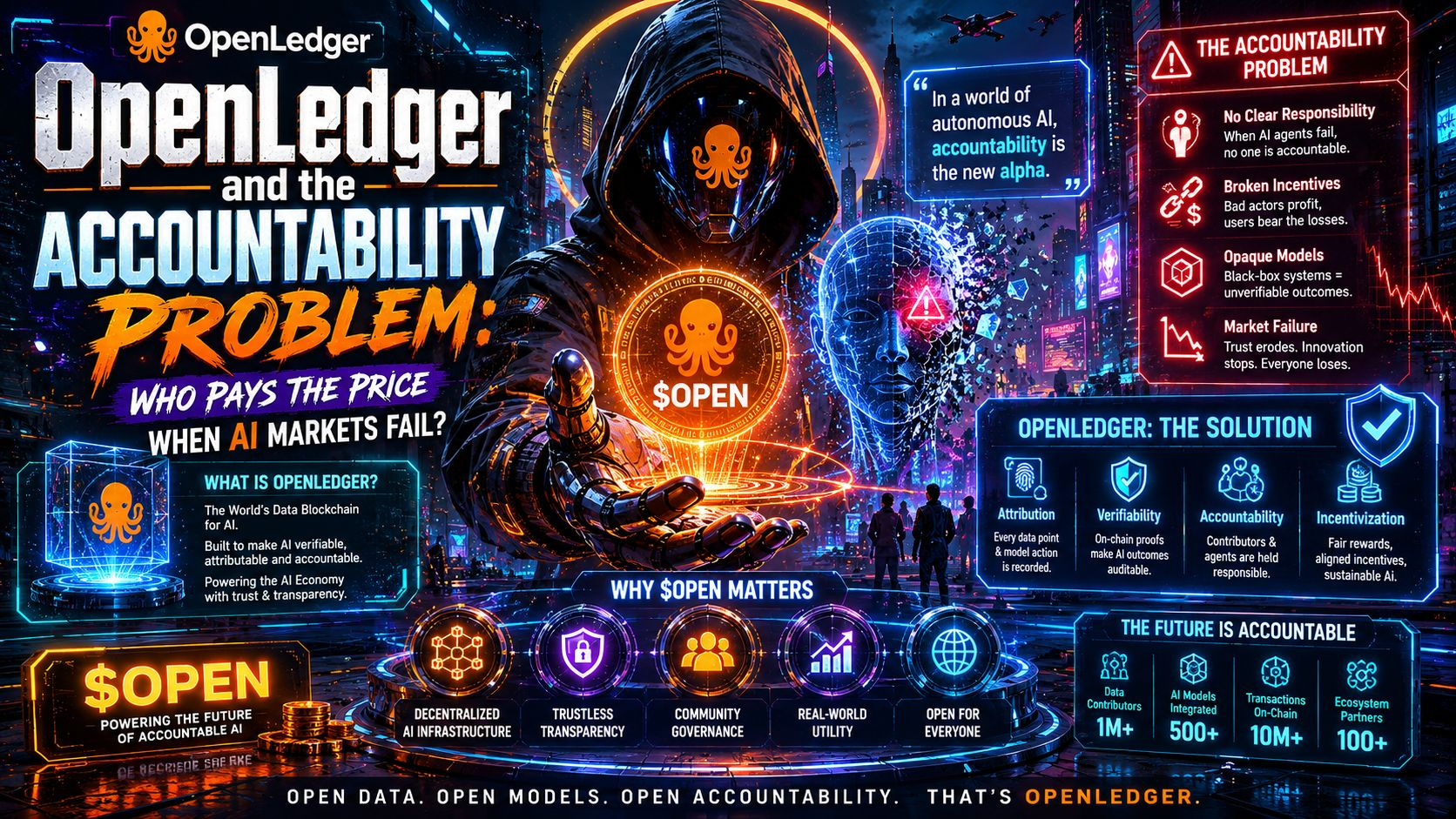
 Looking at OpenLedger for the first time, I can’t deny that I found it impressive. The idea feels perfectly timed for the world we are moving into. An AI-focused blockchain that promises to unlock liquidity around data, models, and agents sounds like the kind of infrastructure people have been waiting for. For years, data has been collected, AI has been trained, and countless individuals have contributed value without always being rewarded for it. OpenLedger presents a vision where those assets become tradable, measurable, and monetizable. At first glance, it feels less like another blockchain project and more like an attempt to redesign how value moves through the AI economy.
That promise is powerful because it speaks to something real. AI systems are becoming more important every day, yet the people who generate the data and knowledge that fuel them often remain invisible. A platform that claims to create economic opportunities around those contributions naturally attracts attention. I found myself thinking about independent developers, researchers, and even ordinary users finally being able to capture value from things that large organizations have traditionally controlled.
But the longer I sat with the idea, the more uneasy I became.
The vision sounds clean. Reality rarely is.
The biggest question that kept returning to me was surprisingly simple: who is actually responsible when things go wrong? The system talks about monetizing data, models, and agents, but value is only one side of the story. The other side is accountability. Data can be wrong. Models can be biased. Agents can make harmful decisions. Once these assets are transformed into tradable economic units, responsibility starts to feel less clear and more fragmented.
That’s the part that stays with me.
Imagine a future where an AI agent operating within such an ecosystem makes a costly mistake. Maybe it influences a financial decision. Maybe it spreads inaccurate information. Maybe it causes harm in ways nobody anticipated. The value generated by that agent may have flowed through multiple participants, multiple contributors, and multiple incentives. But when damage appears, who carries the burden? The creator? The data provider? The model trainer? The platform itself? Or does responsibility become so diluted that nobody truly owns it anymore?
What happens when everyone benefits from success but nobody fully owns failure?
The more I think about it, the more this feels like the uncomfortable gap between technological possibility and human reality. Markets are good at assigning prices. They are much less effective at assigning guilt, responsibility, or moral obligation. Yet those are exactly the things that matter when real people are affected.
There is also a deeper concern hiding beneath the excitement. Turning data into a financial asset sounds empowering, but it can also create incentives that push people toward behaviors they never intended. When every contribution becomes a potential revenue stream, does participation remain authentic? Or does everything slowly become optimized for extraction and profit? The line between contribution and exploitation can become surprisingly thin.
That’s the part I keep returning to.
Not because the technology is flawed by definition. Not because the vision lacks ambition. But because systems built around incentives often reveal their true nature only after people start depending on them. The early story is usually about opportunity. The later story is often about consequences.
And consequences are rarely distributed equally.
Those with resources can absorb mistakes. They can recover from failed experiments and flawed assumptions. Ordinary users often cannot. If an ecosystem built around AI assets experiences failures, market distortions, or misuse, the people carrying the greatest risks may be the ones who understood the system the least. That pattern has appeared repeatedly throughout the history of technology, finance, and digital platforms.
What happens when complexity becomes so great that trust is no longer based on understanding but on hope?
I find myself caught between admiration and skepticism. I can see why people are excited. I can see why investors, developers, and builders are paying attention. There is something undeniably compelling about creating economic structures around the resources that power AI. Yet the closer I look, the more the conversation seems to revolve around value creation while leaving responsibility as a secondary concern.
Maybe that imbalance is unavoidable. Maybe it is temporary. Or maybe it is the warning sign we should pay the most attention to.
Because in the end, the real test of a system is not how efficiently it creates value when everything works, but who is left holding the consequences when it doesn’t.