
Transparency is one of the most frequently discussed principles in decentralized governance.
But transparency is meaningful only when it moves beyond statements and becomes observable.
That is what makes STON.fi's latest governance implementation noteworthy.
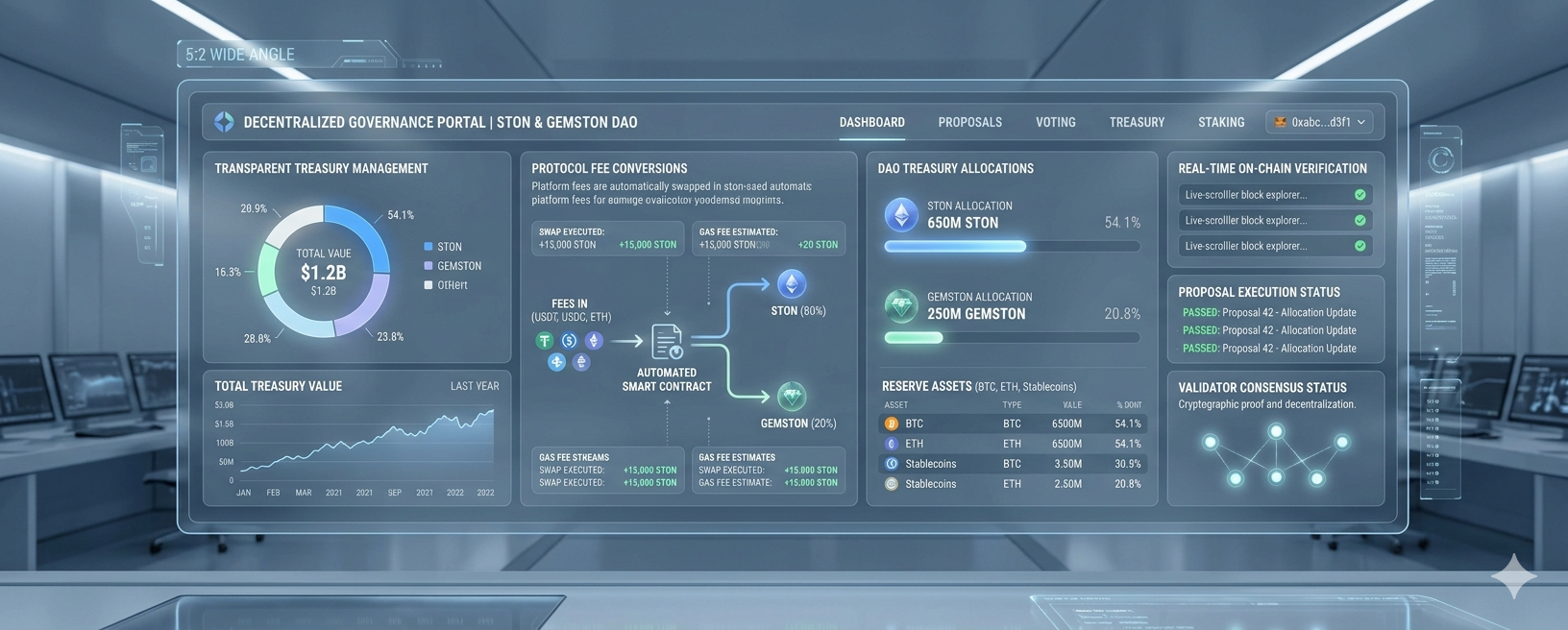
Following approval from the DAO community, the protocol's fee conversion mechanism is now fully visible through a public transparency page that allows anyone to monitor treasury conversions in real time.
This transforms governance from a voting process into something users can actively verify.
From Governance Decisions to On-Chain Visibility
DAO governance is often viewed through proposals and voting outcomes.
A proposal is submitted.
Community members vote.
A decision is reached.
But an equally important question follows:
What happens after approval?
The value of decentralized governance depends not only on decision-making but also on implementation transparency.
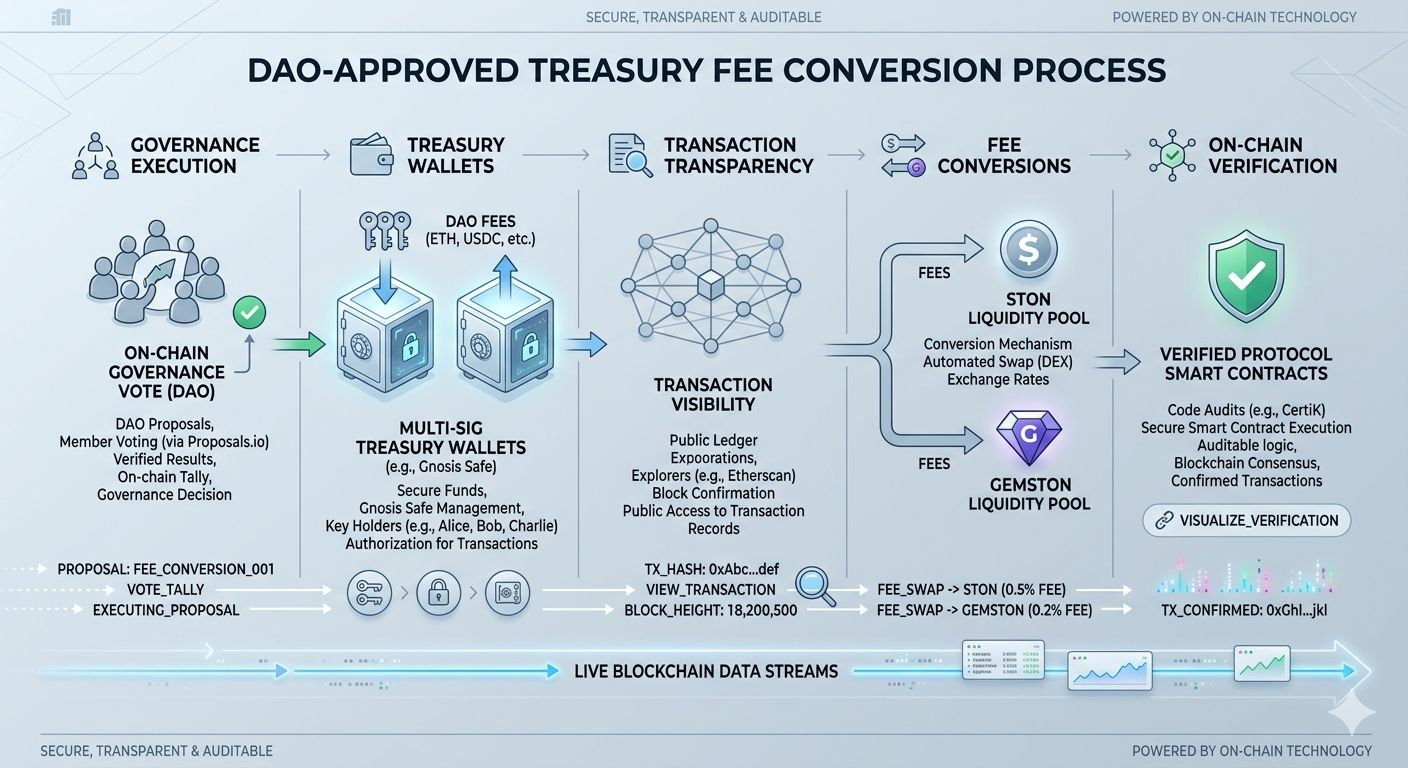
In this case, the STON.fi DAO approved a mechanism for converting protocol fees into STON and GEMSTON for treasury purposes.
Now, every step of that process is publicly visible.
What the Transparency Page Shows
The newly launched transparency dashboard provides a live view of treasury conversion activity.
Community members can observe:
➤ Protocol fee conversions in real time
➤ STON acquisitions for the treasury
➤ GEMSTON acquisitions for the treasury
➤ Wallet activity related to conversions
➤ Aggregate treasury conversion statistics
Most importantly, the information is verifiable directly on-chain.
No reports.
No summaries.
No need to rely on third-party interpretation.
The data is available at the source.
Why This Matters for Decentralized Governance
Governance systems often focus heavily on participation.
Voting power.
Proposal creation.
Community discussion.
Those components are important.
But governance maturity also depends on accountability.
A proposal may pass through community approval.
The next challenge is ensuring implementation remains aligned with what was approved.
Public transparency creates that accountability layer.
It allows governance participants to move from trust-based assumptions to verification-based confidence.
The Difference Between Transparency and Control
An important distinction accompanies this implementation.
The transparency page exists to demonstrate execution of a DAO-approved process.
It does not imply discretionary treasury management.
According to the framework communicated by the Foundation:
➤ Conversions follow DAO-approved rules
➤ Activity remains publicly visible
➤ Future use of acquired tokens remains subject to future community decisions
This reinforces a core principle of decentralized governance:
Implementation should follow community direction rather than centralized discretion.
Governance as a Continuous Process
Many people view governance as voting.
In reality, voting is only one stage.
A complete governance cycle includes:
➤ Proposal creation
➤ Community discussion
➤ Voting
➤ Implementation
➤ Verification
➤ Ongoing accountability
The addition of a public transparency layer strengthens the final stages of that cycle.
It creates a direct connection between community decisions and observable outcomes.
Closing Reflection
The strongest governance systems are not those that simply allow participation.
They are the ones that allow verification.
The STON.fi transparency page represents a practical example of that principle.
A community decision was made.
The implementation moved on-chain.
And now anyone can observe the results in real time.
That is not just governance.
It is governance becoming visible.
👉 Explore the transparency dashboard and follow treasury conversions as they happen.
Observe the process. Verify the activity. Participate in governance with greater context.
#STONfi #TON #DAO #DeFi #Governance #Web3 #Transparency