
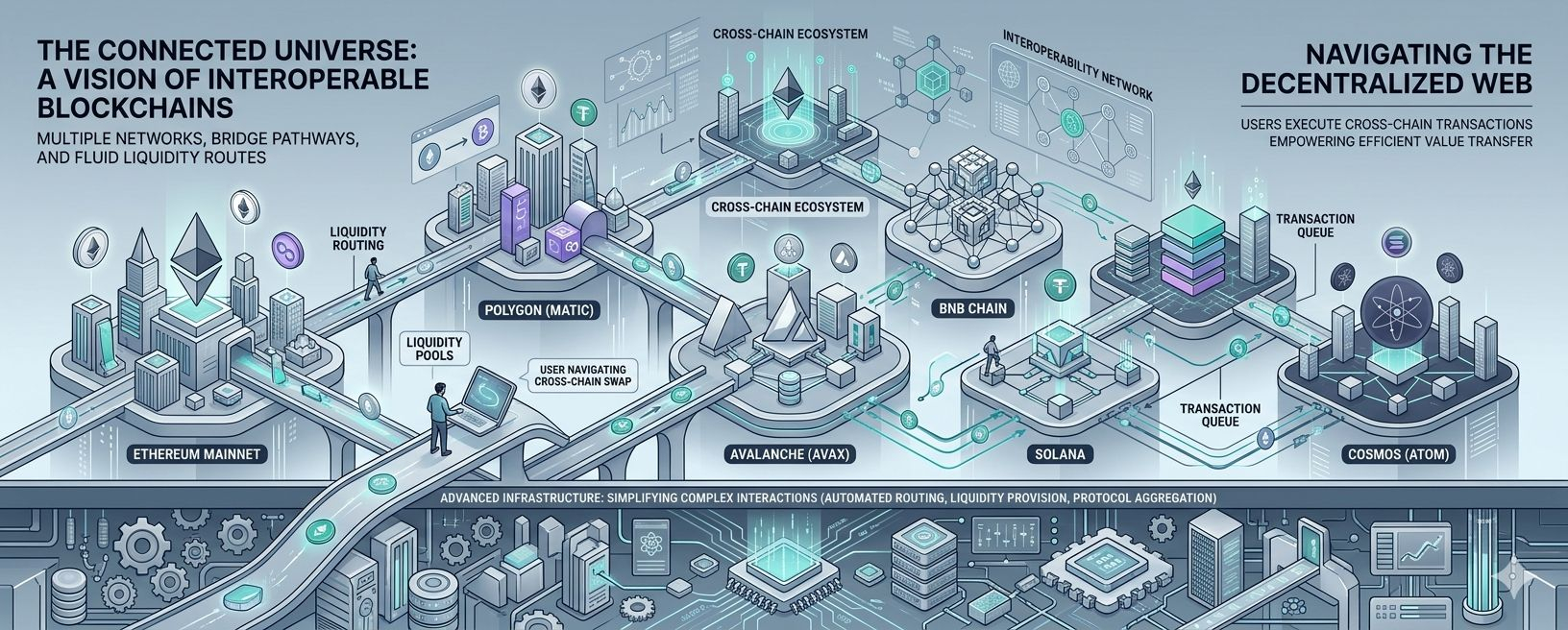
Cross-chain technology promised a more connected crypto ecosystem.
In theory, assets should move seamlessly between networks.
Users should access liquidity wherever it exists.
Applications should operate across chains without introducing additional friction.
Yet for many users, the reality feels different.
Moving assets between chains often remains one of the most stressful experiences in DeFi.
Not because the technology doesn't work.
But because the experience still feels fragmented.
That is the focus of STON.fi's upcoming live discussion on June 17.
A conversation about why cross-chain interactions still feel difficult—and what needs to change.
When Complexity Becomes Normal
One of the most interesting aspects of modern DeFi is how quickly users adapt to complexity.
Over time, processes that would seem unusual elsewhere become accepted as normal.
Consider a typical cross-chain transfer:
➤ Connect multiple wallets
➤ Select the correct network
➤ Bridge assets
➤ Wait for confirmations
➤ Monitor transaction status
➤ Verify arrival on the destination chain
➤ Pay gas on both sides
For experienced users, these steps may feel routine.
For new users, they often feel overwhelming.
The industry has gradually normalized workflows that still contain significant friction.
Why Centralized Exchanges Remain Popular
This creates an interesting contradiction.
Many users strongly prefer decentralized systems.
Yet when moving funds between ecosystems, they frequently return to centralized exchanges.
Why?
Because convenience often wins.
A centralized exchange can act as a simplified transfer layer between networks.
Users deposit.
Users withdraw.
The complexity remains hidden.
The popularity of this approach reveals an important lesson:
People are not necessarily choosing centralization.
They are choosing simplicity.
What Would Seamless Cross-Chain DeFi Look Like?
The next phase of DeFi may not be defined by additional features.
It may be defined by abstraction.
The best infrastructure often becomes invisible.
Users should not need to think about:
➤ Bridge mechanics
➤ Settlement coordination
➤ Route optimization
➤ Gas management
➤ Liquidity sourcing
Instead, they should focus on outcomes.
Move assets.
Execute swaps.
Access opportunities.
The protocol layer should handle the complexity.
This is increasingly becoming the direction of modern cross-chain infrastructure.
The Future Is About Reducing Friction
As blockchain ecosystems continue expanding, interoperability becomes increasingly important.
But interoperability alone is not enough.
The user experience must evolve alongside it.
The strongest infrastructure is not necessarily the most complex.
It is the infrastructure that makes complexity disappear.
That is why discussions around cross-chain UX matter.
They focus attention on the gap between technical capability and practical usability.
Closing that gap may be one of the most important challenges facing DeFi today.
Join the Conversation
STON.fi's upcoming live session will explore:
➤ Which parts of today's cross-chain workflow quietly became accepted as normal
➤ Why many users still rely on centralized exchanges when moving funds
➤ What truly seamless cross-chain experiences could look like in the future
The discussion is less about what exists today and more about where infrastructure is heading next.
And for anyone interested in the future of DeFi usability, that conversation is worth following.
Closing Reflection
Cross-chain infrastructure has made enormous progress.
But progress and simplicity are not always the same thing.
The technology continues to improve.
The question now is whether the experience can improve just as quickly.
Because the future of DeFi may not be determined by how many chains connect together.
It may be determined by how little users notice those connections at all.
👉 Join the live discussion and explore the future of seamless cross-chain experiences.
📅 June 17 · 15:00 UTC
Plus, participants will discover a special reward revealed exclusively during the stream.