
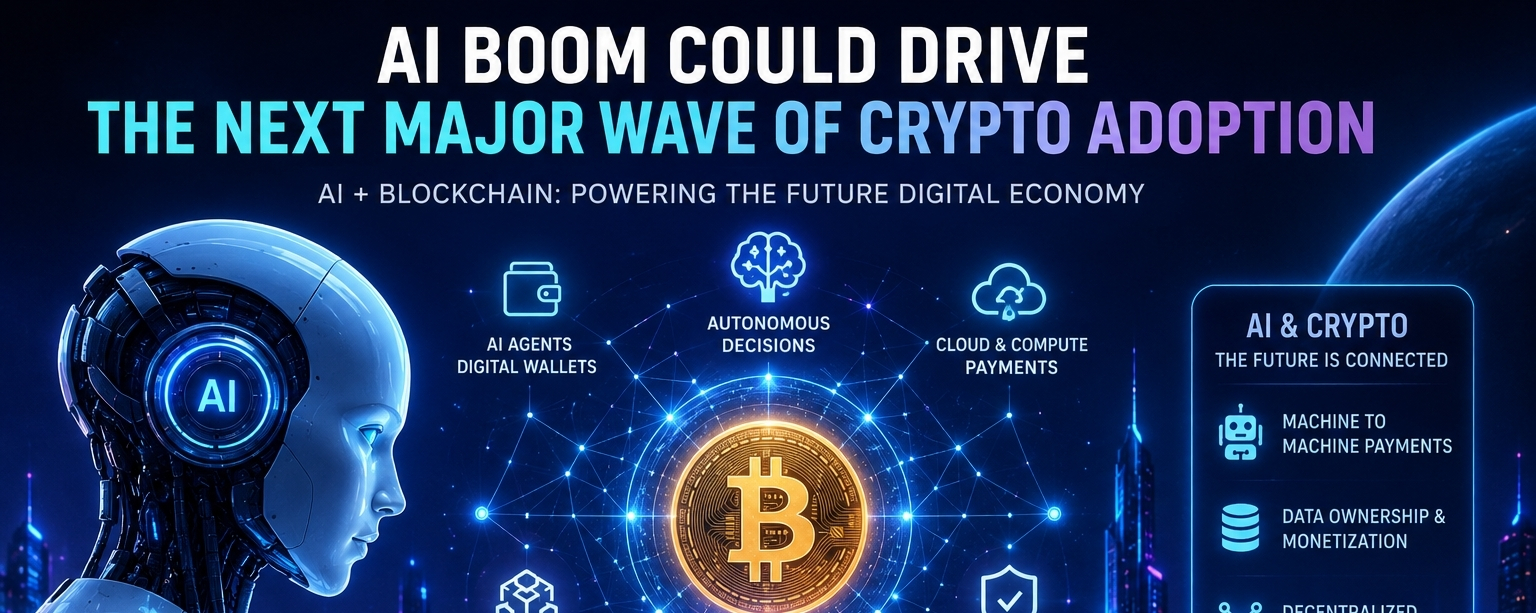
The global conversation around crypto is slowly shifting again, and this time artificial intelligence is becoming the center of attention. According to remarks widely attributed to Changpeng Zhao, the next major expansion phase for crypto may not come from traditional trading hype or short term speculation, but from the rapid rise of AI powered systems that start interacting directly with blockchain infrastructure.
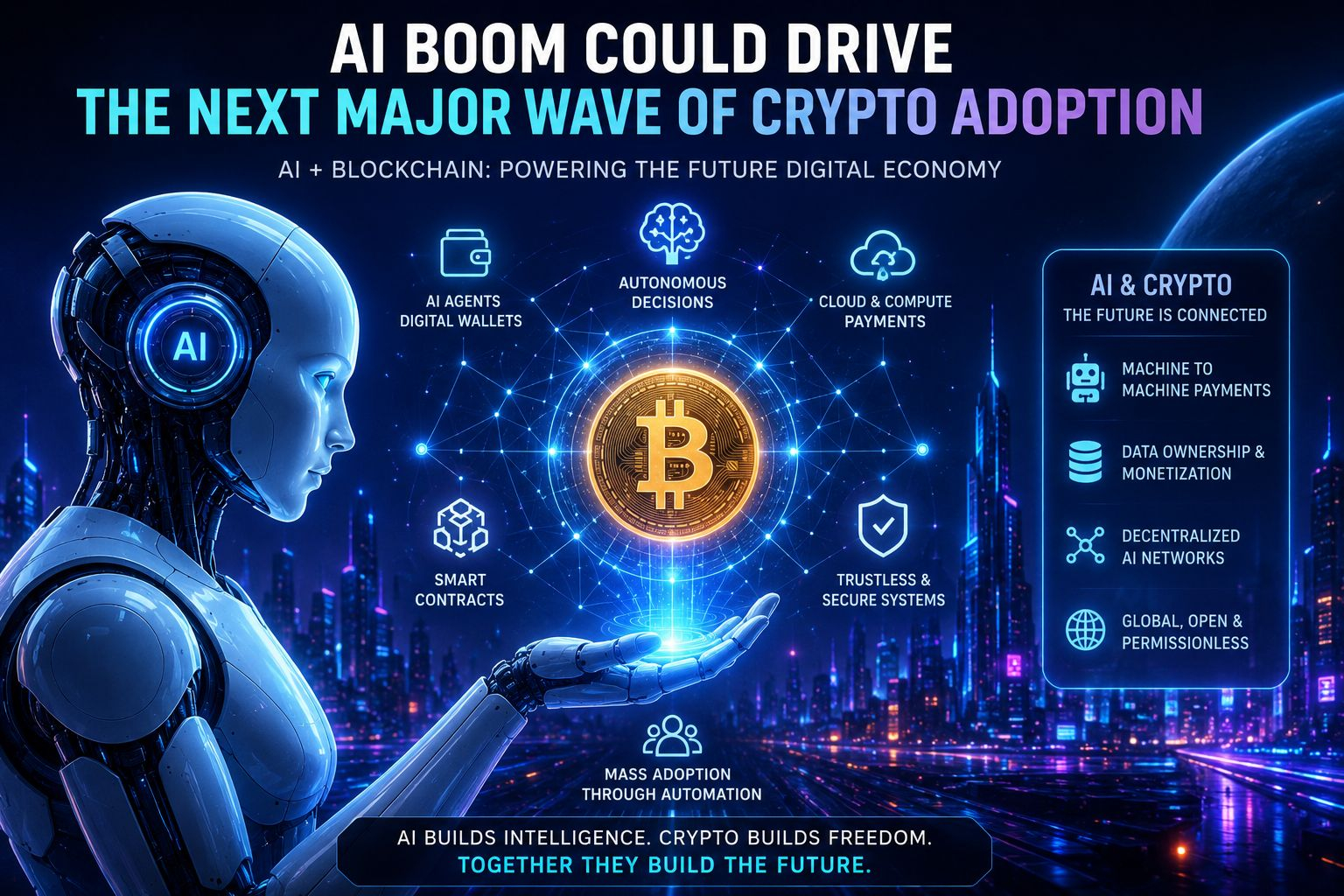
This idea is not just a casual prediction. It reflects a growing belief across the tech and crypto space that AI and blockchain are starting to converge in ways that could reshape how digital economies function. Instead of crypto being used mainly for trading, it could become the backbone for AI driven payments, identity, data ownership, and machine to machine transactions.
One of the key reasons this narrative is gaining traction is the way AI systems are evolving. Modern AI agents are becoming more autonomous. They can analyze data, make decisions, and even perform actions without constant human input. As these systems grow, they will need a way to pay for services, access APIs, store value, and verify identity in real time. Traditional financial systems are slow, heavily regulated, and not built for instant machine level transactions. Crypto, on the other hand, is global, programmable, and always available.
This is where blockchain starts to look like a natural fit. If AI agents become independent economic actors, they will need digital wallets, programmable money, and trustless settlement systems. That is exactly what crypto networks were designed to do. Stablecoins, smart contracts, and decentralized infrastructure could become the financial layer for AI ecosystems.
Many analysts also believe that AI will dramatically increase the number of crypto users without them even realizing it. Instead of people directly interacting with wallets and exchanges, AI assistants could manage transactions in the background. For example, an AI system could pay for cloud storage, purchase computing power, or execute micro transactions across global networks in seconds. This would quietly push crypto into mainstream usage through automation rather than direct adoption.
Another important angle in CZ’s perspective is the idea that innovation cycles in crypto are often driven by external technological waves. In the past, we saw narratives like decentralized finance, NFTs, and gaming drive new users into the space. Now AI could become the dominant force that brings a completely new class of participants, not human traders but autonomous agents and AI powered applications.
This shift could also change how value is created in the crypto market. Projects that integrate AI functionality, data marketplaces, decentralized computation, and machine learning infrastructure may attract more attention and capital. Investors are already starting to look at tokens and platforms that position themselves at the intersection of AI and blockchain, expecting that this combination could define the next growth cycle.
However, this potential future is not without challenges. AI systems require massive amounts of data and computing power, which raises questions about scalability and energy efficiency. There are also concerns about security, since autonomous systems handling financial transactions could become targets for new types of attacks. Regulation is another uncertainty, especially when AI agents begin to interact with financial systems at scale.
Still, the overall direction seems clear. The integration of AI and crypto is no longer theoretical. It is already beginning in small ways through AI driven trading tools, automated smart contract systems, and decentralized AI networks. If these trends continue to mature, they could form the foundation of a much larger ecosystem where machines and humans interact economically on equal footing.
In this vision, crypto is not just an investment asset anymore. It becomes the settlement layer of a machine driven digital economy. And if that happens at scale, the next wave of adoption could be far bigger and more structural than anything seen before.
That is the future CZ appears to be pointing toward, where the real catalyst is not just Bitcoin cycles or market speculation, but the rise of intelligent systems that require a new kind of financial infrastructure to function.