I've kept coming back to Kite AI these past weeks. The holidays have slowed the usual noise in crypto, which makes projects like this stand out more. It avoids the loud memes or over-the-top promises. What it does instead feels grounded in a shift that's creeping up on us: AI agents needing to handle their own transactions without constant human nudges.

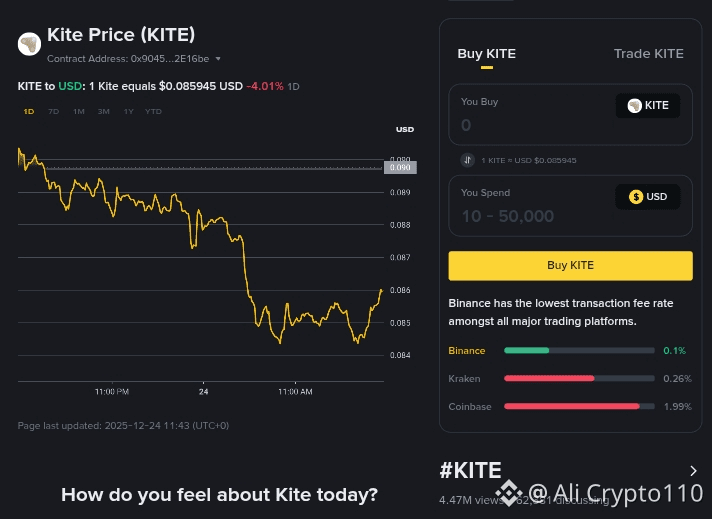
The token arrived through Binance's Launchpool in early November—the 71st project of its kind. Trading began on the third, and volume surged past $260 million almost immediately. Prices have eased back. As of today, December 24, KITE sits around $0.0904, with a market cap near $163 million and daily volume about $35.7 million. Circulating supply holds at 1.8 billion from the 10 billion total, pushing the fully diluted figure toward $904 million.
The real interest lies in the design. An EVM-compatible Layer-1 running Proof-of-Stake, crafted expressly for agentic payments. Those AI tools we tinker with—scanning data, bargaining for access, perhaps even joint creative efforts—often grind to a halt over money matters. Fees add up quickly. Processing lags. Or every payment demands your okay. Kite alters that flow. Stablecoins move natively. Spending gets programmable constraints. Agents carry verifiable identities to avoid chaos.
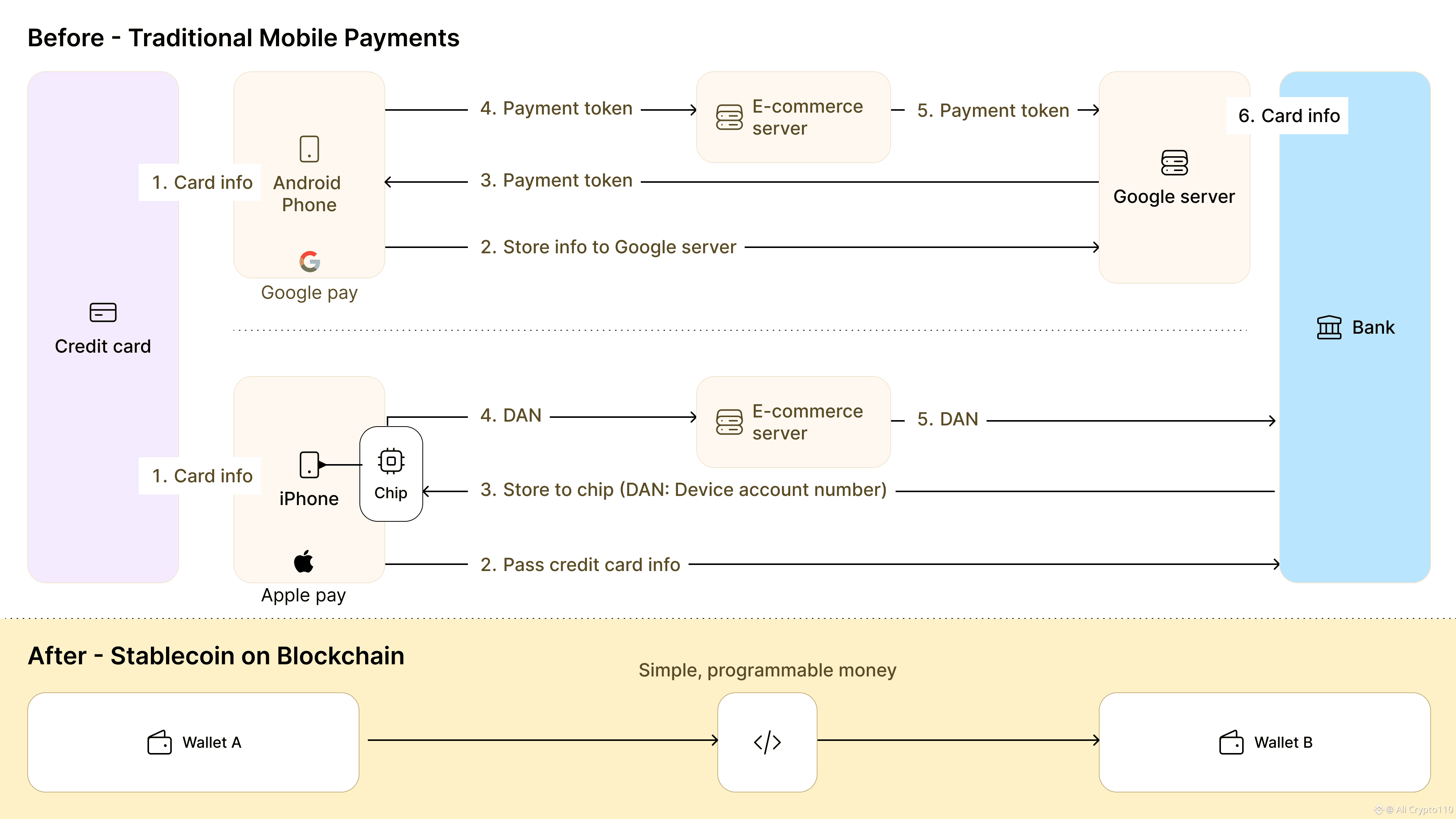
Consider the sub-accounts. One primary wallet delegates to several agents, each with tailored limits—say, allowing a research-focused bot $2,000 monthly on subscriptions. Off-chain handles the rapid exchanges. On-chain secures the final records. The x402 integration pulls from an old web standard, but repurposed for machines negotiating directly. Early signs point to Shopify links, which could mean bots managing actual purchases smoothly.
The raise carries weight too. Over $33 million total, including an $18 million Series A headed by PayPal Ventures and General Catalyst. Coinbase Ventures, Samsung Next, and others rounded it out.
Still, I hesitate on full optimism. Merges of AI and blockchain have flared brightly before, then faded when builders stayed away. Will developers actually flock here and produce agents that rely on this setup? Not certain. Upcoming unlocks might jostle the price. Liability hangs in the air—if an agent errs on a spend, sorting responsibility could prove tricky. Rules haven't fully adapted. Rivals sketch parallel ideas as well.
All the same, picture agents gaining ground in 2026. Handling small-scale arbitrage. Sharing royalties mid-collaboration. Routing modest donations without friction. Rails like these might slip into everyday use unnoticed. Tight scope. Strong support. Aligning with a broader push toward independence.
Posts along these lines tend to draw thoughtful replies on Binance Square or Creator Pad. They invite real exchange rather than pure cheerleading. How do you view agents controlling their finances? Promising leap, or something requiring tighter checks? It stays with me on days like this, when everything else feels paused.