
The engineers at @Dusk have spent years obsessing over a paradox: how do you keep a secret while inviting a regulator to watch?
In 2026, the answer is no longer a whitepaper. It is the Dusk mainnet.
The fundamental flaw of the first wave of blockchain was its exhibitionism. For a bank, a public ledger is a leak. If Goldman Sachs moves a billion dollars, they don’t want the world front-running the trade. Dusk operates on the principle that privacy is a prerequisite for professional finance. They use a custom-built Virtual Machine (Dusk VM) and a consensus mechanism called Segregated Byzantine Agreement (SBA) that doesn’t just verify transactions; it shields them.
Instead of the noisy, energy-sucking auctions of Proof of Work or the centralizing gravity of standard Proof of Stake, SBA allows nodes to participate in consensus without revealing their stake. It is a game of blind bidding where the winners are chosen by a cryptographic lottery. This isn't just "fast finality"; it is a system designed to prevent the kind of MEV (Maximal Extractable Value) that haunts public chains, where bots pick the pockets of retail users before their trades even land.
Real-World Assets (RWA) became the buzzword of the decade, but most projects are just putting a digital sticker on a physical apple. Dusk is doing something different through DuskTrade. In collaboration with the Dutch exchange NPEX, they are moving over €300 million in tokenized securities; bonds and equities; onto the chain.
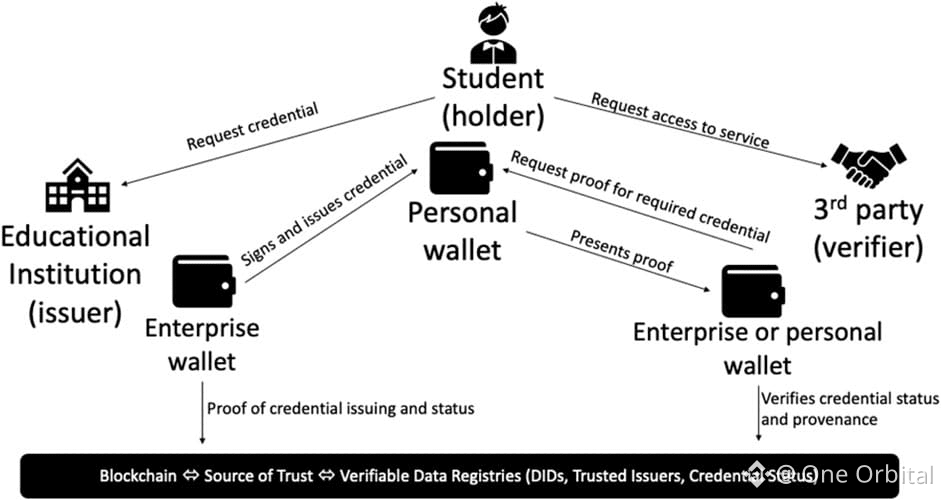
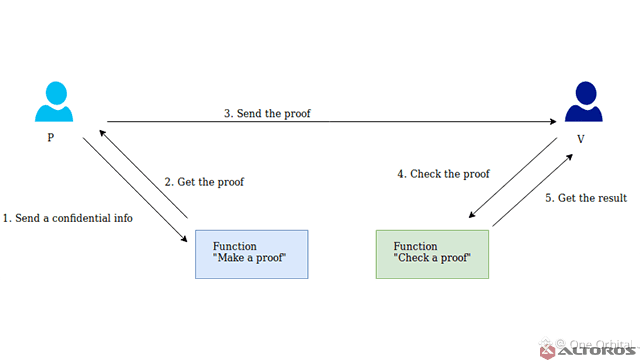
This isn't a pilot program or a "strategic partnership" meant to pump a chart. It is a live environment where the European MiCA (Markets in Crypto-Assets) regulations are the code itself. Through a protocol called Citadel, Dusk allows for "Auditable Privacy." A user can prove they are not a criminal and that they reside in a specific jurisdiction without ever handing over their passport to a dozen different dApps. You carry your credentials like a digital seal, showing only the "proof" of your identity, not the identity itself.
The $DUSK token is the oxygen of this ecosystem, and its supply model reflects a startling lack of interest in short-term hype. While other projects dump their entire supply in eighteen months, Dusk is operating on a 36-year emission schedule.
Total Supply: Capped at 1,000,000,000 $DUSK .
Emission Logic: A geometric decay model that rewards stakers over decades, not days.
Utility: It pays for gas, it powers the privacy-preserving smart contracts (Rusk), and it acts as the collateral for "Hyperstaking"; a programmable staking layer that allows for liquid staking and private delegation.
There is a 10% penalty for compounding rewards too quickly, a move that purposefully slows down the velocity of new tokens entering the market. It’s a mechanism that favors the "conviction holders" over the mercenary liquidity providers who hop from farm to farm.
If you look at the landscape of 2026, the "Wild West" of DeFi is being fenced in. The projects that survive are those that built the fences themselves. Dusk’s XSC (Confidential Security Contract) standard is the blueprint for this. It allows issuers to bake corporate actions; dividends, voting, and compliance checks; directly into the asset.
When a bond on Dusk pays out, it doesn't need a middleman in a suit to click "send." The smart contract sees the proof of ownership and executes. But unlike a standard ERC-20, the rest of the world can't see who got paid or how much. It is the efficiency of a robot with the discretion of a Swiss banker.
Dusk isn't trying to be the "world computer." It is trying to be the world’s clearinghouse. It is a bet that the future of finance isn't just decentralized, but discreet.