
The future of real-world assets (RWAs) is on-chain, but not all approaches are equal. Many confuse tokenization with native issuance—a critical misunderstanding for finance.
Digitization is just a paper certificate becoming a PDF. Tokenization adds programmability and fractional ownership, but the actual asset is still held by a traditional custodian (like a CSD). This creates a "synthetic" version that must be constantly reconciled with the off-chain original, inheriting old inefficiencies: slow settlement, high costs, and intermediary reliance.
𝐍𝐚𝐭𝐢𝐯𝐞 𝐈𝐬𝐬𝐮𝐚𝐧𝐜𝐞 is the paradigm shift. The asset is born and lives entirely on-chain—no custodian, no reconciliation. It enables true disintermediation: issuance, settlement, and clearance happen natively on the ledger. This means instant finality, lower costs, and built-in regulatory compliance.
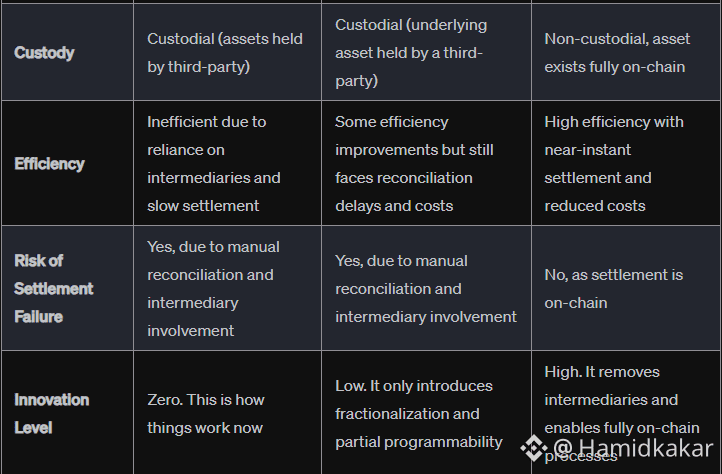
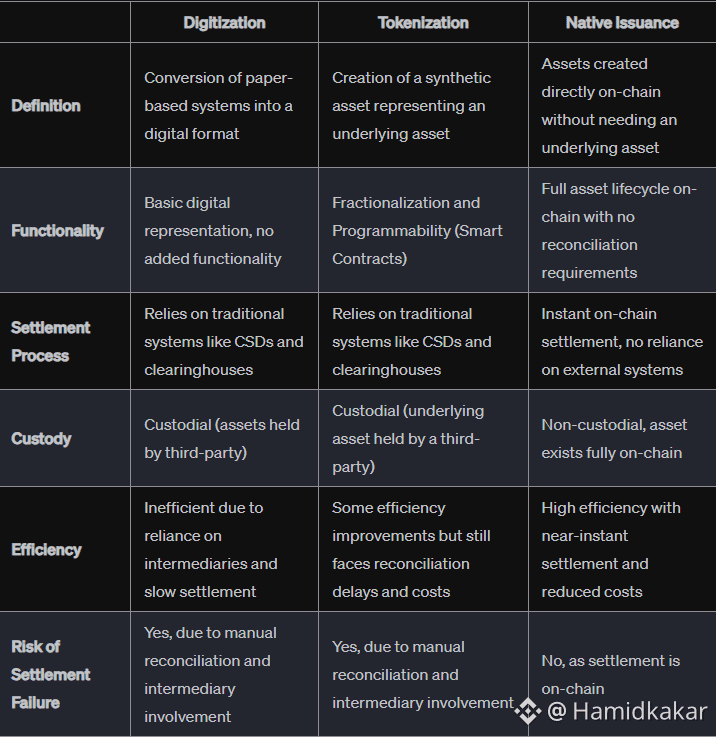
𝐖𝐡𝐲 𝐓𝐡𝐢𝐬 𝐌𝐚𝐭𝐭𝐞𝐫𝐬 𝐟𝐨𝐫 𝐂𝐫𝐲𝐩𝐭𝐨
Most blockchains, including Ethereum L2s, aren't built for securities. They lack the sub-10-second finality and privacy features institutions require. True native issuance demands a purpose-built infrastructure that bridges crypto innovation with regulatory rigor, moving beyond just a "front-end" wrapper.
The future isn't just tokenizing old systems—it's building new ones from the ground up.

