
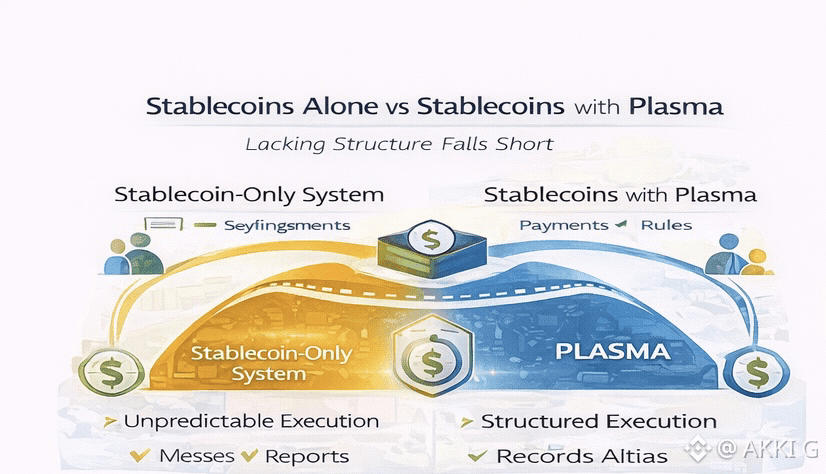
Stablecoins are often described as the breakthrough that makes global digital payments possible. Price stability, instant transfers, and onchain settlement sound like the ingredients of a modern financial system. Yet when stablecoins are placed directly into real commerce, cracks appear quickly. Not because the asset fails, but because money alone is not infrastructure.
Commerce depends on more than value preservation. It depends on timing, accountability, reversibility, and coordination across many participants. A stablecoin can hold its price perfectly and still fail a business if settlement arrives late, refunds behave inconsistently, or records cannot be reconciled across systems. In these moments, stability of value offers little comfort.
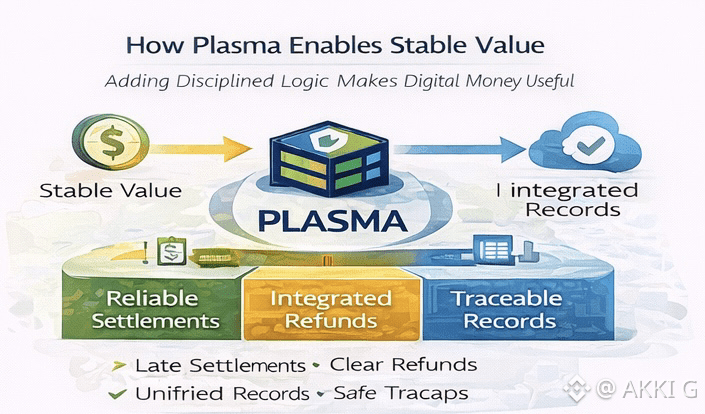
What global commerce actually requires is a reliable rail. Funds must move according to rules, not conditions. Settlement must align with business cycles. Refunds must follow predictable logic. Records must survive audits and disputes months later. Without these guarantees, stablecoins remain instruments waiting for structure.
Plasma is built to provide that missing layer. Plasma does not replace stablecoins. It gives them context. By embedding discipline into execution, Plasma ensures that stable value behaves like dependable money inside real businesses. Payments finalize within defined windows. Refunds are integrated rather than improvised. Lifecycle records remain linked from initiation to resolution.
Moreover, global commerce multiplies complexity. Cross-border platforms operate across jurisdictions, time zones, and regulatory expectations. A token alone cannot manage this. Infrastructure must absorb it quietly. Plasma handles coordination at the rail level, allowing stablecoins to function as intended without exposing businesses to operational risk.
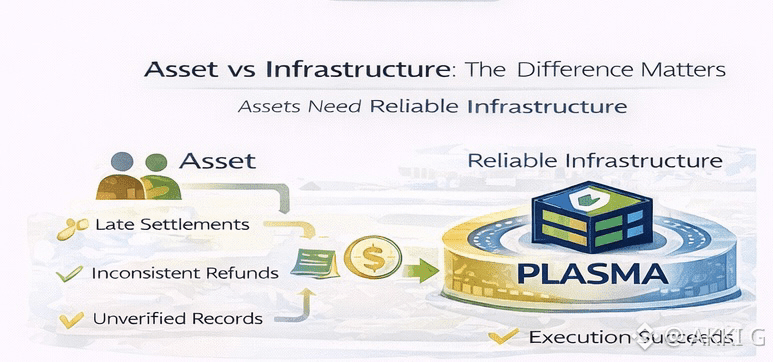
My take is that the future of payments will not be won by the most stable asset, but by the most reliable system. Stablecoins are necessary, but they are not sufficient. Plasma’s role is to turn stable value into usable, repeatable commerce. That distinction is what enables real adoption at scale.

