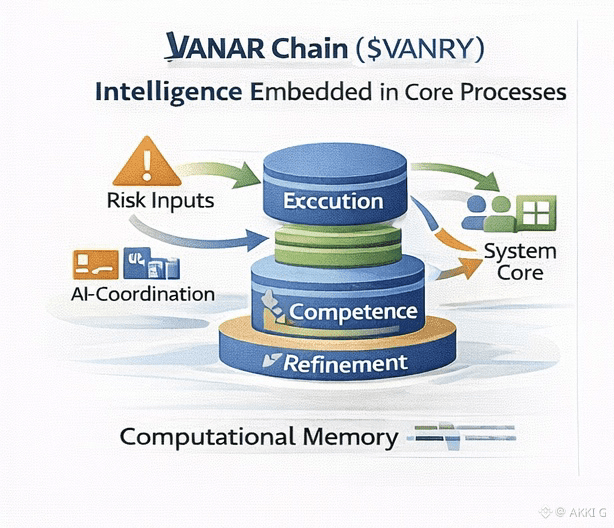
One pattern I keep noticing in Web3 is how intelligence is often treated as a layer you attach later. First comes execution, then scalability, and only after that does intelligence enter the conversation. That order feels backward to me. When I look at Vanar Chain, it feels like intelligence is not something added on top. It is something designed into the base.
Vanar’s architecture allows intelligence to live where decisions actually happen. On chain memory preserves context. AI agents interpret that context. Execution adapts based on what the system has already learned. This means intelligence is not reactive or cosmetic. It actively shapes outcomes. Over time, this creates a network that behaves less like static software and more like a living system.
What stands out is how this changes efficiency. In many blockchains, intelligence is external. Decisions are made off chain and then pushed on chain as instructions. Vanar collapses that distance. The system itself evaluates patterns, adjusts behavior, and refines execution internally. That reduces friction and removes dependency on constant human oversight.
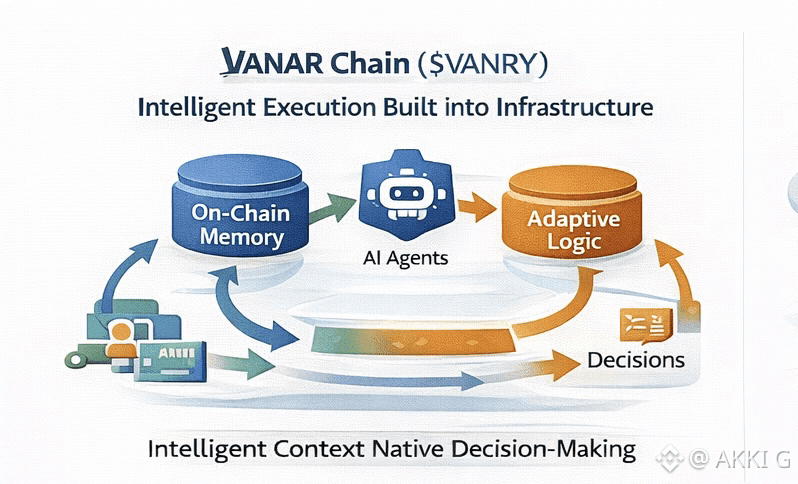
$VANRY plays a central role in this model. Every intelligent action has a cost. Querying memory, running adaptive logic, and coordinating AI-driven execution all consume VANRY. This ties the token’s value to meaningful decision making rather than raw activity. As the network becomes more intelligent, the economic importance of executing well increases.
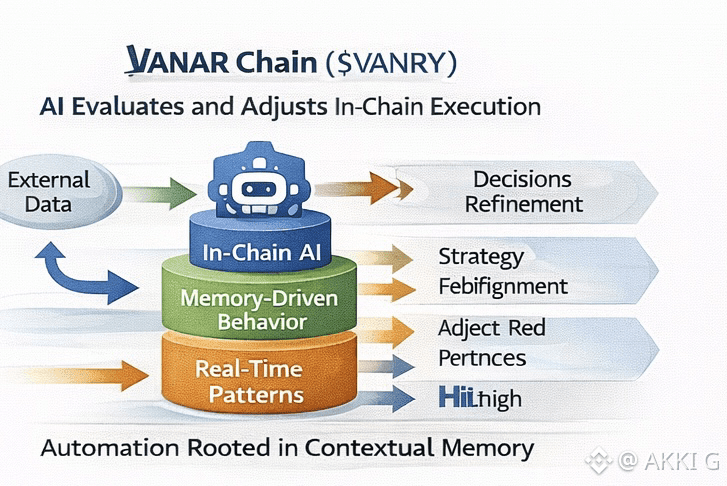
I also think this approach matters for the future of automation. As AI agents take on more responsibility, they need environments that can support nuanced decisions without breaking. Vanar feels designed for that future. It does not assume intelligence will stay external forever. It prepares for a world where intelligence is native.
My take today is that Vanar Chain treats intelligence as infrastructure. By embedding it into memory and execution, the network gains the ability to improve itself continuously. In the long run, systems that think before they act tend to outlast systems that simply react.