@Vanarchain When I first spent time with Vanar, the experience didn’t feel like uncovering something entirely new. It was closer to recognizing something familiar that had quietly existed just outside my focus. It didn’t announce itself with urgency or position itself as the answer to everything that came before. Instead, it gave the impression of a project that had been observing from the sidelines studying recurring patterns across cycles and then stepping forward with a noticeably different stance. After years in this industry, that kind of restraint tends to be more striking than sheer ambition.
Vanar arrives in a space that grows noisier each year. Modern blockchains don’t just compete on technical ideas; they compete for attention. Speed, scalability, novelty, and metrics are frequently used as markers of importance. Beneath that surface, however, the reality is far quieter. Most platforms are still used by a relatively small audience that already understands how they work. The long-promised connection to everyday users remains more conceptual than practical. Vanar appears to recognize this disconnect, not as a flaw that can be patched quickly, but as a human challenge that requires time, patience, and empathy.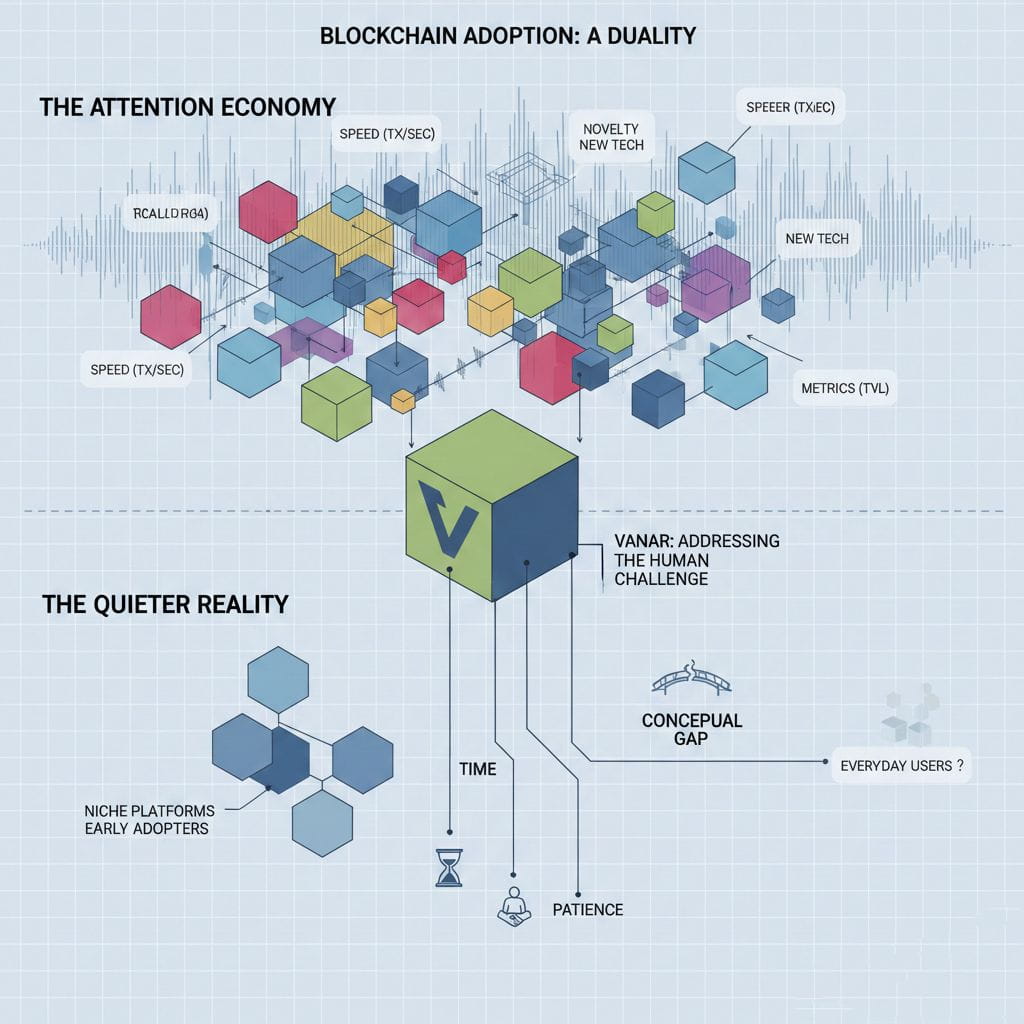
What the project seems to grasp without making a spectacle of it is that adoption rarely fails because people reject new technology outright. It fails when the experience feels alien, brittle, or overly demanding. Many platforms expect users to reshape their behavior, learn unfamiliar systems, and accept new risks. Vanar seems to reverse that assumption. Instead of pulling people toward blockchain, it moves blockchain closer to places people already feel comfortable: gaming, entertainment, brands, and digital environments where participation feels natural rather than instructional.
This is where many existing solutions stumble. They function technically, but on an emotional level they feel clumsy. Friction appears where it shouldn’t, and complexity replaces what could have been simple. Too often, platforms feel like showcases of what’s possible rather than spaces people genuinely want to inhabit. Vanar’s answer isn’t to win on raw performance alone, but to reduce the emotional effort required to engage. It’s a quiet recalibration, but one that reshapes priorities.
That recalibration comes with conscious compromises. Vanar doesn’t attempt to cover everything at once. There’s a sense that certain layers of complexity were intentionally set aside in favor of cohesion. The platform feels designed around how it will actually be used, not just how it can be explained. In an ecosystem obsessed with pushing boundaries, restraint can be mistaken for limited ambition. With experience, it more often signals discipline.
What’s kept simple isn’t the vision, but the interface people interact with. The underlying idea seems to be that users shouldn’t have to think about infrastructure while they’re playing, creating, or engaging. That perspective reflects a background in industries where user experience is non-negotiable. In gaming and entertainment, confusion is fatal people leave quickly. That sensibility appears woven into Vanar’s approach, even if it isn’t loudly promoted.
Viewed this way, growth feels less like a sprint and more like a steady walk. Vanar doesn’t seem to be chasing viral moments or explosive adoption curves. Its products suggest a belief that trust is built gradually, through consistent, uneventful experiences that simply function as expected. This kind of progress rarely generates headlines, but it often outlasts hype-driven surges. It’s the difference between being noticed once and being depended on.
That said, it would be misleading to present the project as finished or guaranteed. Open questions remain. Can a system designed around mainstream comfort stay relevant in an industry that constantly reinvents itself? Will simplicity remain effective as user expectations evolve? There’s also uncertainty around whether brands and entertainment platforms will fully commit or continue to engage cautiously. Vanar’s model relies heavily on patience from both builders and users and patience is not always abundant in this space.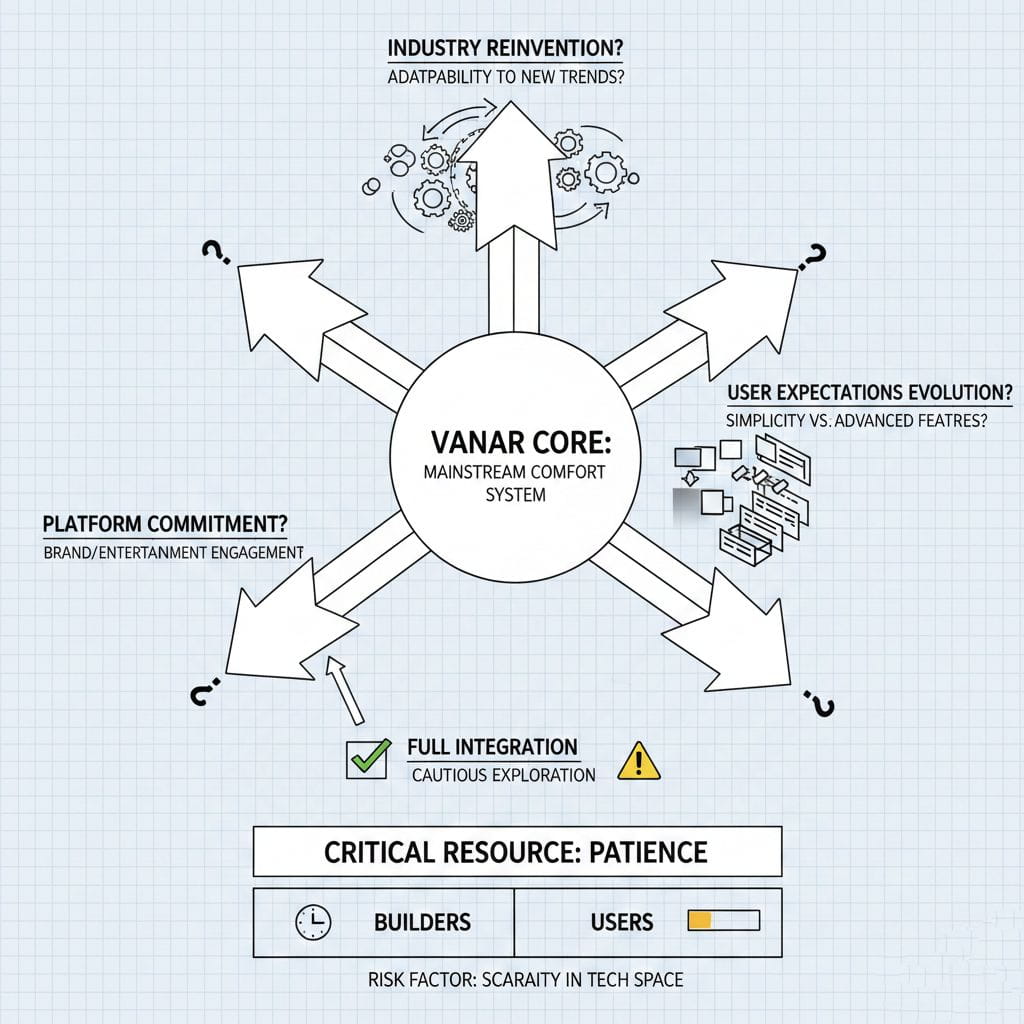
Identity is another unresolved factor. By operating across multiple verticals, the project risks appearing scattered rather than focused. Often, clarity comes as much from what a platform refuses to pursue as from what it enables. Over time, Vanar will likely need to narrow its paths so others can become more defined. That process is rarely comfortable, but it’s often essential for long-term maturity.
What ultimately makes the project compelling is its lack of urgency. It doesn’t feel like it’s trying to persuade or pressure anyone. There’s no sense of “now or never.” Instead, it positions itself as infrastructure that expects to be evaluated slowly. In an industry that frequently confuses loudness with confidence, that quiet presence can be unexpectedly powerful.
After watching multiple cycles rise and fall, I’ve grown cautious of certainty in either direction. Vanar offers reasons for curiosity, not reasons to abandon skepticism. It reflects an understanding that meaningful progress here is less about dramatic breakthroughs and more about aligning with how people actually behave. Whether that understanding will be enough remains to be seen.
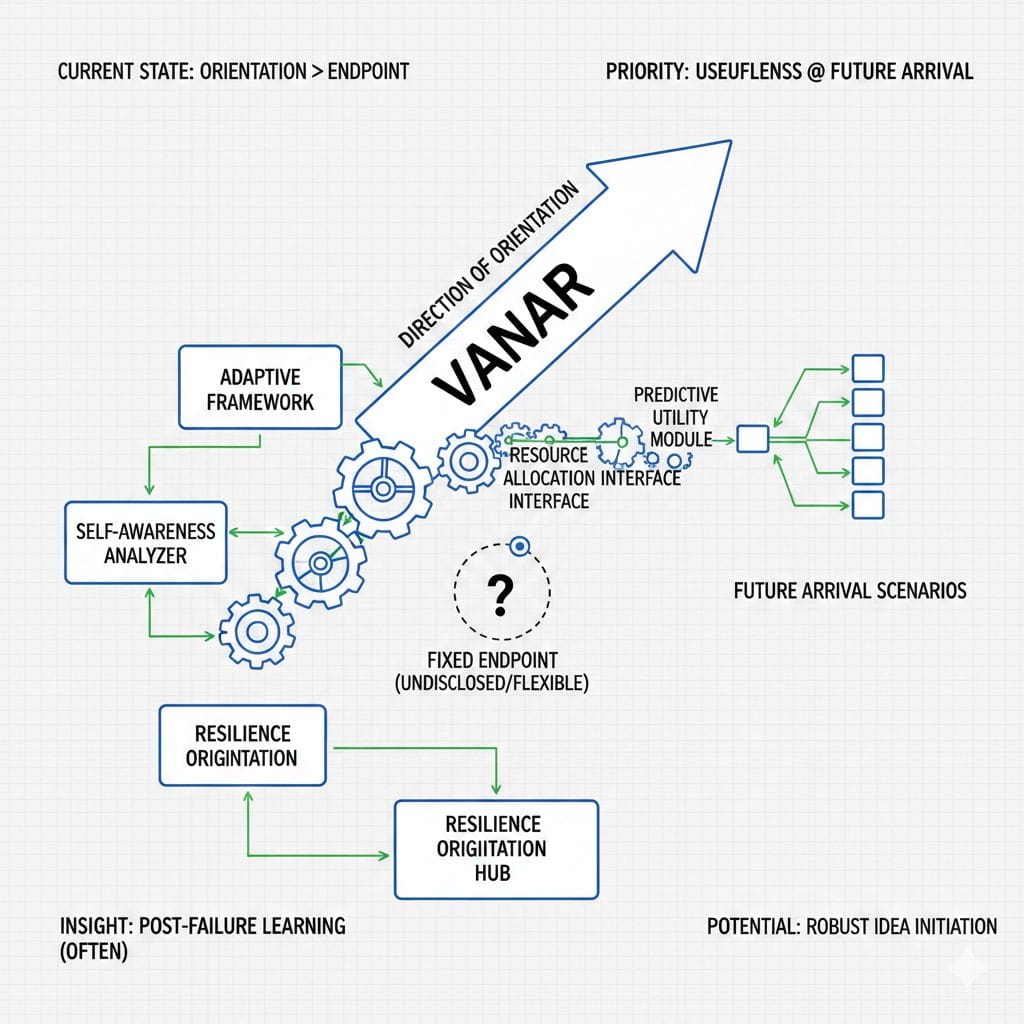
For the moment, Vanar feels oriented toward direction rather than a fixed endpoint. It seems less interested in declaring the future and more focused on being useful when that future arrives. That posture doesn’t ensure success, but it does suggest a level of self-awareness that many projects only develop after failure. And often, that’s where the most resilient ideas begin.