I have been watching the evolution of blockchain infrastructure very closely, and one thing has become clear to me over the past year. Every cycle introduces new narratives, new experiments and new promises, but the real battle is no longer happening in the places most people look. The real shift is happening in stablecoin settlement. This is the layer where actual users move actual value, and it is the layer where most blockchains still fail when pressure increases for even a short time. That is exactly why Plasma caught my attention. It is not a chain built for hype or to join every trend. It is built to behave like stable payment infrastructure that ordinary people, businesses and institutions can rely on.
When you study how crypto users behave in the real world, it becomes obvious that stablecoins are the gateway for mainstream adoption. They are used for salaries, remittances, merchant payments, savings, cross border transfers and on chain commerce. They process more volume than many traditional networks. Yet the infrastructure behind them is still unstable on most chains. Fees spike at random. Congestion appears without warning. Confirmation times are inconsistent. And the experience feels unreliable for anyone who is not deeply technical.
Plasma steps into this gap with a very focused design philosophy. It does not try to be everything at once. It begins with stablecoin settlement as its foundation and builds the entire architecture around reliability and predictability. That is what makes it different from almost everything else in the market today. Most chains try to satisfy a hundred use cases at the same time. Plasma chooses one core use case and builds it well: stablecoin movement at scale.
The first thing that made me look deeper into Plasma was the sub second finality. Payments cannot depend on confirmation times that fluctuate between one second and one minute. People sending money expect immediate certainty. They expect the transaction to settle and become irreversible almost instantly. With PlasmaBFT, Plasma gives exactly that experience. You send a transaction and it becomes final in less than a second. This is not a marketing claim. It is a practical requirement for any chain that wants to support high volume payments.
The next thing that stands out is full EVM compatibility through Reth. Developers do not want to learn new languages or rewrite entire applications. They want compatibility, stability and familiar tooling. Plasma gives them this flexibility while maintaining the performance needed for real payment activity. This makes it easier for builders to experiment with merchant tools, checkout rails, invoicing platforms, fintech integrations or stablecoin powered apps without forcing users to deal with complicated onboarding.
But the most interesting part, at least in my view, is the stablecoin first design. Plasma introduces something that many chains talk about but never fully implement: the ability to pay gas using stablecoins. In traditional networks, you need a native token for gas even if you only want to send stablecoins. This creates friction. It confuses new users. It stops adoption. Plasma removes this obstacle by letting people use stablecoins directly to pay fees.
And then it goes even further. Gasless USDT transfers. This single feature alone is enough to unlock adoption in high volume markets. Imagine sending USDT without needing any extra token in your wallet. No extra balance. No friction. Just simple movement of money that feels normal. This is the kind of design that long term adoption actually depends on.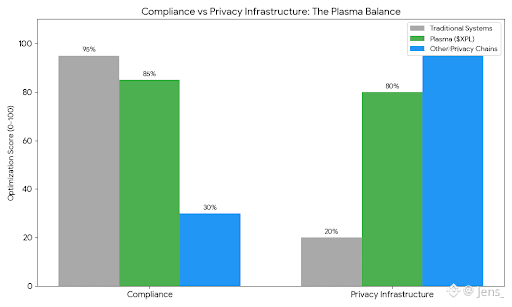
Plasma also brings a very important element of neutrality by anchoring security to Bitcoin. This is not something you see every day. Many networks rely only on their own validators which introduces political risk and sometimes exposes the network to censorship pressures. By anchoring to Bitcoin, Plasma strengthens the security base and makes the settlement layer far more resistant to manipulation. For payments, neutrality is not optional. It is critical for trust.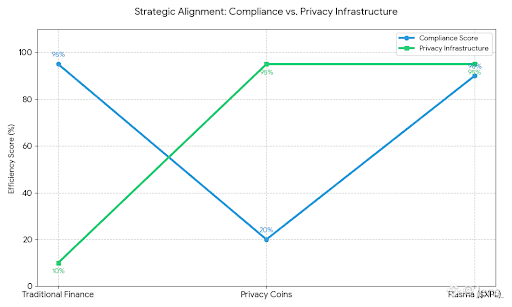
All of this together creates a network that feels engineered for maturity. While other chains advertise speed or try to win narrative wars, Plasma quietly focuses on stability. It feels like infrastructure for the next era of stablecoin usage. It is not trying to change everything about crypto. It is solving one problem correctly: reliable, fast, predictable settlement.
The role of $XPL inside this ecosystem is also grounded. It is not a token built for hype. It represents the economic engine of the network. Validators stake it. Rewards are aligned through it. Security depends on it. And as stablecoin volume grows, the demand for processing power grows with it. This creates a direct connection between the real economic activity flowing through Plasma and the long term relevance of the token.
What makes Plasma even more interesting is where it sits in the global crypto environment. Every chain picks a narrative. Some choose data availability. Some choose gaming. Some choose AI. Some choose RWAs. Plasma chooses payments with a clean and focused vision. Remittances, P2P transfers, merchant settlements, payroll rails and on chain commerce all need a predictable chain. They need speed but also discipline. They need low fees but also stability. They need strong security but also simple onboarding. Plasma gives a combination that is rare in this industry.
Developers are starting to notice. When you remove the friction of gas tokens, unpredictable fees, and slow finality, you allow a new wave of applications to appear. Merchant checkout plugins. Salary distribution tools. Cross border B2B transfers. Subscription billing systems. Mobile wallets for local payments. On chain fintech services. These are not speculative products. They are real world utilities that impact daily life.
The more I study Plasma, the more it feels like a chain that understands the direction of crypto adoption. Not the crypto we imagine on social feeds, but the crypto that people actually use when they send money home, pay for goods or manage savings. The world is moving toward stablecoins. Every payment company knows this. Every bank knows this. Every fintech company knows this. And yet very few chains are prepared for the scale of stablecoin movement that is coming. Plasma is preparing early.
This is why I see Plasma as more than just another blockchain. It is an emerging settlement layer that resembles real infrastructure. Crypto will always have experimental parts, but the economic backbone of this industry will depend on the reliability of networks like Plasma. It feels built for the next decade, not the last cycle.
And as stablecoin adoption spreads to retail users, merchants, enterprises and high adoption markets, the importance of strong settlement layers will only grow. Plasma is positioning itself exactly where the industry is heading. It is steady, predictable, payment focused and built with features that remove unnecessary friction from the user experience.
For me, that is the real reason Plasma stands out. Not because it is loud, but because it is intentional. Not because it promises everything, but because it delivers on the one thing that matters most: dependable stablecoin movement.