
The digital landscape transforms constantly, and somewhere in this shifting terrain lies Vanar Chain, a blockchain project that emerged with an ambitious vision to reshape how we think about virtual economies, gaming platforms, and decentralized infrastructure. Understanding the Vanar project means tracing a path that began with observations about limitations in existing blockchain technology and evolved into a comprehensive ecosystem designed to power the next generation of virtual experiences.
When blockchain technology first captured mainstream attention, it promised to revolutionize digital ownership and economic interaction. Yet as developers and entrepreneurs attempted to build consumer-facing applications, they encountered persistent obstacles. High transaction costs, slow processing speeds, and environmental concerns created barriers that prevented widespread adoption. Gaming companies exploring blockchain integration found themselves constrained by networks that couldn’t handle the transaction volume required for immersive experiences. Content creators discovered that minting digital assets consumed resources that made small-scale operations economically unfeasible. These weren’t minor inconveniences but fundamental limitations that prevented blockchain from fulfilling its promise in the entertainment and gaming sectors.
The founding vision behind Vanar Chain emerged from recognizing these specific pain points. Rather than building yet another general-purpose blockchain, the architects behind this project focused on a particular use case where blockchain technology could deliver transformative value: virtual worlds and digital entertainment. This specialization wasn’t an arbitrary choice. The gaming industry generates hundreds of billions in annual revenue, yet players historically own nothing despite investing time and money. Virtual goods disappear when servers shut down. In-game currencies hold value only within walled gardens controlled by corporations. Creators build content on platforms that can change terms or revoke access without warning.
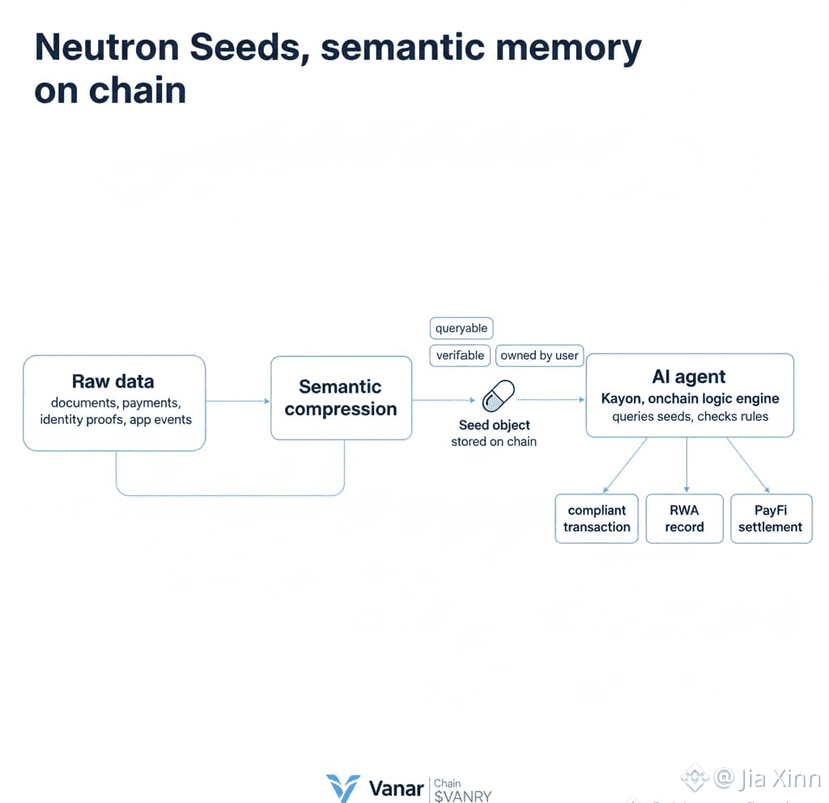
Vanar Chain positioned itself as infrastructure specifically optimized for these challenges. The technical architecture reflects this purpose-driven design. Built as a layer-one blockchain utilizing a carbon-neutral proof-of-stake consensus mechanism, Vanar prioritizes transaction speed and cost efficiency over the security-at-all-costs approach that makes networks like Bitcoin and Ethereum expensive to use for everyday interactions. The system processes thousands of transactions per second with fees measured in fractions of cents, making microtransactions economically viable for the first time in many blockchain applications.
What distinguishes Vanar from other performance-focused chains is the deliberate focus on compatibility and developer experience. The network maintains compatibility with the Ethereum Virtual Machine, meaning developers can deploy smart contracts written in Solidity without learning entirely new programming paradigms. This technical decision acknowledges a practical reality: the blockchain development community has coalesced around Ethereum’s tooling and frameworks. By embracing these standards rather than demanding developers adopt proprietary systems, Vanar lowered barriers to ecosystem growth.
The native token fueling this ecosystem carries the ticker VANRY, and understanding its role requires looking beyond simple payment functionality. Within the Vanar Chain architecture, VANRY serves multiple interconnected purposes. Users spend VANRY to pay transaction fees when interacting with decentralized applications. Validators stake VANRY to secure the network and earn rewards for processing transactions. Developers purchase VANRY to deploy smart contracts and launch projects. Governance participants hold VANRY to vote on protocol upgrades and ecosystem fund allocations. This multi-faceted utility creates organic demand patterns tied directly to network activity rather than speculation alone.
The economic model governing VANRY distribution reflects lessons learned from earlier blockchain projects. Rather than concentrating tokens among insiders, the allocation strategy distributed supply across ecosystem development funds, community incentives, strategic partnerships, and public participation opportunities. This structure aimed to align long-term incentives by ensuring that parties contributing to ecosystem growth maintained meaningful stakes in the project’s success. Vesting schedules for team and advisor allocations stretched across years, mitigating the risk of sudden supply shocks from early participants exiting positions.
As the technical infrastructure took shape, attention turned toward ecosystem development. A blockchain without applications resembles a highway without destinations, and the Vanar team recognized that catalyzing meaningful adoption required more than technical capability. They established partnerships with gaming studios exploring blockchain integration, provided development grants to teams building on the network, and created accelerator programs to support entrepreneurs launching projects within the ecosystem.
One particularly significant partnership connected Vanar Chain with established entertainment properties. By collaborating with IP holders in gaming and digital entertainment, Vanar positioned itself to benefit from existing fan communities rather than building audiences from scratch. These partnerships resulted in branded digital collectibles, blockchain-integrated gaming experiences, and virtual worlds where players could own and trade in-game assets as NFTs. The strategy reflected an understanding that mainstream adoption wouldn’t emerge from crypto-native communities alone but required bridges connecting blockchain infrastructure to existing entertainment ecosystems.
The technical roadmap evolved as the project matured. Early development focused on core blockchain functionality: ensuring network stability, optimizing transaction processing, and establishing validator infrastructure. As these foundational elements stabilized, development priorities shifted toward layer-two scaling solutions, cross-chain interoperability protocols, and specialized tools for game developers. The introduction of sidechains and rollup technologies promised to increase throughput even further, potentially supporting the transaction volumes required for massively multiplayer online experiences.
Developer tools received particular attention because blockchain gaming faced a chicken-and-egg problem. Gamers wouldn’t adopt blockchain-integrated experiences until quality games existed, but developers hesitated to invest resources building on blockchain platforms with uncertain futures. Vanar addressed this by creating SDKs that simplified blockchain integration, offering comprehensive documentation that reduced learning curves, and providing testnet environments where developers could experiment without financial risk. These efforts aimed to transform blockchain integration from a specialized expertise into a straightforward development task.
Marketing and community building presented unique challenges for a project targeting both crypto-native audiences and mainstream gamers. Traditional blockchain projects often cultivate communities through social media engagement, educational content, and speculative interest in token appreciation. Vanar needed these elements but also required strategies that resonated with gamers skeptical of blockchain technology. The messaging emphasized practical benefits rather than technical specifications: true ownership of digital items, play-to-earn mechanics that rewarded skill and time investment, and interoperable assets that retained value across different games and platforms.
The regulatory landscape added complexity to this already challenging environment. As governments worldwide grappled with cryptocurrency regulation, projects building blockchain infrastructure faced uncertainty about compliance requirements. Gaming applications involving digital assets that could be bought, sold, or earned raised questions about securities law, gambling regulation, and consumer protection. Vanar’s approach involved engaging with regulators proactively, implementing know-your-customer procedures where appropriate, and designing tokenomics models that minimized securities classification risks. These efforts reflected awareness that long-term sustainability required regulatory acceptance rather than attempting to operate in gray areas.
Market conditions influenced the project’s trajectory significantly. Vanar Chain launched during a period when cryptocurrency markets experienced extreme volatility. Enthusiasm and pessimism alternated as broader economic conditions, regulatory announcements, and technological developments shifted investor sentiment. VANRY’s price reflected these macro trends alongside project-specific developments. Significant partnerships generated upward momentum. Exchange listings expanded accessibility. Technical milestones demonstrated progress toward roadmap objectives. Yet these positive catalysts existed within a market environment where external factors often overwhelmed project fundamentals in determining short-term price action.
Throughout these market fluctuations, the core development team maintained focus on long-term objectives rather than short-term price performance. This consistency proved important for sustaining community confidence during difficult periods. Regular development updates, transparent communication about challenges encountered, and steady progress toward technical milestones created a narrative of consistent execution that differentiated Vanar from projects that promised revolutionary breakthroughs without delivering tangible results.
The competitive landscape evolved as Vanar developed. Other blockchain projects recognized gaming and virtual worlds as high-potential sectors, leading to numerous specialized gaming chains, metaverse platforms, and NFT marketplaces competing for developer attention and user adoption. This competition created pressure but also validated the thesis that blockchain technology would play a significant role in future entertainment ecosystems. Rather than viewing competitors as threats, Vanar positioned itself within an emerging industry where multiple successful projects could coexist, each serving different niches or offering distinct advantages.
Interoperability became a strategic priority as the multi-chain reality crystallized. Rather than attempting to become the single dominant platform, Vanar invested in cross-chain bridges, wrapped token protocols, and standards that would allow assets and data to flow between different blockchain ecosystems. This approach acknowledged that gamers and developers wouldn’t accept platform lock-in when alternatives existed. A player purchasing a rare weapon as an NFT on Vanar Chain should theoretically use that asset in games built on different blockchains, creating a truly open metaverse rather than fragmented walled gardens.
The social dynamics within the Vanar community reflected broader patterns in cryptocurrency ecosystems. Early adopters formed tight-knit communities united by shared belief in the project’s potential. These community members created educational content, provided technical support to newcomers, and amplified marketing messages through organic social media engagement. As the ecosystem grew, community governance mechanisms gave stakeholders formal input into ecosystem decisions. Proposals for ecosystem fund allocations, technical upgrades, and partnership initiatives went through community voting processes where VANRY holders could influence outcomes.
This participatory governance structure represented more than symbolic inclusion. Decentralization remains an oft-discussed but rarely achieved ideal in blockchain projects. Many networks claiming decentralization maintain concentrated control among founding teams and early investors. Vanar’s gradual transition toward community governance aimed to create genuine stakeholder ownership where the ecosystem’s direction reflected collective preferences rather than centralized authority. Implementation proved challenging because community governance requires balancing efficiency with inclusivity, preventing governance attacks while maintaining accessibility, and ensuring informed decision-making when participants possess varying levels of expertise.
The environmental sustainability aspect distinguished Vanar from proof-of-work blockchains that consume enormous energy resources. The carbon-neutral proof-of-stake mechanism reduced environmental impact dramatically, addressing concerns that had generated significant criticism of earlier blockchain platforms. For gaming companies and entertainment brands considering blockchain integration, environmental responsibility represented a meaningful consideration. Partnerships with brands carrying strong sustainability commitments became feasible because Vanar could demonstrate alignment with environmental values.
Looking toward future developments, the roadmap extends across multiple dimensions. Technical enhancements focus on further scaling solutions, privacy-preserving technologies, and performance optimizations that will support increasingly complex applications. Ecosystem expansion involves onboarding additional gaming studios, entertainment IP holders, and content creators who will build experiences leveraging Vanar’s infrastructure. Token utility evolution explores additional use cases for VANRY within the expanding ecosystem, potentially including governance over specialized sub-DAOs, staking mechanisms that provide passive income to long-term holders, and integration with decentralized finance protocols.
The long-term vision extends beyond gaming into broader virtual world applications. As augmented reality and virtual reality technologies mature, blockchain infrastructure may provide the economic backbone for persistent digital spaces where people work, socialize, create, and play. Vanar positions itself to power these virtual economies, providing the rails for digital ownership, peer-to-peer transactions, and creator monetization in immersive environments. Whether these ambitious visions materialize depends on technological advancement, user adoption patterns, regulatory developments, and execution capabilities.
Challenges remain substantial. Mass adoption requires overcoming user experience friction that makes blockchain applications more complicated than traditional alternatives. Regulatory clarity remains uncertain in many jurisdictions. Competition intensifies as major technology companies explore blockchain integration alongside specialized crypto projects. Technical risks persist around network security, smart contract vulnerabilities, and scaling limitations. Market volatility creates uncertainty that complicates long-term planning. These obstacles aren’t unique to Vanar but represent industry-wide hurdles that every blockchain project must navigate.
Yet the fundamental thesis driving Vanar’s development appears increasingly validated. Digital ownership matters to users who invest time and money in virtual experiences. Creators want independence from platform gatekeepers who can unilaterally change terms. Gamers recognize that their in-game investments should retain value rather than evaporating when publishers shut down servers. Entertainment companies see opportunities to create new revenue streams and deepen fan engagement through blockchain-integrated experiences. These needs exist independently of cryptocurrency market conditions, suggesting that projects delivering genuine utility will find sustainable demand regardless of speculative trading dynamics.
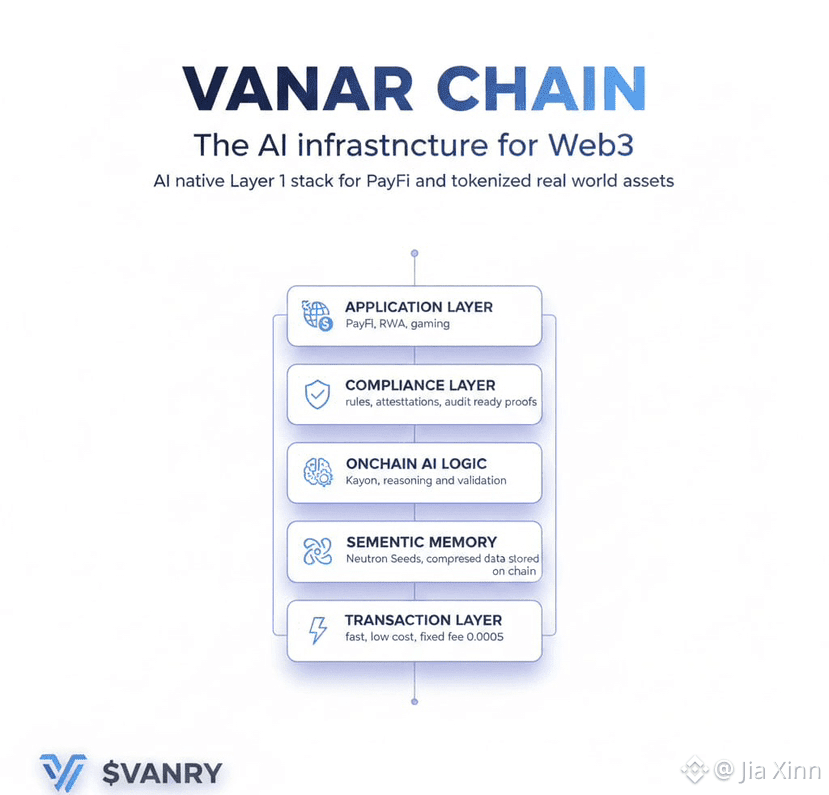
The coming years will reveal whether Vanar Chain fulfills its ambitious vision or becomes another promising project that fell short of transformative impact. Success requires continued technical execution, strategic partnerships that bring meaningful users and developers into the ecosystem, regulatory navigation that maintains compliance without sacrificing functionality, and community building that sustains engagement through inevitable challenges. The infrastructure exists. The partnerships are forming. The technology continues improving. What remains uncertain is whether these pieces will coalesce into something greater than their sum, creating an ecosystem where virtual worlds operate on open blockchain rails rather than corporate servers, where digital ownership becomes as natural as physical possession, and where creators and users share in the value they collectively generate.
As we’re seeing blockchain technology mature from speculative asset to functional infrastructure, projects like Vanar demonstrate how specialization and purpose-driven design can address real problems rather than seeking problems for existing solutions. The journey from initial concept to established ecosystem continues, with each milestone bringing the vision closer to reality while revealing new challenges requiring innovation and adaptation. Whether you’re a gamer curious about true digital ownership, a developer exploring blockchain integration, or an observer watching this technology evolve, Vanar represents one vision of how virtual worlds might function when built on decentralized foundations. The story is still being written, and its final chapters will be determined by technology, markets, users, and the countless decisions made by individuals choosing how to participate in these emerging digital economies.
