
The blockchain industry has relied on the idea of replication for many years now as its primary method for securing information within the network. This approach seemed logical, since there are so many nodes storing the same information, it makes it harder to corrupt the system, easier to validate transactions, and therefore more trustworthy. When looking at very early blockchains, this method worked for how little data was being processed, how small the amounts of actual transactions were, and how cheap it was for network members to run these nodes. As more and more real world applications started using blockchain and financial infrastructures, we now see the hidden limits of this method.
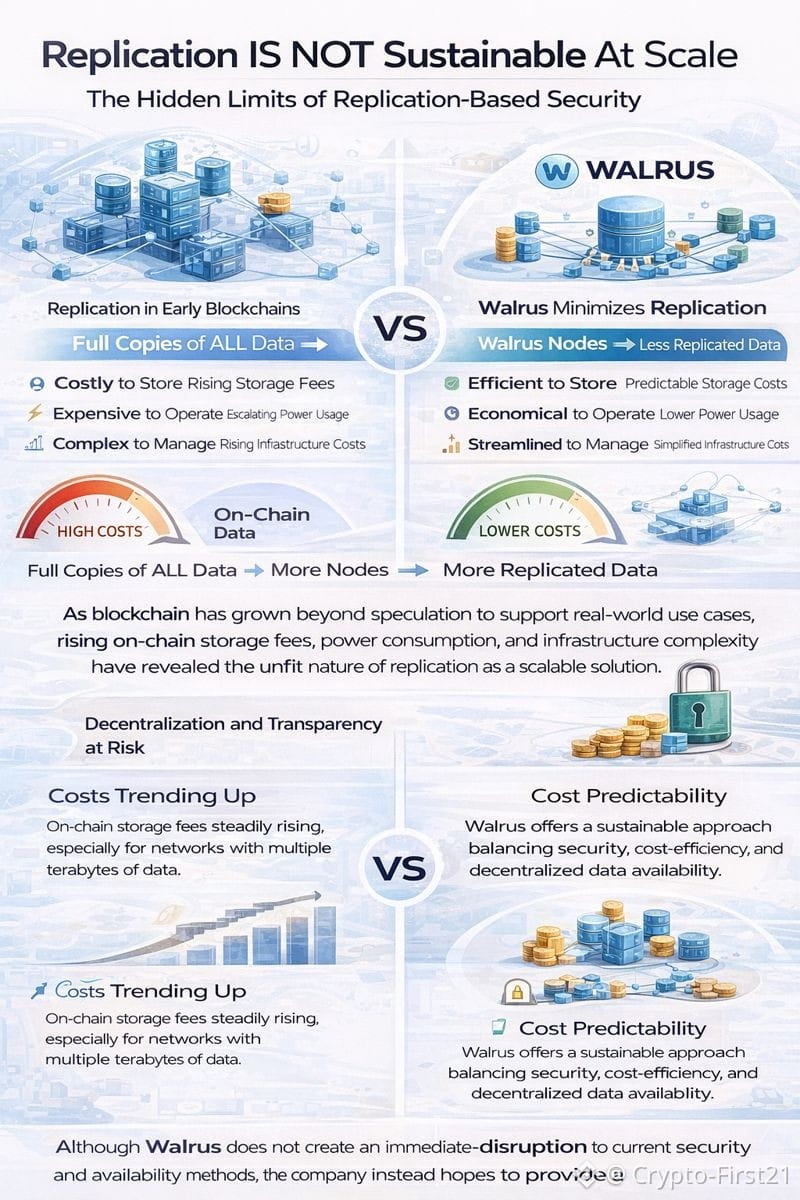
With replication based security, when a brand new piece of information is created on the network, not only does it increase the overall number of pieces of replicated information on the system, but it also will increase the amount of replicated information. Although this improves availability of information, there are also the negative aspects of replication, such as rising storage costs, rising power costs, and rising operational complexity. It doesn't take long for these three elements to produce a system that becomes very costly to operate and impossible to scale effectively. Current market data indicates that the trend over the last two years for on chain storage fees, as well as for all infrastructure, has been constantly increasing, especially in cases of networks that are operating with multiple terabytes of data. As the costs of operating a network increase, many reputable projects are quietly being pushed away from using on chain data for the sake of decentralisation and transparency.
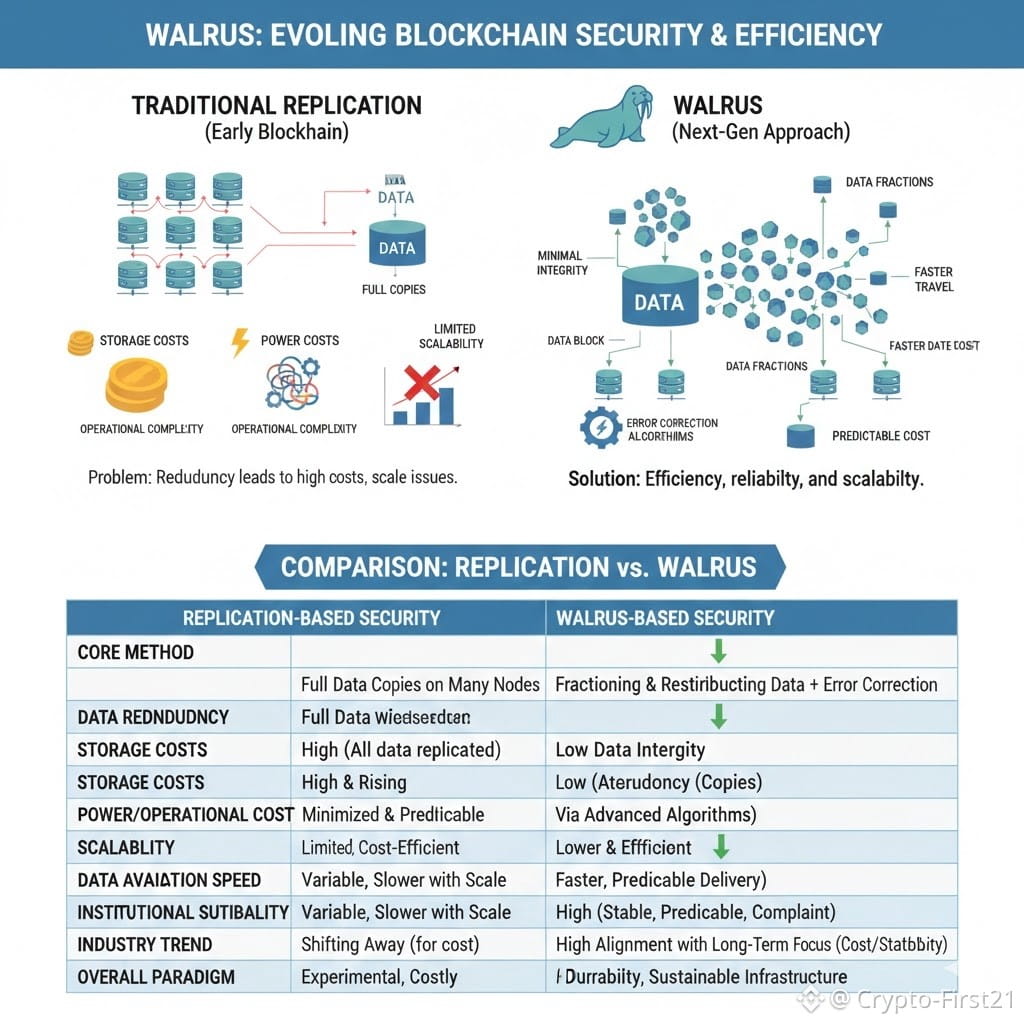
Although Walrus does not create an immediate disruption to current security and availability methods, the company instead hopes to provide a new thought process on how both technologies could combine hand in hand into one cohesive product. Walrus combines cutting edge error correction algorithms with a method of fractioning every piece of data and then redistributing these smaller pieces with a fraction of all the available pieces needed to restore the original. By doing so, Walrus minimises data redundancy yet provides the reliability that all modern computing requires. To put it another way, Walrus provides a way to maintain a high level of data integrity while simultaneously minimising the overall mass of a network by optimising the number of pieces of data that must be sent over the network. Furthermore, as a result of Walrus methodology, the data within it are able to travel much faster, have a predictable delivery time and allow for the lowest reasonable price of service.
From an Institutional standpoint, the changes that Walrus represents represent significant value. Regulated Finance does not only concern themselves with the fact a system is functional, additionally, that system is functionally effective over an extended period of time in a stable and predictable manner. Replication systems provide an obstacle when attempting to build a comprehensive picture with cost structure and infrastructural design within a highly regulated environment, therefore there is a high degree of uncertainty as to how the replication of a product or service will influence its integration into a compliance based environment. In contrast, Walrus promotes a much more tranquil solution with better levels of efficiency supporting levels of accountability. Additionally, through the technical design of Walrus, the reality of how that technical design supports and incorporates recognisable operational constraints are reflected. Therefore, we often see disjointedness between systems that are purely experimental in the same way we see represented in traditional replicative systems.
In addition to the normalization of decentralised infrastructure, we see a larger trend occurring within the industry. Where previously much of the focus of the industry was on supporting maximum performance, we are beginning to see a shift in that focus toward attributes like durability, consistency and long term accumulation of resources, rather than simply as many transactions as possible. We have started to see an evolution away from having multiple available versions of data and from the standardised approach of trying to replicate the same transaction multiple times.
On a personal level, I find this shift to be very encouraging and supportive of what I have always believed. I have always thought that the most important thing we can do for ourselves and for the future of the blockchain is design an infrastructure that can be built and accepted as being reliable over time. If we want to make decentralisation part of every day life for people, it is concurrent with that belief, it will happen some day through a consistent, non disruptive way of providing reliability for decentralized systems.
Walrus marks out growing maturity of understanding through their perspective on security, Walrus does not necessarily oppose security. However instead, Walrus questions how we achieve that security and by which means, at the same time Walrus is opening a doorway for us to create lighter, stauncher and more realistic systems pertaining to long term use through its thoughts on approaching replication. Thus, at this point, Blockchain technology is becoming far less of a testing ground, and far more of an actual functioning Infrastructure.

