

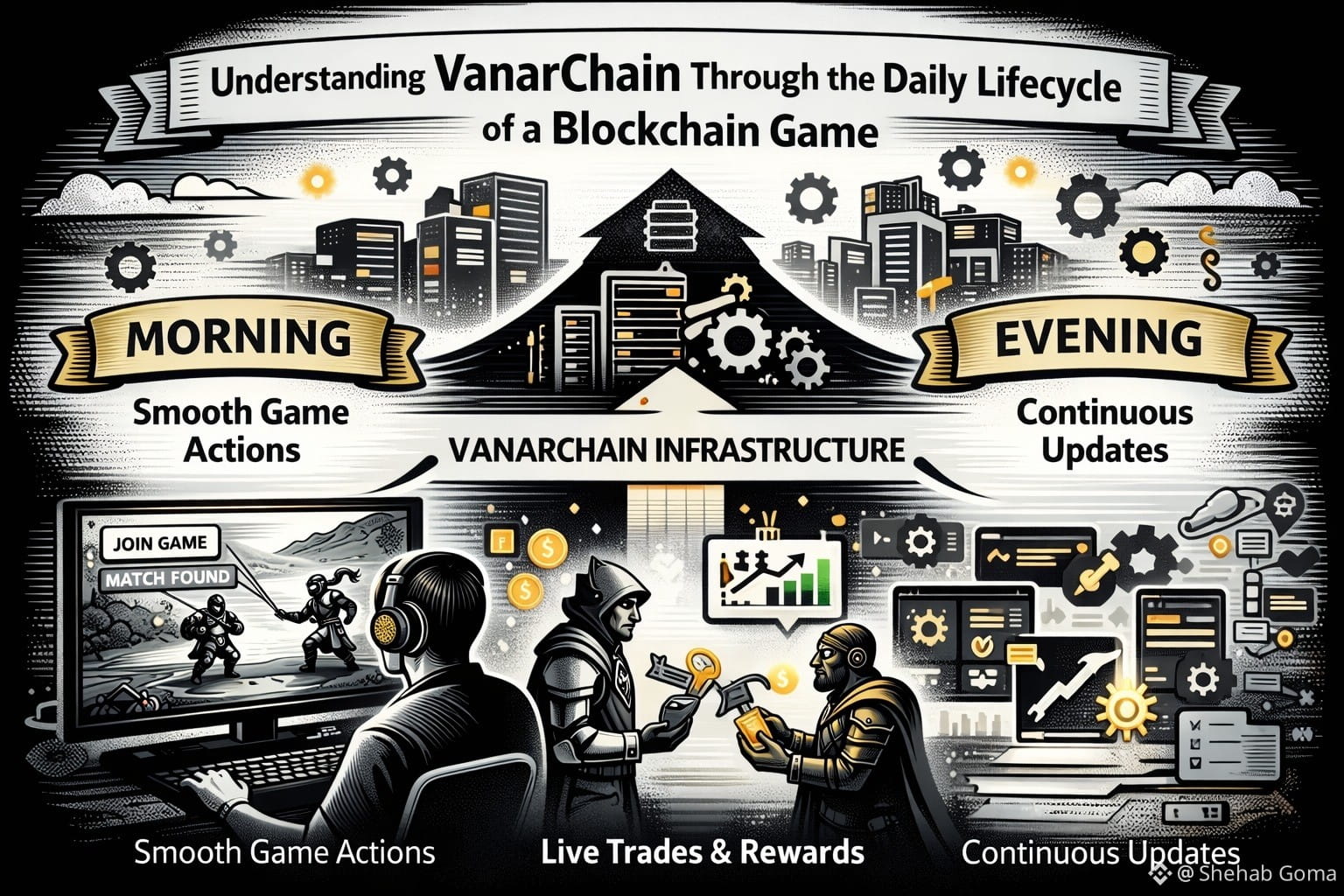
One practical way to understand VanarChain is by observing how a blockchain game functions from morning to night. When players first log in the expectation is simple: the game should respond instantly. Movements matchmaking and live interactions need to feel smooth similar to traditional online games. At this stage the blockchain’s role is to support activity without drawing attention to itself.
As the day goes on the game becomes more dynamic. Players earn items exchange assets and trigger changes in the game world. These actions create a steady flow of data that must be processed alongside gameplay. The challenge is maintaining consistency without slowing the experience. This is where infrastructure choices directly affect how natural the game feels to its users.
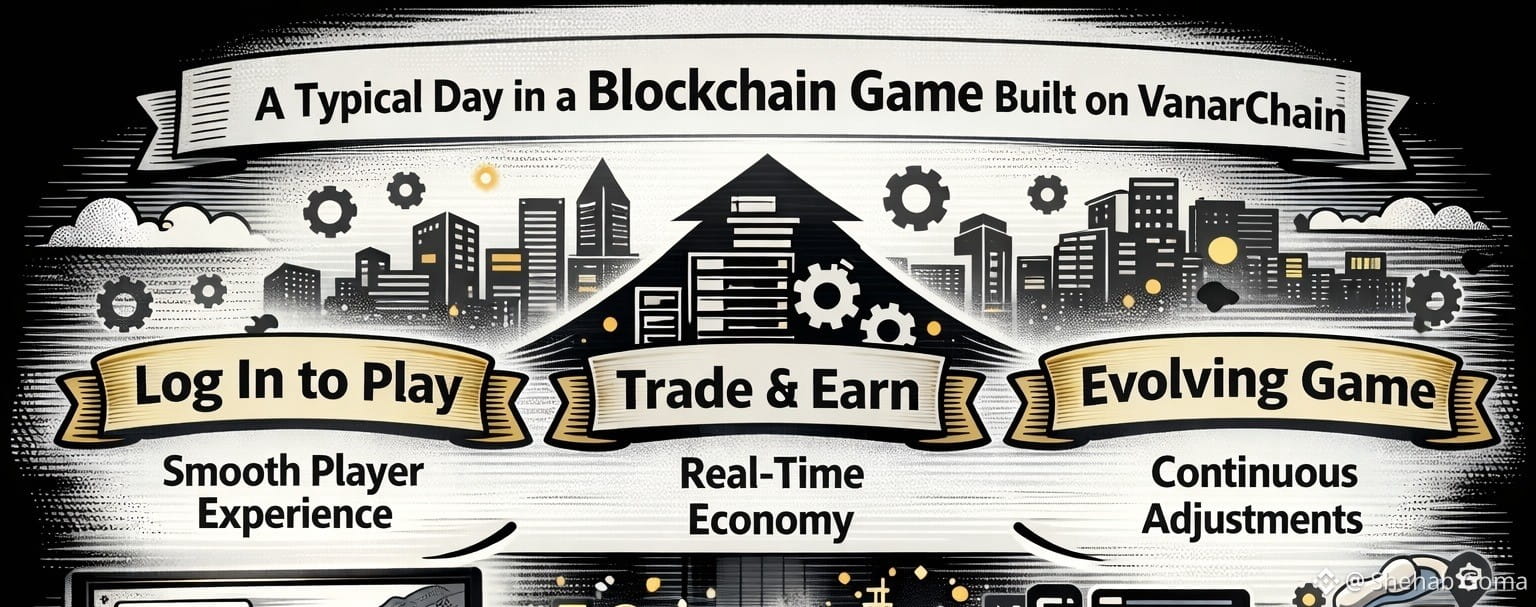
Toward the end of the day developers evaluate player behavior, adjust game mechanics, and prepare updates while the game remains active. A well-designed system allows these changes to happen with minimal disruption. Looking at VanarChain through this daily lifecycle shows that effective blockchain infrastructure is less about visibility and more about reliability—quietly supporting immersive and continuous digital experiences.
