

In 2025–2026, the Walrus Protocol has transitioned from early development to a live, production-ready decentralized storage layer that addresses one of Web3’s most persistent limitations: scalable, verifiable, high-availability data storage. Built on the high-throughput Sui blockchain, Walrus is redefining how large binary data — from multimedia files and game assets to AI datasets — is stored and retrieved across decentralized networks, bringing cloud-like performance and blockchain-grade security together.
The project’s mainnet launch earlier in this cycle marked a key inflection point, moving Walrus from testnet experiments into a live ecosystem where real applications can reliably store and manage data in a decentralized, incentive-aligned environment. This launch was backed by a $140 million funding round led by Standard Crypto, with participation from a16z, Franklin Templeton Digital Assets, Electric Capital and others, signaling strong institutional conviction in decentralized data infrastructure’s long-term importance.
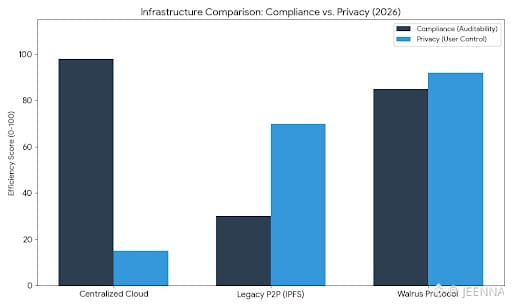
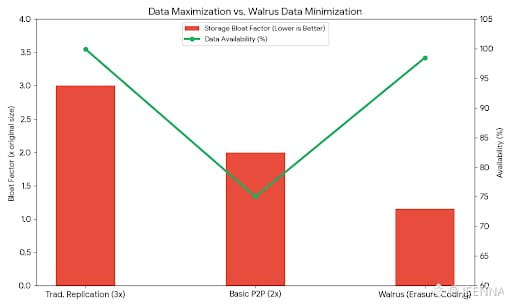
What sets Walrus apart from legacy decentralized storage protocols is its engineering foundation and integration with Sui’s architecture. Rather than simple replication or pinning services, Walrus uses advanced erasure coding and data distribution mechanisms to store fragments of files across nodes while maintaining availability, fault-tolerance, and verifiability. This ensures stored data remains accessible even if some nodes go offline, while the Sui blockchain coordinates storage proofs, indexing, and payments — making Walrus data permanence economically sustainable and cryptographically trustworthy.
A critical recent addition to the protocol’s capabilities is Seal, a native access control and encryption layer that enables fine-grained privacy and programmable data permissions on decentralized storage. With Seal, developers can define who can access specific content and under what conditions, enabling use cases previously impossible in transparent blockchain environments. This unlocks business models like paid access to AI training datasets, gated media content, and enterprise-grade document control, expanding Walrus’s relevance well beyond simple file hosting.
Walrus’s integration remains tightly aligned with the broader Sui ecosystem, benefiting from the chain’s throughput and modular design while also enhancing Sui’s appeal to data-intensive applications. Developers building Web3 games, media platforms, prediction markets, or autonomous AI agents are increasingly choosing Walrus as the data layer because it combines speed, reliability, and provable storage guarantees — traits that older storage solutions like IPFS or traditional cloud services struggle to match.
From a token utility perspective, the native WAL token is central to the protocol’s economics. WAL functions as the payment unit for storage services, allowing users to prepay for storage at stable, fiat-equivalent pricing while incentivizing node operators and stakers to maintain network reliability. The token’s distribution incorporates subsidies designed to support adoption during early phases, and its role in payments and governance positions WAL as both an economic and infrastructure primitive within the Web3 data stack.
On the ecosystem side, Walrus’s utility is increasingly visible: major content platforms and projects are adopting Walrus for decentralized media storage, while integrations with AI agent platforms and analytics tools highlight its suitability for next-generation applications. Partnerships and performance upgrades — including millisecond response times that rival centralized cloud retrieval — are helping Walrus close the gap between decentralized storage ideals and real-world expectations.
The protocol’s emergence also dovetails with broader market movements. Institutional interest in infrastructure — exemplified by products like Grayscale’s Walrus Trust — reflects a shift in capital toward foundational layers that enable Web3’s scaling beyond simple token transfers. Data infrastructure, once an afterthought, is increasingly seen as essential to blockchain adoption in enterprise, gaming, AI, and regulated industries.
Looking forward, the next chapter for Walrus will hinge on expanding real usage metrics — such as total stored data volume, decentralized app adoption, and economic throughput on the network. As Web3 evolves toward more data-rich applications, Walrus’s role could parallel how cloud storage became indispensable for Web2 — but with the added benefits of decentralization, censorship resistance, and on-chain verifiability.
In summary, Walrus Protocol is no longer just a storage experiment — it’s actively shaping the decentralized data layer that many Web3 and AI applications depend on. Its combination of technical innovation, institutional support, and ecosystem integration positions it as a foundational pillar in the emerging decentralized data economy.