

Blockchain systems are often judged by immediate performance metrics such as transaction speed, throughput or cost. While these indicators matter they overlook a critical factor: how a system behaves over time. For blockchain networks intended to support real-world financial activity time is not a background variable it directly shapes reliability and trust.
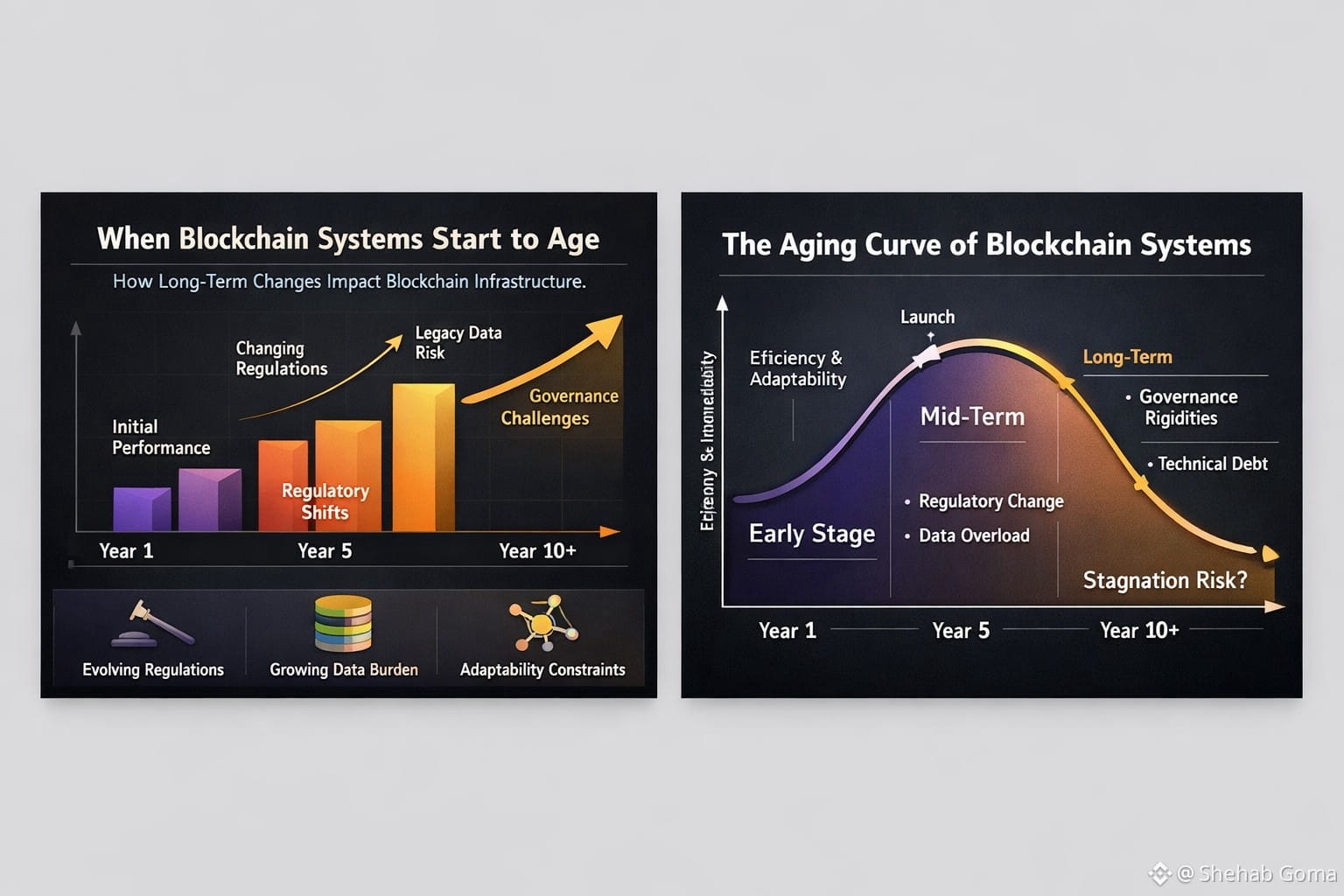
As blockchains mature the data they generate does not lose relevance. Transactions smart contract logic and system states remain accessible long after their original context has changed. What appears neutral or low-risk at launch can carry different implications years later when viewed through new analytical tools regulatory expectations or market structures. This long-term visibility makes time a central design consideration.
Time also influences how rules are interpreted. Smart contracts may execute deterministic logic but the environments around them evolve. Legal standards shift compliance requirements change and user behavior adapts. Blockchain initiatives focused on long-term financial infrastructure such as the Dusk Foundation recognize that systems must remain functional and interpretable as external conditions change not just at the moment of deployment.
From an infrastructure perspective prolonged use creates cumulative effects. Early governance decisions become lasting precedents small inefficiencies compound and design flexibility gradually narrows. This is why projects like the Dusk Foundation emphasize durability and adaptability ensuring that blockchain systems can sustain long operational lifecycles without undermining trust.

Viewing time as a core design variable shifts blockchain thinking from short-term optimization to long-term responsibility. Networks designed with temporal awareness are better positioned to remain reliable accountable and relevant as they age an essential requirement for blockchain systems aiming for meaningful lasting adoption.