
There is something uneasy about letting software decide who can move money and who must stay visible while doing it, because once that job is given to code, there is no face to explain a mistake and no hand to slow things down.
For a long time, finance has depended on people, offices, papers, and phone calls. When something went wrong, there was at least a person to speak to. Public blockchains changed this feeling. They replaced people with automatic rules and public records that never forget. This brought speed and efficiency, but it also created a strange world where everyone can see everything, even when that visibility causes harm. Not all money is meant to be watched. Not all ownership should become a public story.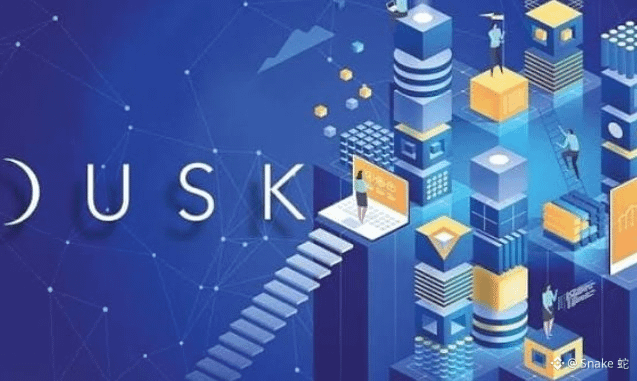
Businesses do not want competitors studying their financial moves. Investors do not want strangers tracking what they hold. Regulators want control and order, but they do not want markets to turn into chaos or public surveillance. Dusk was built around this quiet conflict. It does not believe that everything should be hidden, and it does not believe that everything should be open. It tries to create a middle space where information is shared only when there is a real reason.
The system works in a calm and practical way. Transactions can be checked to make sure they follow the rules, without showing private details to the whole world. Ownership can change hands without announcing itself to strangers. Conditions can be attached to assets, such as who is allowed to hold them or when they can be sold, and these conditions are enforced automatically. This makes the network feel less like a noisy market and more like a well run office, where records exist but doors are not made of glass.
This matters most for security tokens, which represent regulated assets like shares or bonds. These are serious tools tied to real laws and long term responsibilities. Dusk treats them that way. It tries to build a digital place where legal rules are part of how the system behaves, not something added later through paperwork and promises.
Instead of trusting people to always follow the rules, the system is designed so breaking them becomes difficult. If a transfer is not allowed, it simply does not happen. If reporting is required, the right authority can see the needed information without everyone else seeing it too. In daily use, this feels steady and predictable. It is not exciting, but it is stable, and stability is often what real finance needs most.
The technology behind this is complex, but the idea is simple. Protect private details while keeping order. Allow institutions to check what they must, without exposing everything to the public. Keep records that can be trusted, even when no single person is in charge. The network tries to behave like a quiet, reliable system that does its job without asking for attention.
Inside this structure, the token DUSK is used to pay for activity and help the network run. It plays a small but necessary role, like electricity in a building. People notice it only when it is missing.
Still, there are honest limits. Laws change often, and different countries follow different rules. Software does not change as easily. A system built for regulation today may struggle with new rules tomorrow. There is also the question of who decides how these rules are written into code. If only a few people control those decisions, then power can slowly gather in places that are hard to see. Privacy can protect users, but it can also hide problems until they become serious.
There is also human behavior to consider. People act out of fear, greed, and confusion. They look for shortcuts. No system can fully control how it will be used once real money is involved. Dusk can reduce disorder, but it cannot remove it.
In the end, this project does not promise a perfect future. It simply suggests that money can move quietly, that rules can exist without shouting, and that trust does not always need to be loud to be real. Sometimes I wonder if we are building these systems because we believe in them, or because we are slowly admitting that we do not fully trust ourselves to carry this responsibility alone anymore.