

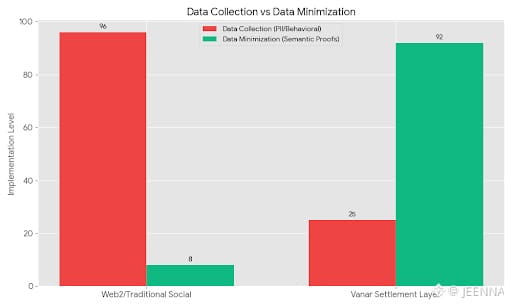
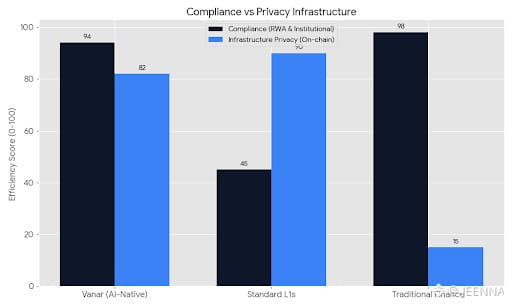
entity["company","Vanar","ai-native blockchain"] is not positioning itself as another Layer-1 chasing speed metrics or short-term narratives. Its trajectory over recent updates and announcements points to something more deliberate: building infrastructure that can support gaming, AI-driven applications, payments, and real-world digital assets without forcing users or developers to think about blockchain mechanics at all. Vanar’s core differentiation lies in its AI-native design philosophy. Instead of treating artificial intelligence as an external service or bolt-on feature, the network embeds intelligence directly into its architecture, enabling semantic data handling, on-chain reasoning, and autonomous application logic. This design choice reflects a belief that the next phase of Web3 will not be defined by manual user interactions, but by intelligent systems that can act, adapt, and transact in real time.
Recent developments reinforce this direction. Vanar has increasingly framed itself as an “invisible backend” for builders, particularly in gaming and immersive digital environments. The idea is straightforward but ambitious: players and users should be able to own assets, move value, and interact with digital economies without being exposed to wallets, gas fees, or complex transaction flows. Blockchain should disappear into the background, doing its job quietly. This approach addresses one of the longest-standing barriers to Web3 adoption — friction. By focusing on low-latency execution, predictable costs, and abstracted user experiences, Vanar is aligning its infrastructure with how mainstream users already expect digital platforms to work.
Another notable signal is Vanar’s growing emphasis on real-world relevance and institutional dialogue. Participation in global finance forums and discussions around agentic payments and intelligent financial systems suggest that the project is not limiting its ambitions to crypto-native use cases. Instead, it is exploring how AI-driven ledgers can support programmable payments, automated settlement flows, and tokenized representations of real-world assets. This is a subtle but important shift. It places Vanar in a category of infrastructure projects that are preparing for convergence between traditional finance, AI systems, and decentralized networks, rather than competing purely within the existing crypto ecosystem.
From a technical perspective, Vanar’s focus on semantic data and reasoning layers hints at a future where decentralized applications can move beyond simple state changes. Applications built on such infrastructure can potentially understand context, store meaningful information efficiently, and make autonomous decisions based on predefined rules or real-time inputs. For developers, this reduces reliance on fragmented off-chain systems and makes it easier to design applications that behave intelligently by default. For users, it translates into smoother experiences — applications that respond instantly, adapt to behavior, and operate continuously without constant manual input.
What stands out in Vanar’s recent communication is restraint. There is less emphasis on aggressive marketing cycles and more on explaining architectural choices and long-term vision. In a market saturated with bold claims and rapid pivots, this slower, infrastructure-first narrative suggests confidence in execution rather than urgency for attention. It also reflects an understanding that foundational platforms are judged over years, not weeks. Adoption for this kind of infrastructure will not arrive overnight; it will compound as developers build, tools mature, and real-world integrations come online.
Of course, challenges remain. AI-native blockchains are still an emerging concept, and translating architectural advantages into measurable adoption is not trivial. Developer traction, real application deployment, and sustained usage will be the metrics that ultimately validate Vanar’s approach. Market volatility and shifting narratives can also obscure long-term progress. But the consistency of Vanar’s direction — intelligent infrastructure, invisible user experience, and real-world applicability — suggests a project focused on relevance rather than reaction.
In essence, Vanar is making a calculated bet: that the future of Web3 will belong to platforms that feel less like blockchains and more like modern digital infrastructure, capable of supporting autonomous systems, immersive environments, and seamless financial interactions. If that future materializes, the most important networks may be the ones users barely notice — and Vanar appears to be building precisely for that outcome.