

The moment a player presses a button they expect the game world to respond instantly. This expectation defines modern gaming yet many blockchain systems still rely on timing models built for financial transactions rather than interactive experiences. Blocks confirmations and waiting cycles may work for transfers but games operate on a much faster rhythm.
In live gaming environments actions are continuous. Movement combat collaboration and real-time decision-making generate constant state changes. Even small delays can interrupt flow and alter outcomes. When block-based timing introduces latency immersion breaks especially in multiplayer games where fairness and synchronization matter. This gap highlights why gaming infrastructure must be designed differently.
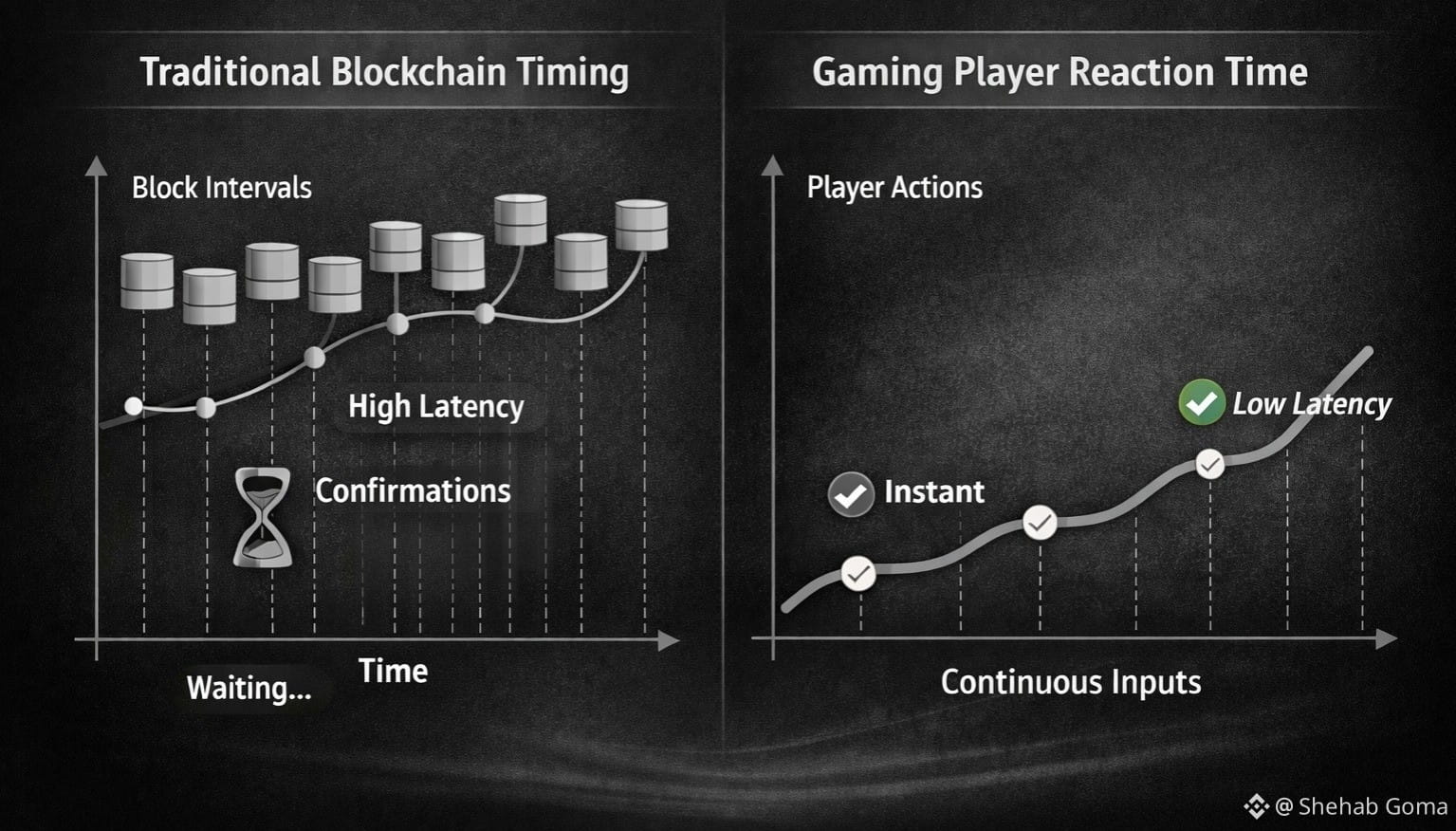
Thinking in milliseconds reshapes blockchain priorities. Instead of focusing on how quickly blocks are produced the emphasis shifts to how fast state changes are processed and reflected across the game world. Responsiveness and consistency become more important than finality measured in block intervals. Infrastructure built with this mindset such as VanarChain treats real-time interaction as a baseline requirement rather than an optimization.
Player perception also plays a critical role. Gamers don’t analyze confirmation logic they judge experience. If actions feel delayed the technology behind the game becomes a distraction. Gaming-focused blockchains aim to make infrastructure invisible allowing players to remain fully immersed. This design philosophy is central to platforms like VanarChain which prioritize uninterrupted gameplay over visible on-chain mechanics.
This approach aligns closely with the goals of the VanarChain which emphasizes performance-driven infrastructure for interactive digital worlds. By designing around millisecond-level responsiveness VanarChain addresses the mismatch between traditional blockchain timing and modern gaming expectations.
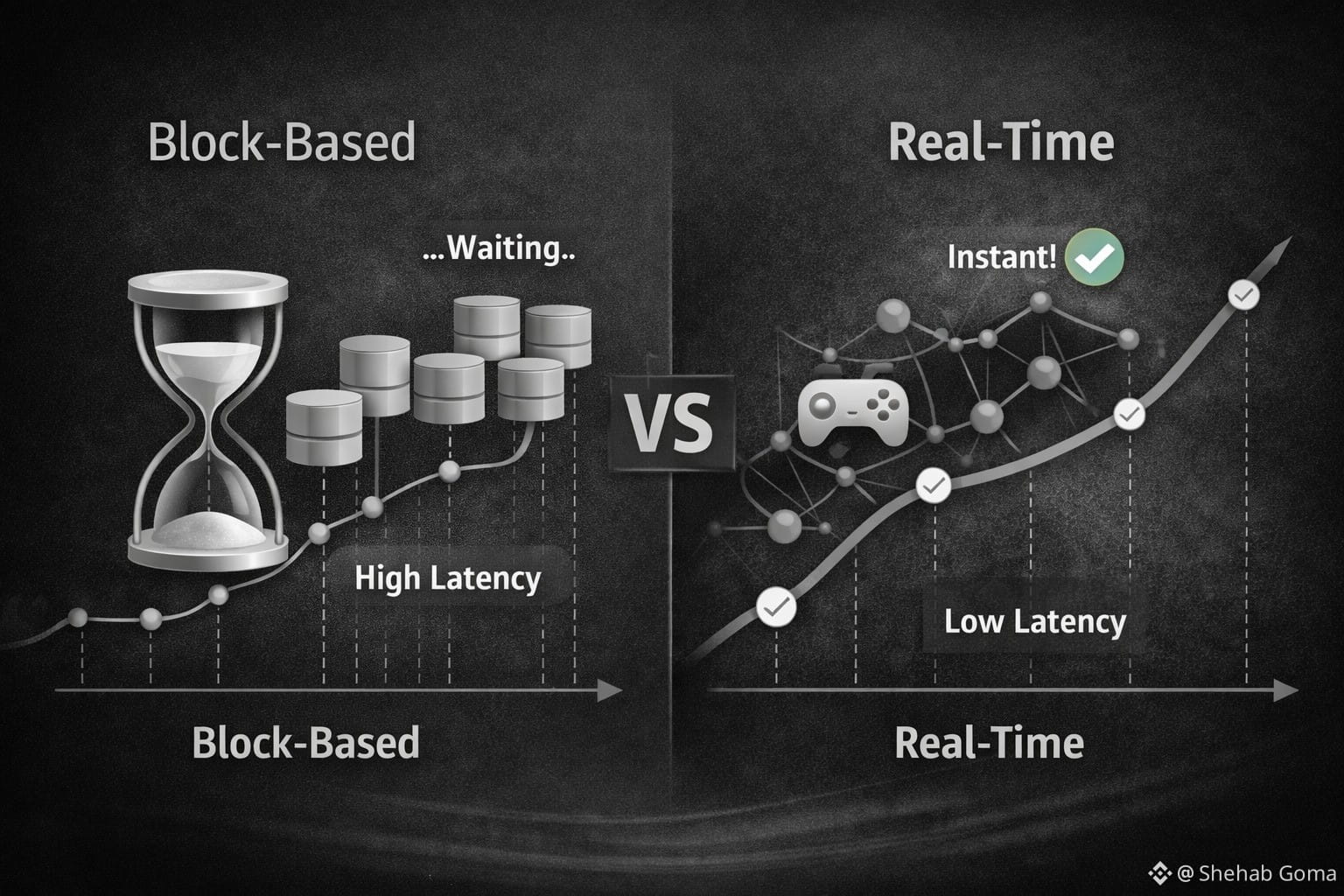
As Web3 gaming continues to evolve success will depend on how well blockchain systems adapt to human reaction speed. Thinking in milliseconds rather than blocks is not a technical preference—it is a practical necessity for building scalable immersive and player-first gaming experiences.
