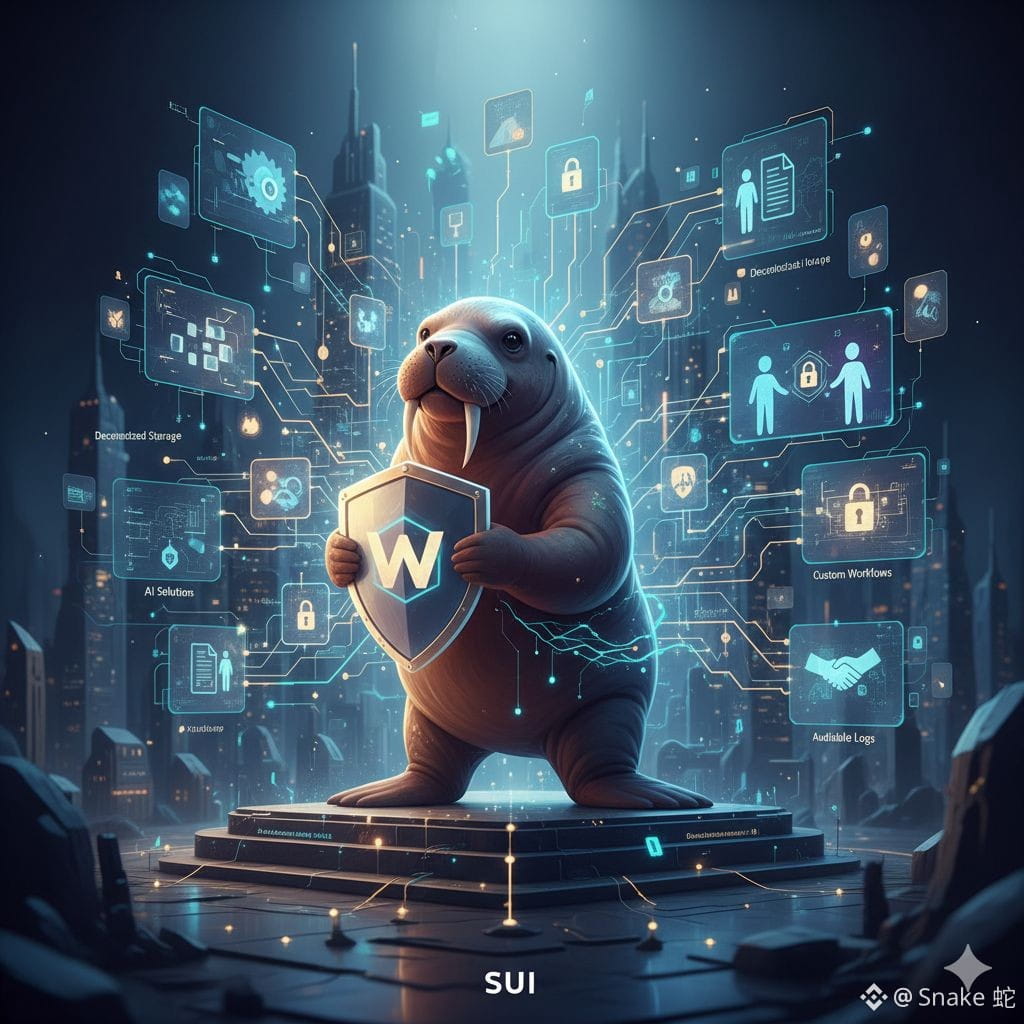
It can feel uneasy to let software hold our personal information and digital identity When the things that prove who we are and what we own are just lines of code even small mistakes can cause big problems The worry is not only about technology it is about trust and responsibility Code does what it is told but it cannot understand forgive or think like a person As we rely more on digital systems we have to ask who is responsible when something goes wrong Walrus works in this space quietly not as a flashy project but as a tool trying to make this risk easier to manage and understand
Walrus was made to solve two connected problems storing information safely in a decentralized way and checking identities without relying on a single authority Traditional cloud storage keeps data in a few central places This can be fast but it has risks Mistakes may go unnoticed privacy can be broken and there is little recourse if something is lost or stolen Walrus spreads the responsibility across many nodes each following the same rules Mistakes may still happen but they are visible and can be fixed according to the networks rules
In daily use Walrus works more like a conversation than a strict machine When you store a file it is split into pieces scrambled and shared across the network Anyone in the system can check that each piece is safe and unchanged Identity works similarly with proof linked to secure credentials so people can verify information without seeing private details The WAL token is part of the system but quietly It helps keep the network honest and makes sure participants follow the rules It is not for speculation or profit it is just a small part of how the network runs smoothly
The system is designed to balance flexibility with reliability It encourages everyone to follow the rules but allows some room for small errors This creates shared responsibility the network can spot problems and help fix them without needing a central authority Every file stored or identity verified is logged so it can be checked by those with permission but no one person has control over everything This design builds trust in a way that is visible and understandable People can reason about what is happening because the rules are clear and cannot be secretly changed
Walrus is not perfect There are questions about how it will handle large growth how people will behave in unexpected ways and how privacy and accountability will work in tricky situations Some risks are technical like when a node fails or data slows down Some are about human judgment like when the systems rules do not match what people expect These problems are not signs of failure They show that designing systems to match human needs is a long process The network is strong in many ways but there is always a small part that cannot be predicted
Using Walrus makes people think about responsibility and trust Everyone in the network has a role and sees what is happening Mistakes are visible and correctable and the system never pretends to replace human judgment It works alongside people guiding them and giving them tools to manage digital identity and data safely Trust is part of the network but it is never complete People still need to think check and make decisions
What is most striking about a system like this is the space it leaves for reflection Can we really trust a process that is partly automatic and partly human Even though Walrus encourages honesty and transparency it cannot cover every possible mistake or decision It does its best to reduce errors and make them fixable but it cannot see every unexpected event The system teaches that trust is not something we hand over fully It is something we negotiate and maintain Even the best designed tools are partners to human judgment not replacements for it