

Stablecoins were created to make digital money practical. They remove volatility, keep value familiar, and make it possible to move dollars, euros, or other fiat-backed assets on public blockchains. But for stablecoins to truly work as everyday money, the underlying payment rail needs to be simple, reliable, and built for real-world use. This is the problem Plasma is designed to solve.
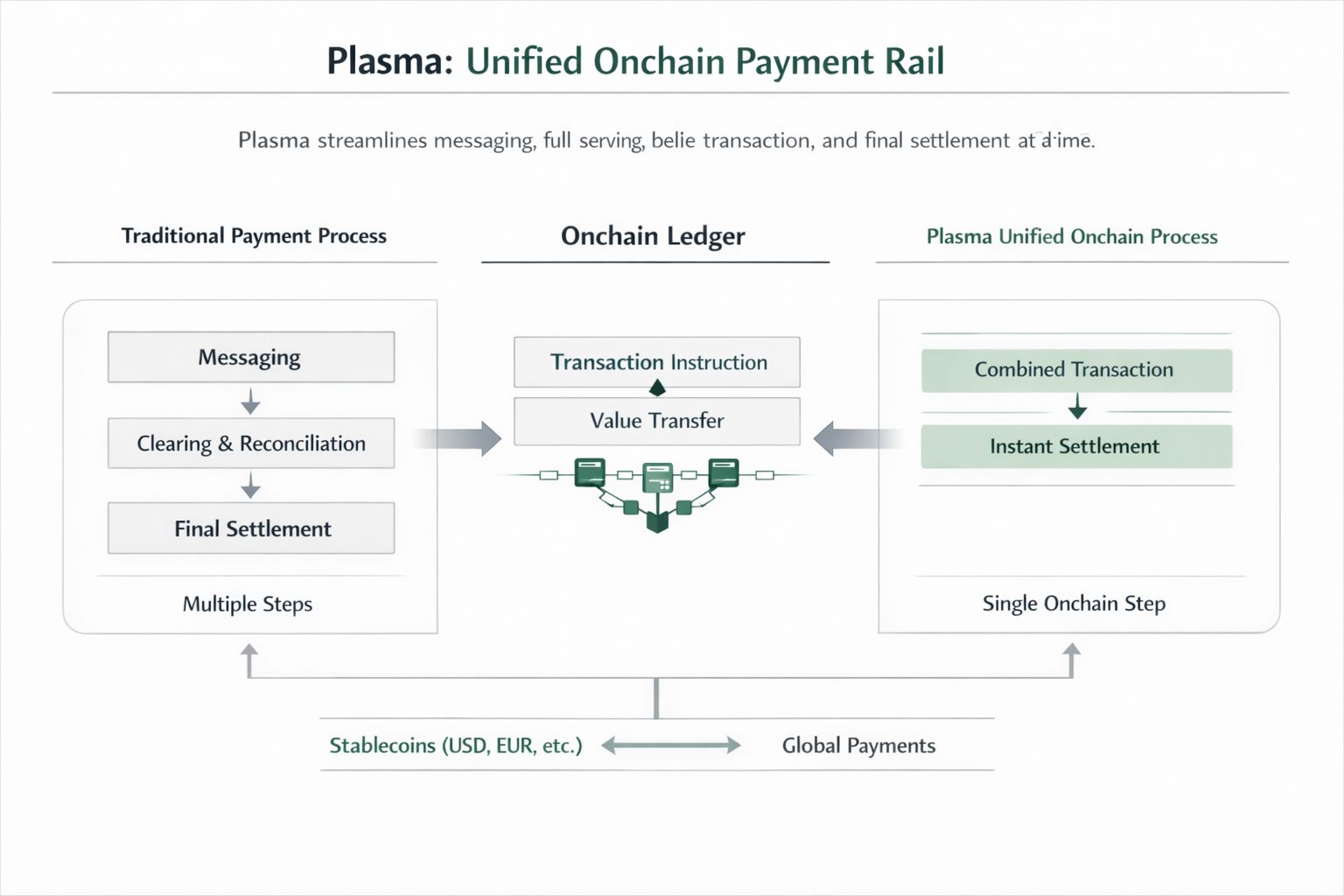
Plasma is built around a clear idea: payments should move as one complete action, not as a chain of fragmented steps. In traditional systems, sending money usually involves multiple layers—messages, clearing, reconciliation, and settlement—all happening separately and often slowly. Plasma approaches this differently by treating payment instructions and value transfer as a single onchain event. When a transaction happens, the message and the money move together, and settlement is final on the shared ledger.
This unified rail matters because it reduces uncertainty. Instead of waiting hours or days to confirm whether funds have arrived, users can see balances update directly onchain. For businesses, this means fewer reconciliation headaches. For individuals, it means clearer expectations and fewer delays. Plasma is not trying to replace every financial system, but it offers a cleaner starting point for stablecoin payments where speed, clarity, and predictability matter.
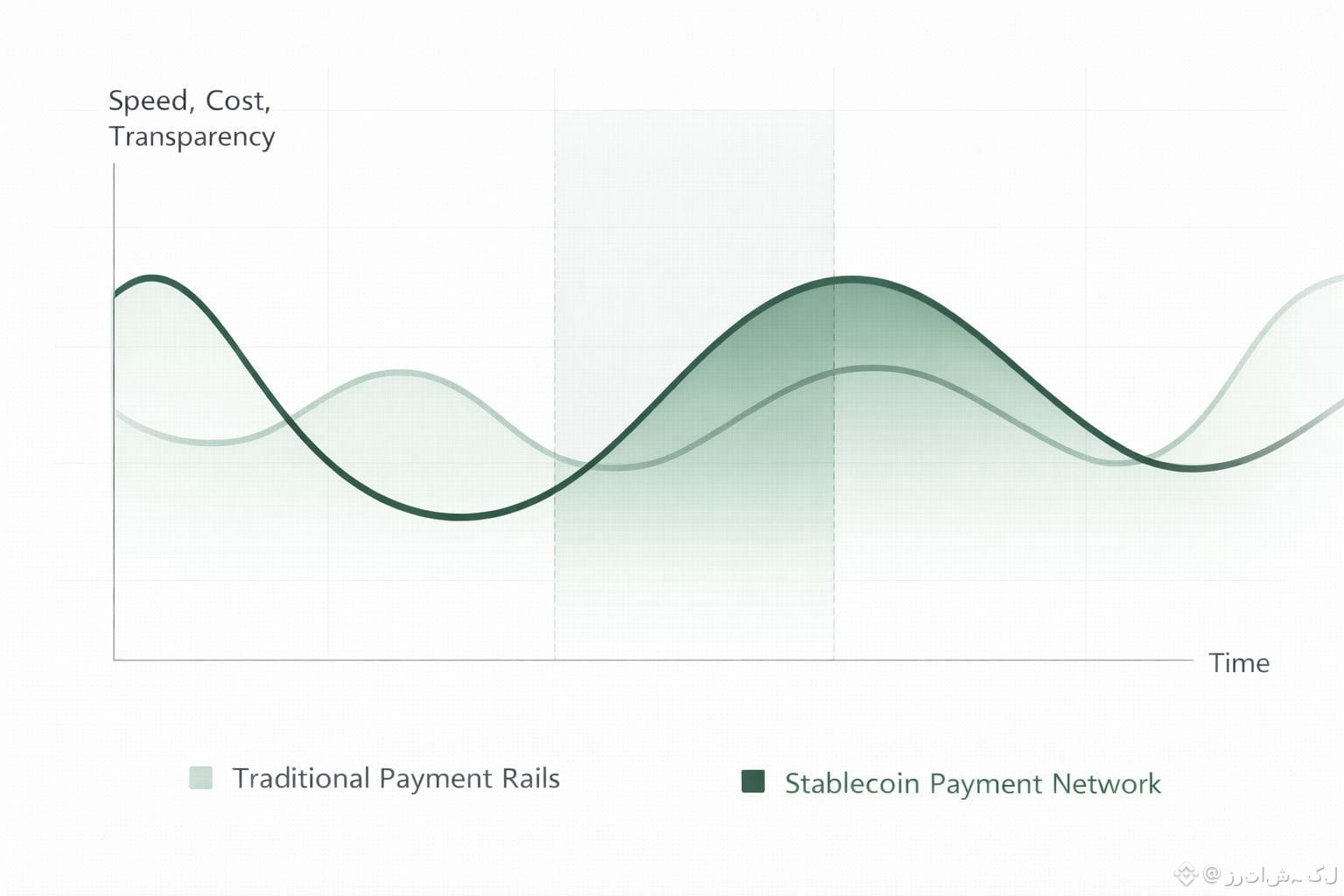
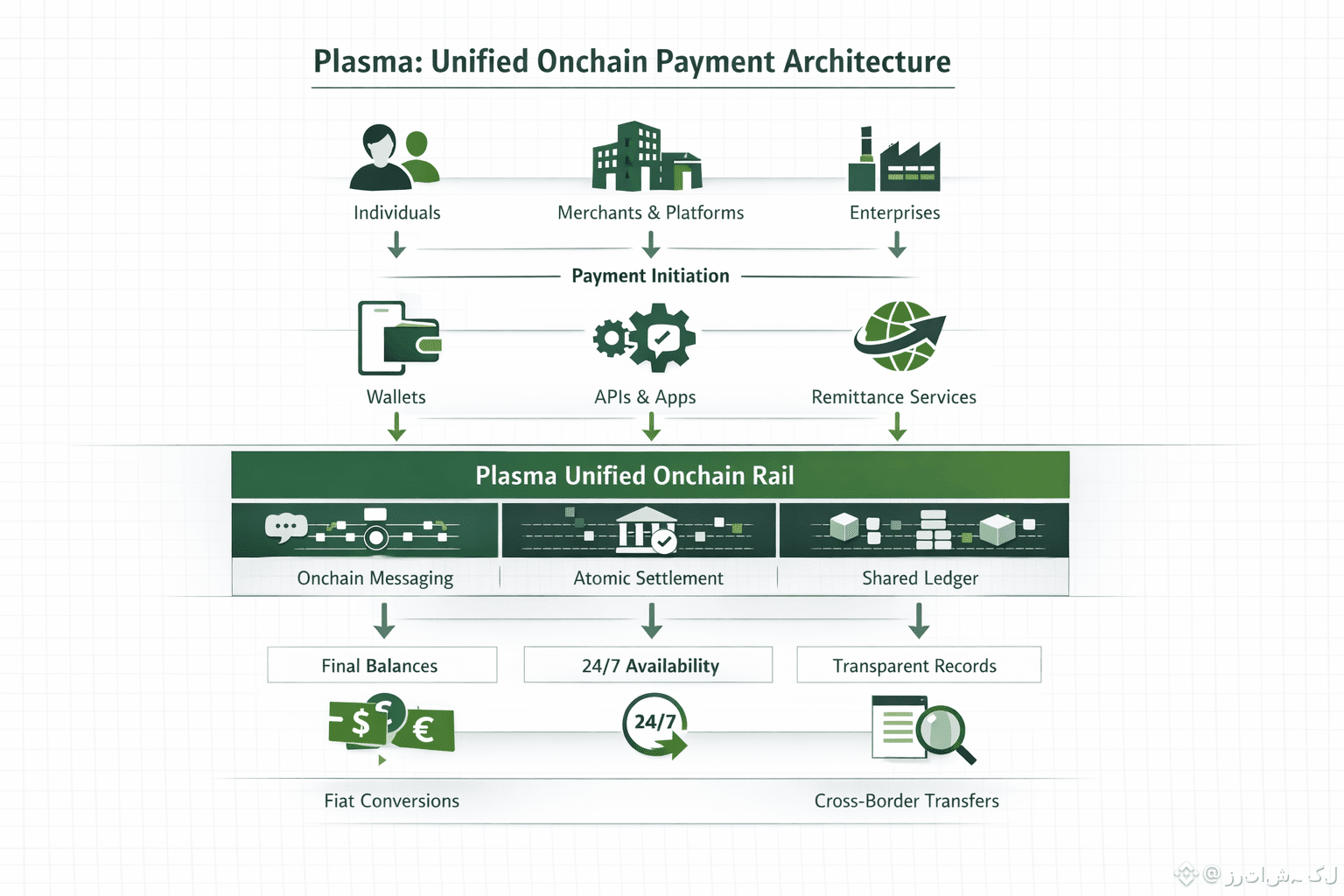
Another key part of Plasma’s vision is accessibility. Stablecoin payments should not require deep technical knowledge or complex workflows. Plasma focuses on making the underlying infrastructure straightforward so builders can create tools that feel familiar to users. Wallets, payroll systems, remittance flows, and merchant payments can all be designed on top of the same unified rail, instead of relying on separate settlement paths for each use case.
Plasma also acknowledges that payments do not exist in isolation. Real-world money flows involve compliance, accounting, and operational controls. By keeping transactions transparent and verifiable onchain, Plasma supports better tracking and auditing without adding extra layers of manual processing. Every transfer leaves a clear record that teams can reference, which helps reduce disputes and operational risk.
Community is another important part of Plasma’s approach. Payments infrastructure only works when people trust it and understand how it fits into their daily lives. Plasma aims to grow alongside its community by listening to developers, operators, and everyday users who rely on stablecoins for practical reasons. Feedback from real usage helps shape how the rail evolves, ensuring it stays aligned with actual needs rather than abstract ideas.
Plasma is also built with the reality of a global, always-on economy in mind. Stablecoin payments often cross borders, time zones, and banking systems. A unified onchain rail runs continuously, without weekends or cut-off times. This creates new possibilities for cross-border payouts, supplier payments, and remote work, where timing and reliability are just as important as cost.
Importantly, Plasma does not claim to remove all challenges around stablecoin payments. On- and off-ramps, regulation, and user education remain essential parts of the ecosystem. Plasma focuses on what it can do well: providing a clear, consistent, and onchain-native payment layer that others can build on responsibly.
At its core, Plasma is about making stablecoin payments feel less like an experiment and more like useful infrastructure. By unifying messaging and settlement into a single onchain process, it helps stablecoins function as they were meant to: simple digital money that moves efficiently, transparently, and globally.
As stablecoins continue to find their place in everyday payments, projects like Plasma play a quiet but important role. Not by chasing attention, but by building the rails that let communities move value with confidence, clarity, and shared understanding.

