
Plasma is a Layer 1 blockchain that has been designed to support stablecoin transactions in an efficient way, making it possible to transfer USDT gaslessly. The native $XPL token is the key element of the ecosystem as it will pay the fees on transactions, allow staking network security, and allow participation in the governance. The clear understanding of XPL tokenomics can assist in the analysis of the economic design and sustainability of the project.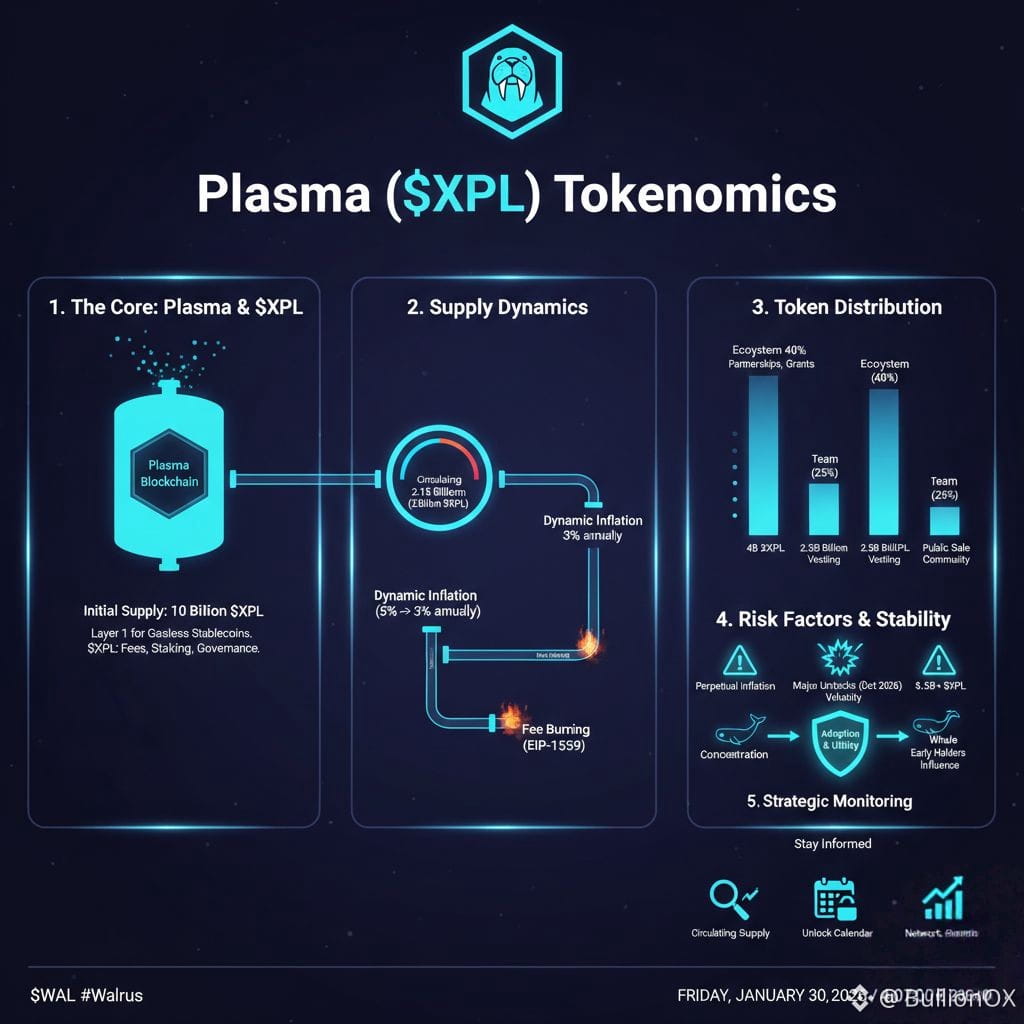
The interactions between supply, distribution and incentives are determined by tokenomics. Plasma released its mainnet in September 2025 and its token supply has taken a systematic route since that time.
As of early 2026, the supply of the current circulating amount of tokens of xpl is at about 2.15 billion. This is what is on trade, staked or otherwise. When it launched to mainnet, there was approximately 1.8 billion tokens in circulation, or approximately 18 percent of the original supply. New coins have been introduced into the market at a slow rate via unlocks and validator rewards.
The original total supply was determined as 10billion XPL. This was a starting amount that was generated when the network was launched. Plasma has embedded inflation compared to capped supply models to incentivize validators and ensure security.
Maximum supply is not highly restricted. Rather, the supply is dynamically increased. The inflation begins with 5 percentage per annum in the first year, which then decreases by 0.5 percent every year until the level stabilizes at 3 percent. This is a method where incentives are given continuously with the creation of tokens decreasing at a slow pace.
To put this into perspective, the possibility of 5% inflation of 10 billion tokens will introduce approximately 500 million more of new $xpl in the first year. As the rate reduces, annual additions reduce, but growth proceeds at a slower rate indefinitely.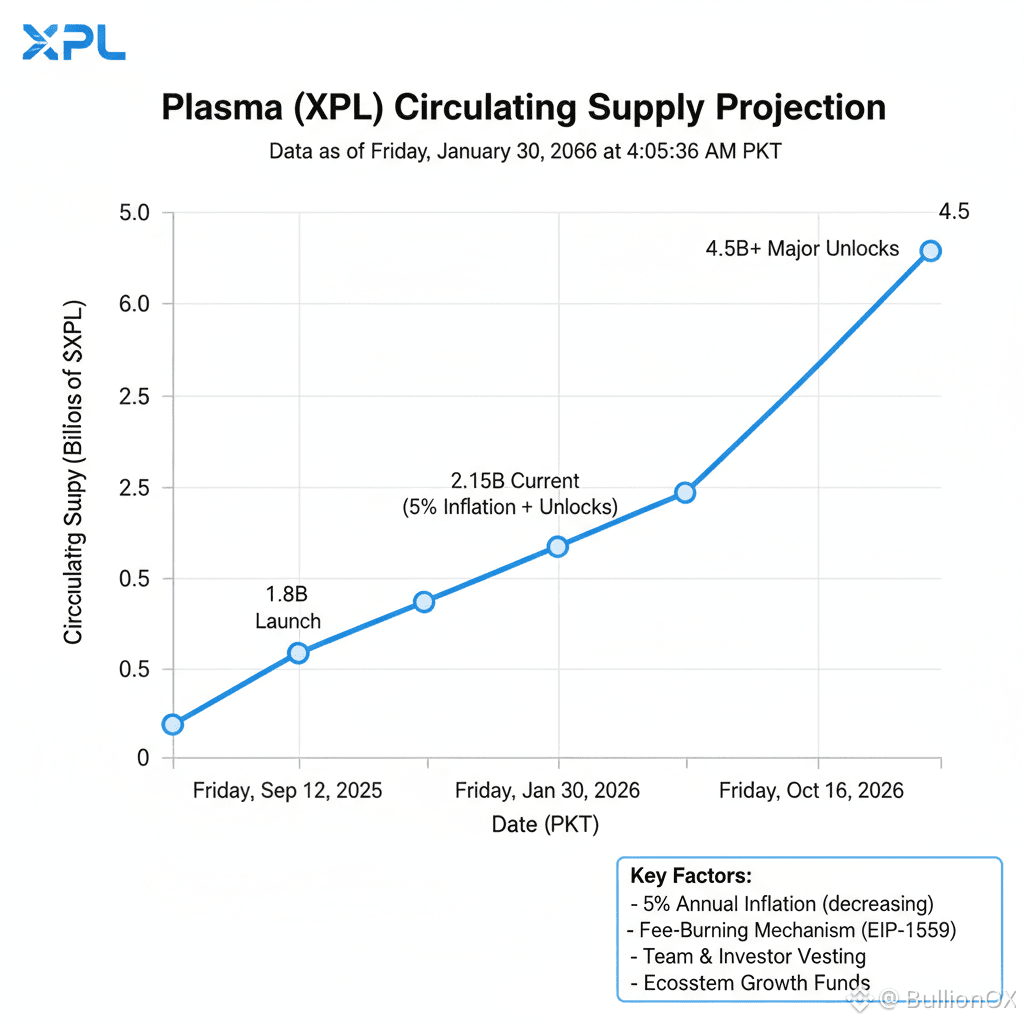
Plasma counters inflation using a fee burning mechanism based on the EIP-1559 of Ethereum. Transaction fee percentage will be eliminated out of circulation. This burn may produce deflationary pressure and stabilize supply relationships during the times of the high usage.
The token distribution is divided as follows: 40 percent (4 billion XPL) of the token goes into ecosystem growth, funding partnership, liquidity, and grants. When it was launched, 800 million of these were unlocked, with the remaining vesting monthly in the next three years.
The team is given 25% (2.5 billion) which is normally locked with a multi year vesting to make them committed in the long term. Investors receive another 25% which also undergoes a vesting period to prevent early dumps. The remaining 10% was to be sold in the open market to promote a large number of people.
Initially, the proportion of team and investor ownership was a significant portion of the circulating supply - approximately 44 during its inception. This concentration has the ability to influence a price stability, but the risk of sudden sales over a time is lowered through vesting.
There are a number of risk factors that are prominent in this model. Increased supply is the result of perpetual inflation even with a lower 3 percent rate. In case the demand in the network decreases, it may dilute the value of tokens in the long term.
There is another issue with major token unlocks. The circulation supply is likely to hit a high mark in October 2026 and may go higher to more than 4.5 billion. These jumps tend to cause a rise in selling pressure and short term volatility.
Whales concentration (team, early backers, and large holders) is risky. There can be coordinated selling in unlocks or market dips, which enhances downwards movements.
Adoption remains critical. Plasma is based on the increase of stablecoins volume and activity of the developers. The low adoption pace may undermine fee burns with inflation exercising its primacy and straining the price of XPL. Such externalities as regulation, competition or crypto market cycles have their influence, too.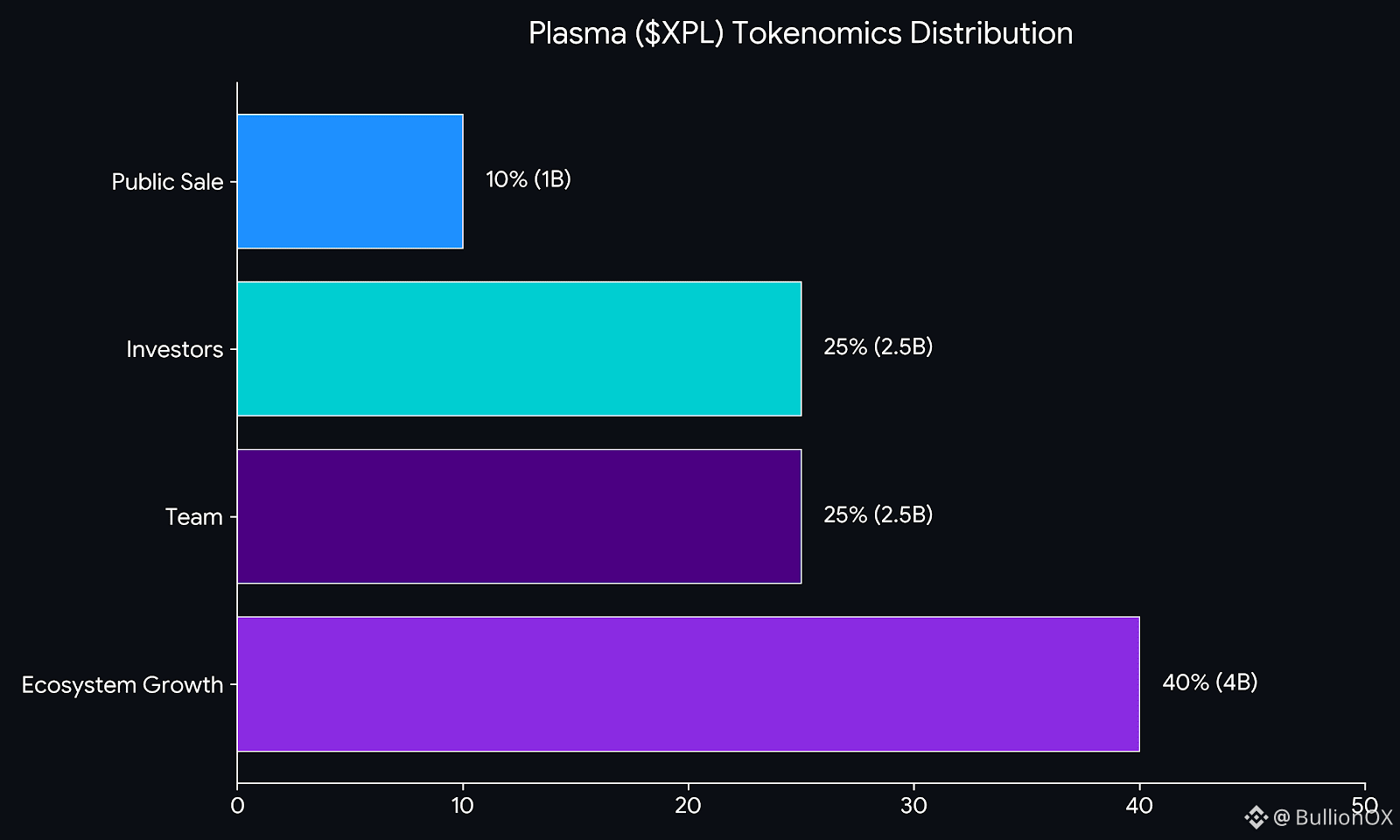
Vesting schedules unlocking slowly and tapering inflation is a positive aspect on the one hand, as well as maintaining sustainability. It is in the ecosystem allocations that the intention is to increase the real usage and this may stimulate demand to overcome the increase in supply.
Any person engaging in interest in @Plasma is expected to follow the changes related to circulating supplies, unlocking calendars, and adoptions. Authoritative sources and reputable analytical systems are sources of the current information to make informed decisions.
In general, XPL tokenomics unite a fixed 10 billion supply with regulated rate of inflation, no hard limit, and considerate allocation to propel growth. Whereas incentives encourage security and increase, inflation, unlocks, and concentration of the holders are some of the risks that should be considered. The key will be the stable utility and adoption of Plasma in the stablecoin space.