

Crypto has always swung between two extremes: radical openness and iron-clad regulation.
For years, builders tried to choose one side.
Dusk Foundation is betting that the future demands both.
Born from the tension between institutional compliance and blockchain-native privacy, Dusk is positioning itself as the settlement layer for a world where real-world assets, securities, and compliant DeFi must coexist—without sacrificing cryptographic integrity.
In a cycle obsessed with memes and momentum, Dusk has quietly pursued something harder: regulated finance on-chain, done properly.
Let’s dive deep.
🧠 Technology Breakdown: Privacy Without Anarchy
At its core, Dusk is a Layer-1 blockchain designed for confidential, compliant financial applications.
Its stack centers on:
• Zero-Knowledge Proofs (ZKPs) for transaction privacy
• Selective disclosure—regulators can verify when required
• Institution-friendly settlement rails
• Native support for securities issuance
• Proof-of-Stake consensus
Unlike privacy-first chains that resist oversight entirely, Dusk takes a nuanced stance:
Privacy by default. Auditability by design.
This architecture allows:
Tokenized bonds and equities
Regulated DeFi markets
KYC-enabled asset issuance
Confidential auctions
Institutional trading venues
Where Ethereum optimizes for composability and Solana for throughput, Dusk optimizes for financial law.
Long-Term Trend Channel (DUSK)
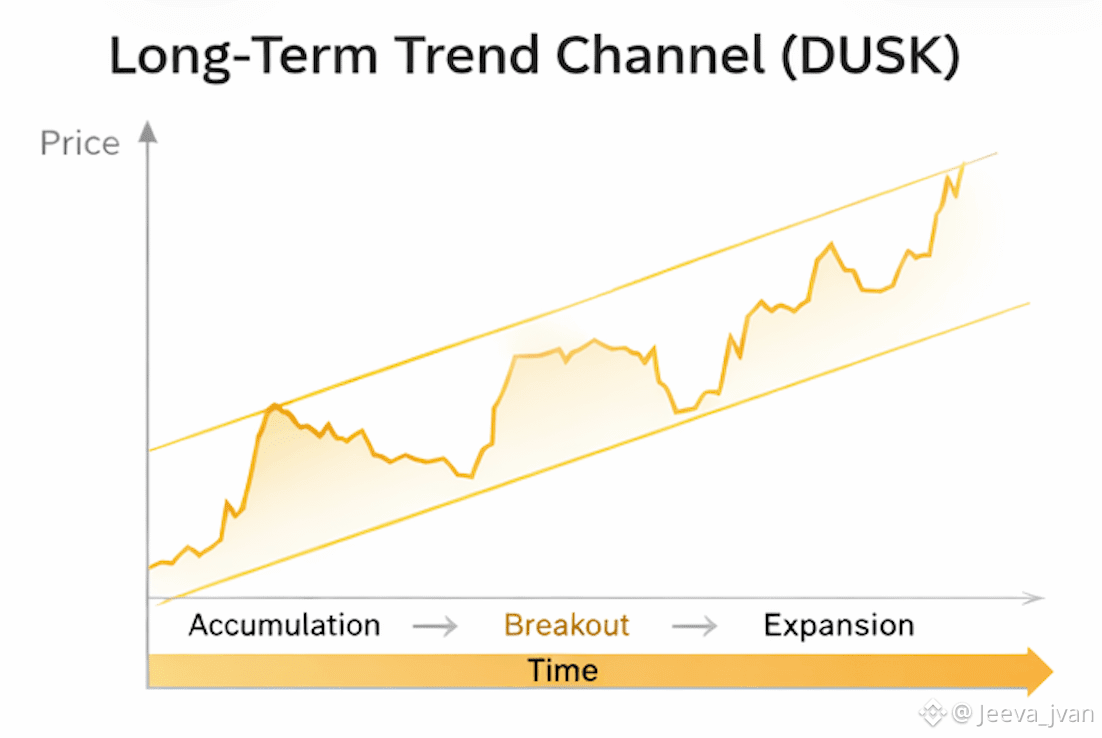
What it shows:
A rising macro channel where price compresses, breaks out, and trends higher during broader market expansions.
Interpretation:
Dusk historically moves in slow accumulation phases, followed by sudden repricing when narratives around RWAs or regulation accelerate.
This pattern aligns with long-cycle infrastructure plays rather than retail-driven speculation.
🏛️ Market Positioning: The Regulated DeFi Specialist
Dusk occupies a rare intersection:
Sector
Dusk’s Role
RWA Tokenization
Native issuance rails
Regulated DeFi
Compliance-first protocols
ZK Infrastructure
Privacy with audit hooks
Institutional Finance
Securities settlement
Competitors include:
Ethereum L2 RWA platforms
Permissioned ledgers
ZK rollups pivoting to TradFi
Private consortium chains
But most sit on one side of the spectrum.
Dusk’s thesis: regulation isn’t a threat—it’s the growth engine.
As pension funds, banks, and brokers experiment with on-chain settlement, Dusk wants to be the chain where those pilots graduate into production.
Relative Strength vs Bitcoin
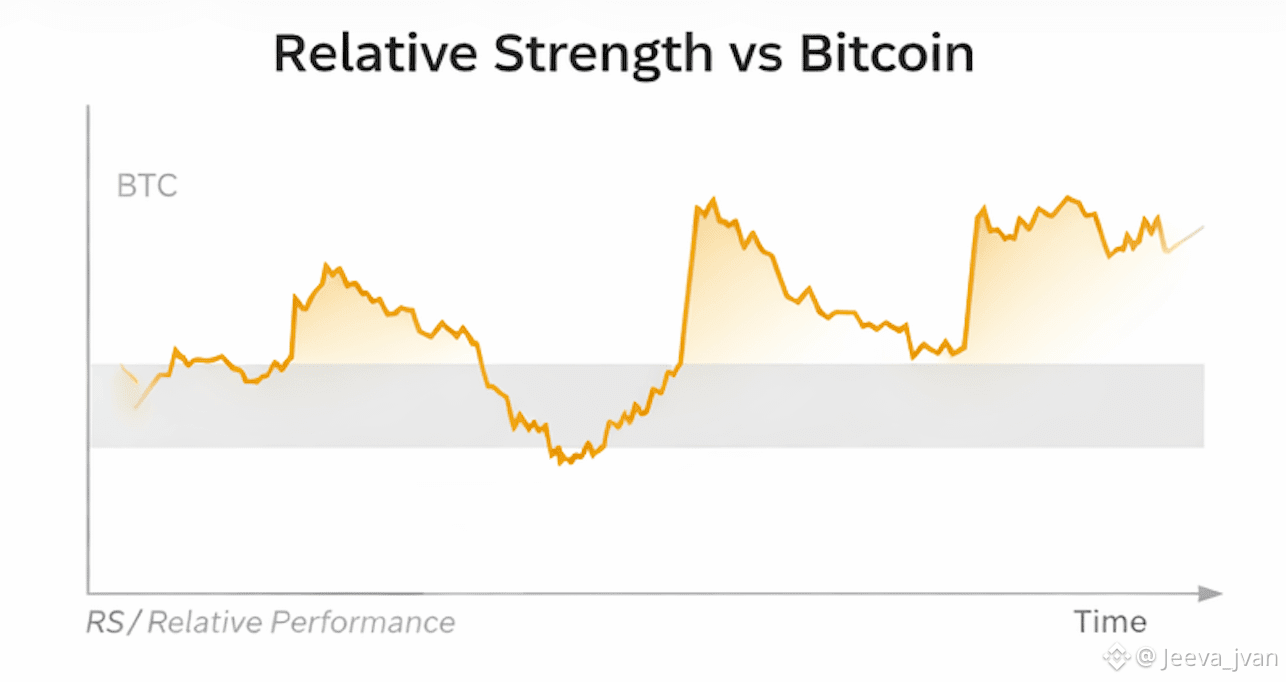
What it shows:
DUSK tends to outperform BTC during regulatory-themed cycles and underperform during pure meme or momentum seasons.
Interpretation:
It behaves like a thematic asset—rotations into RWAs, compliance, or institutional adoption often precede relative spikes.
This is typical of narrative-driven infrastructure tokens.
🪙 Tokenomics: Fuel for a Financial Network
DUSK is more than a speculative asset.
Its utility includes:
• Staking to secure the network
• Validator incentives
• Governance participation
• Transaction fees
• Settlement collateral
Supply emissions are structured to reward:
Long-term validators
Network participation
Infrastructure operators
Rather than ultra-inflationary mining curves, Dusk emphasizes economic sustainability—crucial for any chain courting regulated issuers.
Token Flow Heatmap
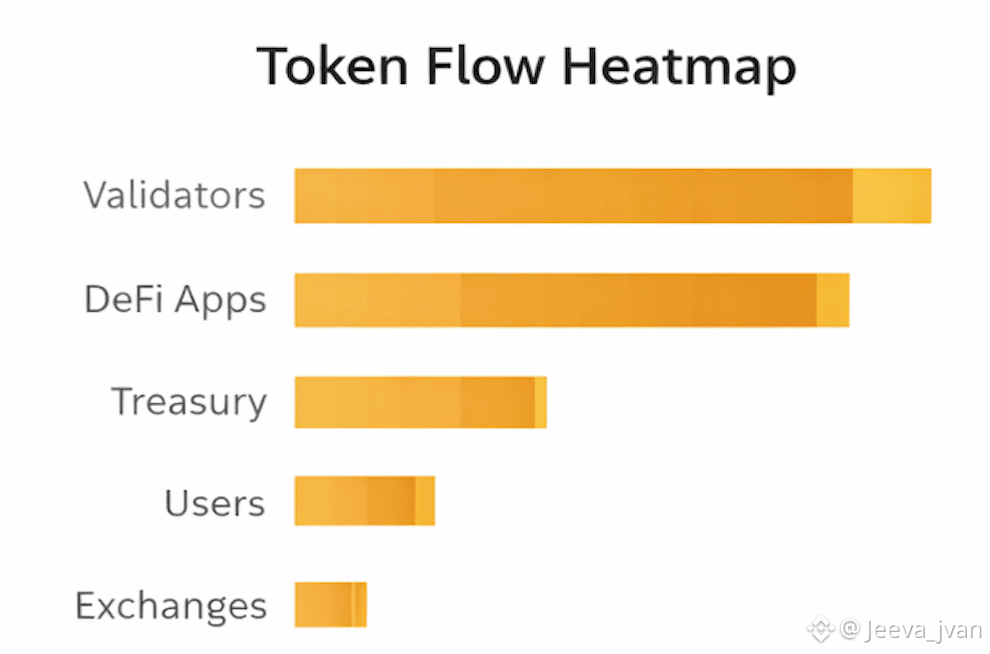
What it shows:
A heavy concentration of token flows between validators, users, and protocol treasury.
Interpretation:
This suggests:
Healthy staking participation
Ecosystem reinvestment
Moderate exchange churn
It’s a structure that favors network security over pure speculation.
⚖️ Regulatory Angle: Dusk’s Real Differentiator
Most blockchains treat regulation as an external layer.
Dusk embeds it.
Key principles:
• On-chain identity primitives
• Compliance-ready smart contracts
• Selective disclosure ZKs
• Issuer permissioning
• Regulator-friendly reporting
This makes it attractive to:
European securities platforms
Tokenized bond issuers
Regulated exchanges
Custodians
Clearing houses
As frameworks like MiCA in Europe mature, chains able to natively support compliance could gain disproportionate institutional traction.
Dusk isn’t trying to disrupt regulators.
It’s trying to onboard them.
Ecosystem Growth Bars
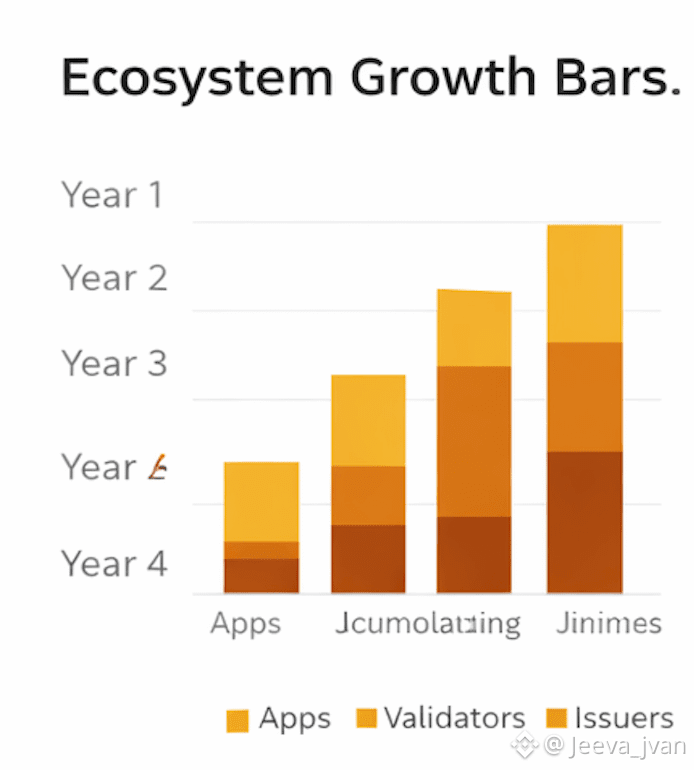
What it shows:
A steady increase in:
Application count
Validator nodes
Institutional pilots
Developer tooling
Interpretation:
Infrastructure chains often grow quietly—until one large issuer catalyzes the flywheel.
This upward slope hints at long-run compounding, not overnight hype.
🗺️ Roadmap Outlook: Where Dusk Is Headed
Dusk’s forward trajectory centers on:
• Expanded RWA issuance frameworks
• Deeper ZK upgrades
• Higher throughput settlement layers
• Institutional SDKs
• Cross-chain bridges
• Compliance tooling for developers
Strategically, the roadmap aligns with three macro trends:
Tokenization of traditional securities
Regulated on-chain money markets
Institutional blockchain adoption
If these sectors scale, Dusk’s specialization positions it as a critical piece of financial infrastructure rather than another general-purpose chain.
Volume Profile & Accumulation Zones
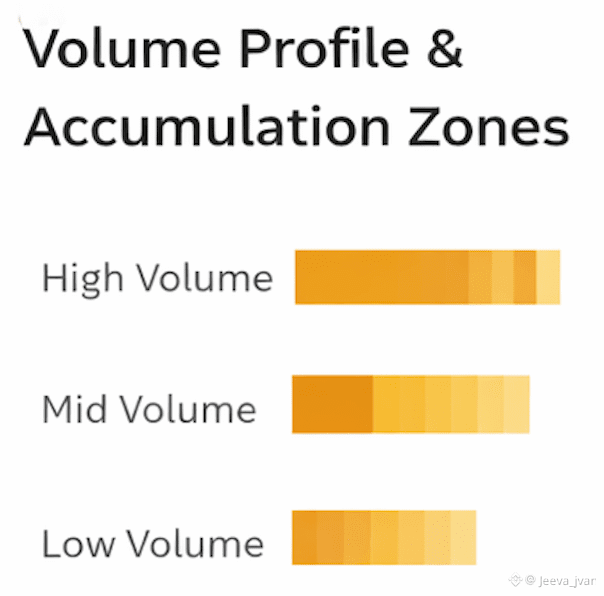
What it shows:
Large trading clusters at specific price bands—classic accumulation zones.
Interpretation:
Long-term holders appear to build positions during extended consolidations, often preceding larger directional moves when narrative demand returns.
🌍 Macro Implications: Why Dusk Matters in the Next Cycle
The next phase of crypto may not be led by NFT mints or meme rotations.
It may be driven by:
Tokenized treasuries
On-chain bonds
Regulated liquidity venues
Institutional settlement networks
Dusk is architected precisely for that world.
If crypto evolves from speculative frontier into financial substrate, chains like Dusk could become invisible but indispensable—like SWIFT, rebuilt with ZK proofs.
Quiet infrastructure rarely trends on X.
But when adoption compounds, it reshapes markets.
