
The global financial system is experiencing something remarkable. While traditional banking moves billions through layers of intermediaries and waiting periods, a new breed of digital infrastructure is rewriting the rules entirely. Plasma stands at the center of this transformation, not as another blockchain chasing general-purpose ambitions, but as something more focused and potentially more revolutionary. They’re building the first Layer 1 blockchain designed exclusively for stablecoin payments, and the journey from concept to reality reveals both the ambition and practicality driving modern crypto infrastructure.
The Problem Nobody Wanted to Admit
When Paul Faecks co-founded Alloy in 2021, he witnessed firsthand the friction between crypto innovation and traditional finance. The experience taught him valuable lessons about institutional needs, compliance burdens, and the endless delays that plague corporate procurement. But it also revealed something more fundamental. Stablecoins had already become crypto’s killer application, moving trillions of dollars annually and providing financial access to millions worldwide. Yet they were operating on infrastructure never designed for them.
Ethereum launched in 2015 as a general-purpose smart contract platform. Tron focused on content sharing before pivoting to payments. Solana optimized for speed across all transaction types. None of these blockchains started with stablecoins as the primary design consideration. If it becomes clear that stablecoins represent the most successful crypto use case, generating over thirty trillion dollars in transfer volume during 2024 alone, then the infrastructure mismatch becomes impossible to ignore. Users needed to hold volatile native tokens just to pay gas fees. Transaction costs could spike to fifty dollars during network congestion. Settlement finality took minutes rather than seconds. Small payments became economically impractical.
The stablecoin market had grown to two hundred fifty billion dollars in circulation by late 2024, yet it remained trapped on chains built for different purposes. Faecks recognized that building from first principles around stablecoin needs could unlock entirely new possibilities. This wasn’t about creating another Ethereum competitor or claiming to be faster than Solana. This was about solving specific problems that prevented stablecoins from becoming truly global payment infrastructure. That clarity of purpose would define everything that followed.
From Vision to Foundation
In 2024, Faecks founded Plasma with a singular mission: create the foundational layer for global stablecoin adoption. The name itself carried significance, referencing both the fourth state of matter and Ethereum’s early scaling solution concepts, but the project would chart its own technical path. Rather than building yet another general-purpose blockchain and hoping stablecoins would adopt it, Plasma started by asking what stablecoins actually needed and designing architecture to deliver exactly that.
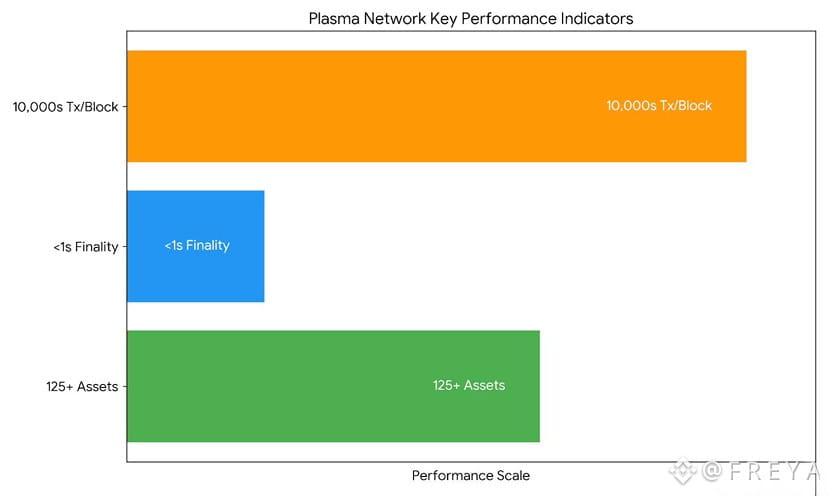
The technical approach centered on PlasmaBFT, a Byzantine Fault Tolerant consensus mechanism derived from the HotStuff algorithm. Unlike probabilistic finality systems where blocks can theoretically be reorganized, PlasmaBFT provides deterministic finality within seconds. Transactions confirm and become irreversible almost instantly, meeting the expectations users have from traditional payment systems. The consensus design supports throughput exceeding one thousand transactions per second, with capacity to scale further as adoption grows. For a payment-focused network, sub-second finality matters more than raw throughput numbers, and Plasma’s architecture prioritizes that certainty.
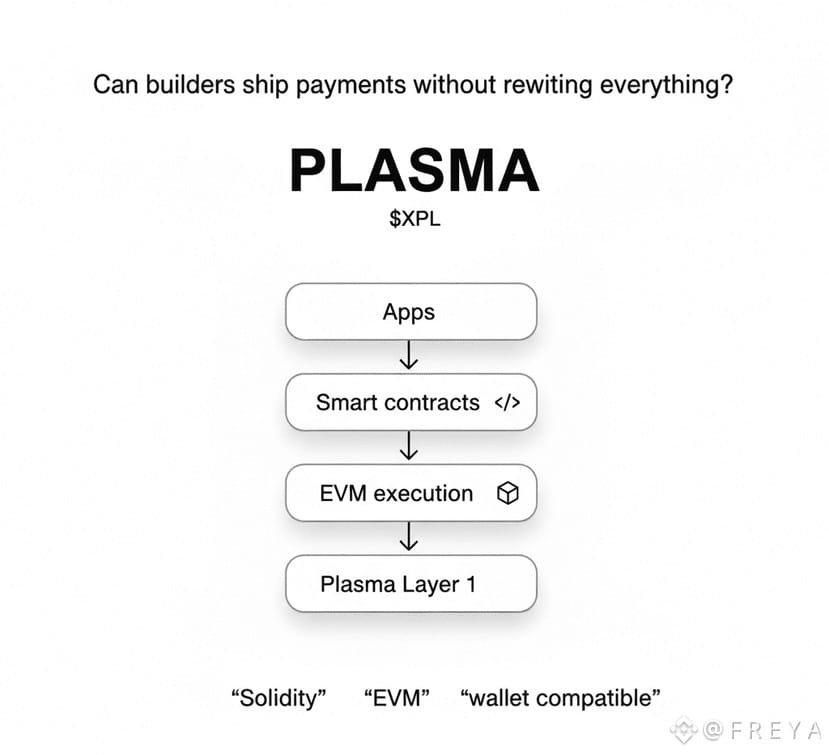
The execution layer leverages Reth, a high-performance Ethereum client written in Rust. This decision provided full EVM compatibility, allowing developers to deploy existing Solidity smart contracts without modification. They’re not asking developers to learn new languages or rebuild applications from scratch. MetaMask works. Hardhat and Foundry work. The entire Ethereum development ecosystem translates directly to Plasma. This compatibility reduces friction for both builders and users while maintaining the stablecoin-first optimizations at the protocol level.
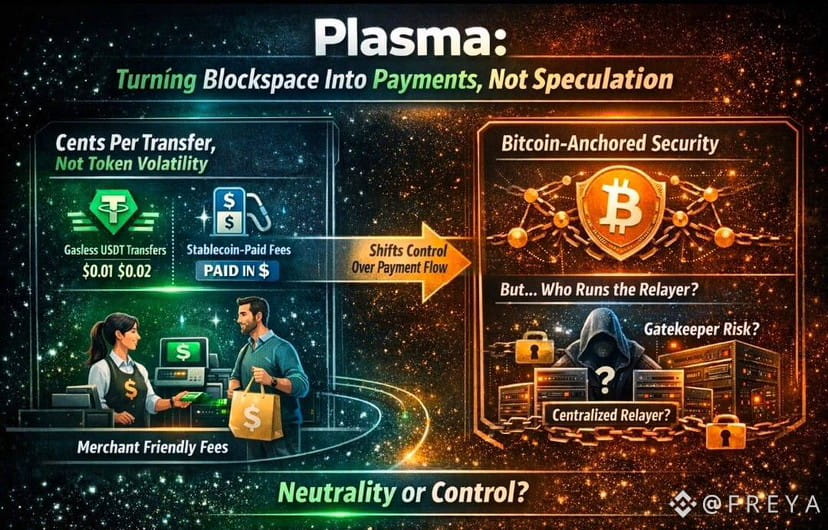
Perhaps the most innovative architectural choice involves the paymaster system. On typical blockchains, users must acquire and hold the native token to pay transaction fees, creating an onboarding barrier that’s particularly problematic for mainstream adoption. Plasma implements a protocol-managed paymaster that sponsors gas fees for basic USDT transfers. Users can send Tether without ever touching XPL tokens. The system applies rate limits and spam protection to maintain network security while eliminating the “gas token problem” that has plagued crypto payments for years. Complex smart contract operations still require gas fees paid in XPL or converted stablecoins, preserving validator economics while making simple transfers genuinely frictionless.
Building the Backing
Transforming vision into reality required significant capital and strategic partnerships. Plasma’s funding journey reflects both the ambition of the project and the confidence institutional players place in its thesis. The earliest believers included some of crypto’s most influential figures. Paolo Ardoino, CTO of Bitfinex and closely associated with Tether, provided seed funding alongside Peter Thiel’s investment channels. These weren’t passive financial commitments. They signaled that the infrastructure powering the world’s dominant stablecoin saw Plasma as strategic to their own future.
In February 2025, Plasma closed a twenty-four million dollar Series A round led by Framework Ventures, with participation from Bitfinex, DRW, Bybit, Flow Traders, IMC, Nomura, and others. The investor roster combined crypto-native expertise with traditional financial infrastructure experience. If you’re building settlement rails for trillions of dollars, having market makers, trading firms, and institutional players backing the project provides both capital and credibility. Framework Ventures particularly specializes in identifying infrastructure that enables new categories of applications, and their leadership in the round indicated conviction that purpose-built stablecoin infrastructure represented exactly that opportunity.
The public sale in July 2025 demonstrated unprecedented community enthusiasm. Plasma targeted fifty million dollars but raised three hundred seventy-three million, representing a seven-times oversubscription. More than just capital, the sale distributed ten percent of the XPL supply to thousands of participants, ensuring broad ownership from launch. The pricing at five cents per token during the sale would prove significant when mainnet went live. Faecks emphasized transparency throughout the process, with clear unlock schedules and token distribution designed to align long-term interests rather than enable quick exits.
Perhaps more important than the dollar figures were the strategic partnerships forming around Plasma’s vision. Integrations with Aave, Ethena, Fluid, and Euler meant that two billion dollars in stablecoin liquidity would be deployed across DeFi protocols from day one of mainnet. Partnerships with payment providers and regional stablecoin issuers like BiLira positioned Plasma to serve markets where dollar access represents genuine financial inclusion. We’re seeing a pattern where infrastructure projects succeed not just through technology but through ecosystem alignment, and Plasma invested heavily in ensuring both financial and strategic support from key players across the stablecoin landscape.
The Launch That Changed Everything
September 25, 2025 marked Plasma’s mainnet beta launch. At eight o’clock Eastern Time, the network went live alongside the Token Generation Event for XPL. The scale of the launch exceeded most Layer 1 blockchain debuts. Two billion dollars in stablecoin liquidity activated immediately across more than one hundred DeFi partners. Users could bridge USDT deposits and withdraw USDT0, Tether’s omnichain version, directly on Plasma. Zero-fee transfers became available through the official Plasma dashboard, removing one of the fundamental barriers to stablecoin adoption.
For Faecks and the team, the launch represented both triumph and terror. In February, a deposit campaign had raised one billion dollars in ninety seconds, creating what Faecks later described as the most stressful moment of his life. The potential for smart contract exploits, front-end attacks, or infrastructure failures weighed heavily during those crucial minutes. By September’s mainnet launch, the team had battle-tested systems and prepared for scale, but launching blockchain infrastructure always carries risk. The successful execution without major incidents validated months of preparation and the expertise assembled from backgrounds at Goldman Sachs, Microsoft, Apple, and leading crypto projects.
Market reception proved equally dramatic. Pre-market trading had valued XPL between fifty-five and eighty-three cents, with an average around seventy cents. Official listings began at higher levels, with the token briefly touching one dollar fifty-four, representing a more than fourteen-fold increase from the public sale price. Within forty-eight hours of mainnet launch, stablecoin supply on Plasma exceeded seven billion dollars, positioning it as the fifth-largest blockchain by stablecoin market cap, ahead of established networks like Arbitrum and Base. Aave’s Plasma markets were adding over one and a half billion dollars in deposits daily.
The numbers told only part of the story. Plasma had become the eighth-largest blockchain by stablecoin liquidity from the moment of launch, an achievement that typically takes months or years for new networks to reach. The strategic decisions around ecosystem development, liquidity partnerships, and community distribution were paying immediate dividends. Trading volume concentrated on major exchanges, with over fifty-five percent flowing through Binance Futures. The platform also distributed seventy-five million XPL tokens through its HODLer Airdrops program, further broadening token ownership among its two hundred eighty million users.
The Economics of XPL
Understanding Plasma requires understanding the role of its native token. XPL serves multiple functions within the network’s economic model, each designed to align long-term incentives as stablecoin adoption scales. The total supply stands at ten billion tokens at genesis, with a carefully structured distribution and unlock schedule that rewards patience and discourages short-term speculation.
Twenty-five percent of supply allocated to the team and twenty-five percent to investors share identical vesting terms: a one-year cliff followed by gradual unlocks over three years. This ensures that founders and early backers remain aligned with the project’s success far beyond launch day. Critics sometimes point to large allocations for these groups, but the vesting structure matters more than the percentages. No team member can sell tokens until September 2026, and even then, releases spread across years rather than flooding markets all at once.
The forty percent allocated for ecosystem and growth funds strategic expansion over thirty-six months. Eight hundred million XPL unlocked at mainnet beta to provide immediate DeFi incentives and liquidity support, with the remaining three point two billion releasing gradually. This capital fuels partnership deals, exchange integrations, developer grants, and the countless initiatives required to bootstrap a new network. Marketing budgets and community programs draw from this allocation, ensuring resources to compete for attention in an increasingly crowded blockchain landscape.
Validator economics introduce controlled inflation starting at five percent annually and decreasing by half a percentage point each year until reaching a three percent floor. This rewards network security providers while avoiding the permanent high inflation that devalues many proof-of-stake tokens over time. Importantly, Plasma implements reward slashing rather than stake slashing. Validators who act dishonestly or fail to maintain uptime lose their earned rewards but not their staked principal, creating a more forgiving economic model that could encourage broader validator participation as the network decentralizes.
The fee mechanism follows principles similar to Ethereum’s EIP-1559, with base fees burned from each transaction. While users can pay gas in stablecoins or other supported tokens, the protocol automatically swaps these for XPL in the background to compensate validators. This creates deflationary pressure on token supply as network usage increases. The paymaster’s sponsorship of gasless USDT transfers doesn’t eliminate fees entirely but redistributes who pays them, with the protocol itself covering costs from its XPL treasury to bootstrap adoption.
For US participants in the public sale, a mandatory twelve-month lockup means token distribution won’t occur until July 28, 2026. This regulatory compliance requirement creates a natural vesting period for ten percent of the supply. When combined with team and investor locks, the majority of tokens remain restricted from circulation well into 2026, potentially supporting price stability as the network matures and demonstrates real utility.
Beyond Launch: Building the Ecosystem
Mainnet launch marked a beginning rather than an ending. The weeks following September 25 saw rapid ecosystem development across multiple fronts. Integration with NEAR Intents connected XPL and USDT0 to liquidity pools spanning one hundred twenty-five assets across twenty-five blockchains, dramatically expanding accessibility. Users could now swap assets directly to and from Plasma through cross-chain protocols, eliminating the friction of manual bridging.
Major wallet providers added Plasma support, with OneKey enabling hardware wallet users to manage XPL and on-chain assets securely. The expanding wallet ecosystem matters enormously for mainstream adoption. If users can’t easily store, send, and receive assets, technical elegance at the protocol level becomes irrelevant. RPC providers like QuickNode deployed production endpoints to support developers building on Plasma, while block explorers provided transparency into network activity.
The DeFi landscape on Plasma matured quickly. Beyond the initial two billion dollars deployed at launch, protocols continued building products optimized for stablecoin use cases. Lending markets offered competitive rates for USDT borrowing, appealing to institutional players seeking dollar liquidity. Savings products provided yield opportunities for users parking stablecoins between transactions. The focus remained distinctly different from typical DeFi activity on other chains. This wasn’t about exotic derivatives or leveraged yield farming. This was about creating practical financial services around the digital dollar.
Real-world payment integration progressed through partnerships with companies operating at the intersection of crypto and traditional commerce. While many blockchain projects discuss merchant adoption theoretically, Plasma’s relationships with payment processors and fintech firms targeted actual implementation. The vision of stablecoins moving through Plasma rails for remittances, business-to-business settlements, and consumer purchases required these connections to legacy systems. Progress happened incrementally, with pilot programs and limited rollouts preceding broader availability.
Developer activity showed healthy signs, with new applications deploying to leverage Plasma’s unique characteristics. The combination of gasless transfers for end users and EVM compatibility for builders created opportunities unavailable on other chains. Payment-focused applications particularly benefited, as transaction costs representing a small percentage of payment value became feasible. Micropayments, subscription services, and cross-border transfers all became more economically viable when infrastructure costs dropped toward zero for basic USDT movements.
The Technical Roadmap Ahead
Plasma’s architecture in late 2025 represents the foundation rather than the finished product. The roadmap extends several years into the future with features designed to expand capabilities while maintaining the stablecoin-first focus. Understanding where the project aims to go reveals both ambition and pragmatism about what infrastructure needs to succeed.
The Bitcoin bridge stands as perhaps the most technically complex and strategically important upcoming feature. Rather than a traditional wrapped asset approach, Plasma is building what they describe as trust-minimized anchoring of its state to Bitcoin’s blockchain. This would provide institutional-grade security inherited from Bitcoin’s unparalleled network security while maintaining Plasma’s speed advantages. The bridge would enable pBTC, allowing Bitcoin to be used as collateral within Plasma’s DeFi ecosystem and smart contracts. For institutions managing large Bitcoin holdings, the ability to deploy that capital into stablecoin markets without sacrificing security could unlock significant liquidity.
Confidential transactions represent another major technical initiative. Privacy remains a controversial topic in crypto, with regulators concerned about illicit finance while users and businesses demand reasonable confidentiality for legitimate purposes. Plasma’s approach aims for selective privacy that balances both concerns. The vision includes use cases like payroll processing, where employees receive payments without broadcasting salary information to the public blockchain, and business-to-business settlements where competitive considerations demand discretion. Implementing privacy features that satisfy both compliance requirements and user needs requires careful design, and Plasma’s timeline for this functionality extends into 2026.
Expanding zero-fee transfers beyond Plasma’s own products to third-party applications remains a critical near-term goal. At launch, gasless USDT transfers worked only through the official Plasma dashboard. Extending paymaster functionality to external wallets and applications would dramatically increase the feature’s impact. Every payment app, DeFi protocol, and merchant integration could offer users fee-free stablecoin transactions, fundamentally changing the economics of blockchain payments. The phased rollout allows Plasma to manage spam protection and economic sustainability while progressively democratizing access to gasless infrastructure.
Progressive decentralization of the validator set reflects long-term thinking about network security and governance. At launch, Plasma’s team operated validator nodes to ensure stability during the critical early period. The path forward involves gradually expanding the validator committee to include external operators, distributing control while maintaining performance standards. Staking delegation will eventually allow XPL holders to delegate tokens to validators and earn rewards without running infrastructure themselves, broadening participation in network security. The timeline for these changes balances security concerns with the philosophical commitment to decentralization that underpins blockchain technology.
Geographic expansion particularly targets regions where dollar access represents genuine need rather than speculative interest. Partnerships with local payment providers in Turkey, Argentina, and African markets aim to serve populations experiencing currency instability. These aren’t the wealthy crypto traders in developed markets but people using stablecoins as primary stores of value and payment methods. The technology enabling remittances to arrive in seconds rather than days and preserving purchasing power overnight creates real economic impact. Success in these markets would validate Plasma’s thesis about stablecoins as infrastructure for global finance rather than crypto speculation.
Challenges and Questions
No project of Plasma’s ambition proceeds without obstacles and uncertainties. The stablecoin market’s regulatory environment remains in flux across jurisdictions. While the United States shows signs of moving toward clearer frameworks, other regions maintain varying degrees of restriction or prohibition. A blockchain optimized for stablecoins inherently bets on regulatory clarity emerging that allows these assets to scale globally. If major economies restrict stablecoin usage, Plasma’s addressable market shrinks considerably.
Competition comes from multiple directions. Established blockchains like Ethereum and Tron already host the majority of stablecoin activity and continue improving their infrastructure. Newer chains like Solana compete aggressively for payment use cases with fast finality and low base fees. Traditional payment companies including Stripe and PayPal increasingly integrate stablecoin support into their existing networks. The question becomes whether purpose-built infrastructure can capture meaningful market share from incumbents with established user bases and network effects.
Token economics face scrutiny as unlock schedules progress. The first major test arrives in July 2026 when US participants in the public sale receive their tokens alongside the completion of the one-year cliff for team and investor allocations. If significant selling pressure emerges, it could suppress XPL price regardless of underlying network adoption. The ecosystem and growth allocations releasing monthly also represent potential supply increases that markets must absorb. Projects often struggle when token unlocks outpace demand growth from genuine utility.
The sustainability of zero-fee transfers remains an open question. The paymaster system currently sponsors gas costs from XPL treasury allocations, essentially subsidizing user adoption. This works during growth phases when distributing tokens to drive network effects makes strategic sense. Eventually, the model must either generate sufficient revenue to sustainably cover gasless transaction costs, or fees must be introduced, or transaction volume must grow to the point where even minimal fees fund the paymaster adequately. Finding the right balance between user experience and economic sustainability will determine whether gasless transfers can scale long-term.
Execution risk applies to any ambitious technical roadmap. Building Bitcoin bridges and privacy features while maintaining security and decentralization requires deep expertise and careful implementation. Smart contract bugs in payment infrastructure could result in catastrophic losses. Consensus failures could halt the network or create competing forks. Performance degradation under heavy load could frustrate users and drive them back to alternative chains. The gap between roadmap promises and delivered reality has disappointed countless blockchain projects.
The Broader Context
Plasma’s story fits within larger narratives about crypto’s evolution and money’s digitization. The stablecoin market has grown from a niche tool for crypto traders to infrastructure processing volumes exceeding Visa. Tether alone facilitates trillions in annual transfers, predominantly serving use cases like remittances, trading settlements, and dollar savings in economies with unstable local currencies. This happened despite regulatory uncertainty, technical limitations of underlying blockchains, and skepticism from traditional finance.
The shift from general-purpose blockchains to application-specific chains reflects maturation in how the industry thinks about infrastructure. Early crypto emphasized platforms that could theoretically support any use case. Ethereum aspired to become the world computer. Newer thinking recognizes that different applications have different requirements, and optimization for specific purposes often beats general flexibility. Cosmos and Polkadot pioneered application-specific blockchain concepts. Plasma takes this further by targeting not just an application category but a specific asset class with particular needs.
Institutional adoption of crypto infrastructure increasingly centers on stablecoins and payment use cases rather than speculative tokens. Major corporations hold stablecoins on balance sheets. Payment processors integrate stablecoin rails. Central banks explore digital currency issuance influenced by stablecoin success. If crypto’s institutional future involves moving real economic value rather than trading speculation, then infrastructure optimized for that purpose gains strategic importance. Plasma positions itself at the intersection of these trends.
The relationship between Plasma and Tether deserves particular attention. Direct backing from Bitfinex and close ties to Tether’s leadership suggest strategic alignment. Tether dominates the stablecoin market with nearly seventy percent market share, processing the vast majority of stablecoin volume. If Plasma becomes a preferred distribution channel for USDT, capturing even a fraction of existing Tether activity would generate enormous network effects. The question becomes whether Tether views Plasma as core infrastructure worthy of sustained support or as one experiment among many potential blockchain partnerships.
Looking Forward
Years from now, Plasma’s success or failure will be measured not by token price but by whether it actually changed how money moves globally. The vision extends far beyond launching another cryptocurrency. It encompasses becoming foundational infrastructure that billions of people use without knowing or caring about the underlying blockchain technology. The measure of success isn’t how many crypto traders speculate on XPL but how many businesses settle invoices through Plasma, how many workers receive salaries via fee-free transfers, and how many unbanked individuals access dollar stability through mobile wallets connected to Plasma’s rails.
The path forward requires executing on technical promises while navigating regulatory evolution and competitive pressure. It demands building products that mainstream users actually want rather than features that impress crypto insiders. It means forging partnerships with payment companies, merchants, and financial institutions that bridge between blockchain infrastructure and real-world commerce. The team’s background combining technical expertise from elite institutions with operational experience building companies provides reason for optimism, but execution remains everything.
We’re seeing an interesting experiment in whether specialization beats generalization in blockchain infrastructure. Ethereum succeeded by being the first credible smart contract platform for everything. Plasma bets that being the best platform for one crucial thing matters more than being adequate for many things. That clarity of purpose influenced every architectural decision, every partnership conversation, and every product prioritization. Time will reveal whether focus creates competitive advantage or whether general-purpose chains simply adopt the innovations and maintain network effects through superior liquidity and developer mindshare.
The stablecoin market’s trajectory toward trillions of dollars seems increasingly inevitable as regulatory frameworks mature and adoption accelerates. Whether Plasma captures significant share of that growth depends on factors both within and beyond the team’s control. They control technical execution, partnership development, and community building. They don’t control regulatory decisions, competitive responses, or macroeconomic conditions affecting crypto adoption. The interplay between execution and circumstance will determine outcomes.
For those watching blockchain infrastructure evolve, Plasma represents an important test case. It asks whether purpose-built infrastructure can challenge established networks. It explores whether gasless transactions can sustainably scale beyond subsidized growth phases. It examines whether institutional backing and strategic partnerships translate to actual usage and adoption. The answers will inform how future blockchain projects approach architecture, fundraising, and go-to-market strategy.
The ultimate question isn’t whether Plasma’s technology works. The mainnet launch and early performance demonstrate technical capability. The question is whether the world needs specialized stablecoin infrastructure badly enough to adopt new networks when existing options, however imperfect, already handle trillions in volume. Convincing users to change requires offering something substantially better, not marginally improved. Zero-fee transfers, sub-second finality, and stablecoin-optimized design create that value proposition on paper. Converting it to reality in wallets and applications across the globe remains the work ahead.
As we move deeper into 2026 and beyond, attention will shift from launch excitement to sustained execution. The easy part is getting attention with well-funded launches and ambitious visions. The hard part is delivering infrastructure that people use every day without thinking about it, the way they use email or text messages without considering SMTP protocols or cellular networks. If Plasma achieves that invisibility while processing trillions in payments, it will have succeeded beyond even its founders’ aspirations. The journey from whitepaper to global infrastructure spans years, not months, and the most interesting chapters of this story remain unwritten.