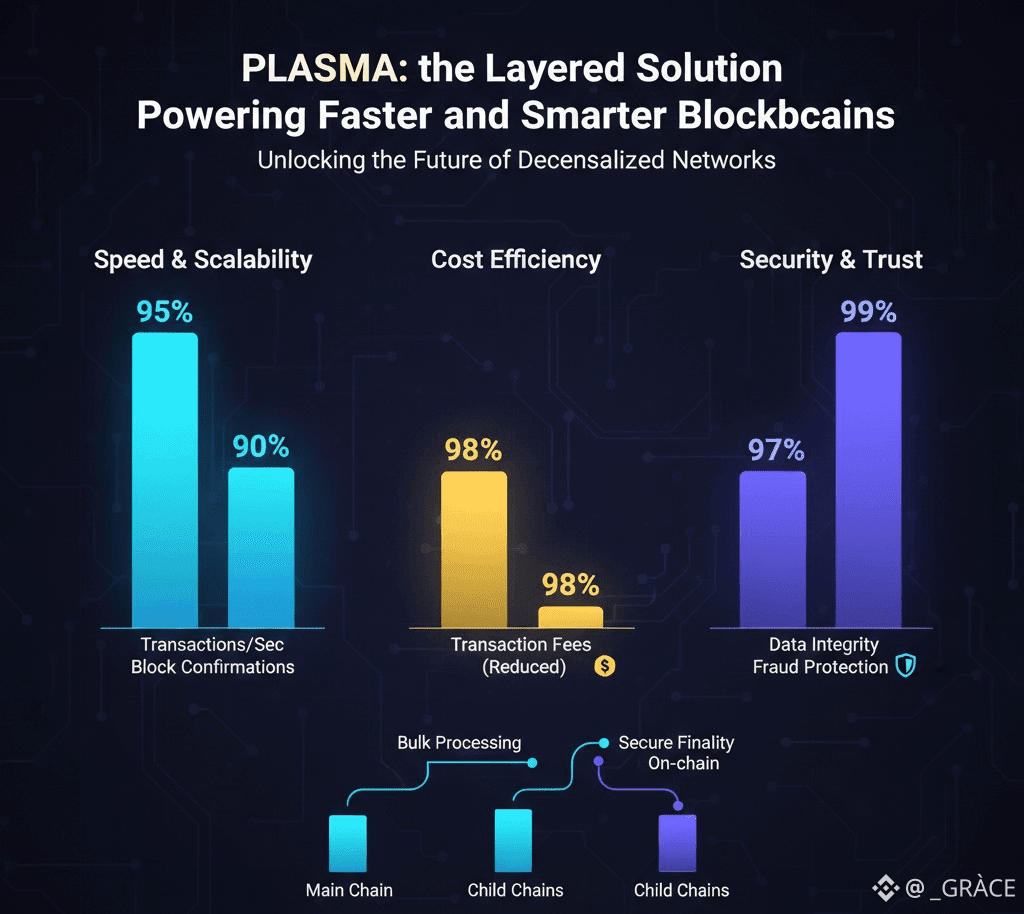
Plasma is one of the most practical solutions in blockchain technology, designed to help networks handle more transactions without slowing down or becoming too expensive. At its core, Plasma addresses a problem that every blockchain user experiences: congestion. As more people interact with a network, the main blockchain can get crowded. Transactions take longer to confirm, and fees rise. Plasma provides a way to manage this load by creating smaller, connected blockchains, often called child chains, which process the bulk of activity before sending the results to the main chain. This layered approach allows the system to scale efficiently while maintaining the security and trust that are fundamental to decentralized networks.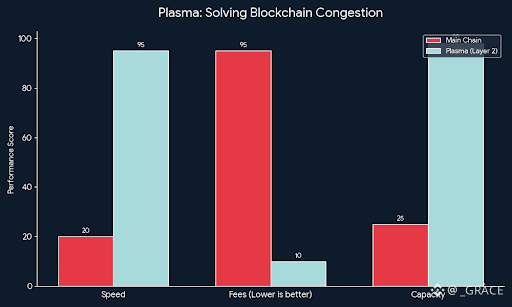
Understanding how Plasma works is easier if we imagine a busy city with congested streets. Each transaction is like a vehicle trying to get to its destination. If every car is forced to travel along the main roads, traffic jams are inevitable. Building more lanes might seem like a solution, but it is expensive and slow. Plasma’s approach is to create secondary routes that handle most of the traffic, delivering only summaries to the main roads. In the blockchain context, these secondary routes are the child chains, where most transactions are executed. Only the final results are anchored to the main chain, reducing congestion and improving speed without sacrificing security.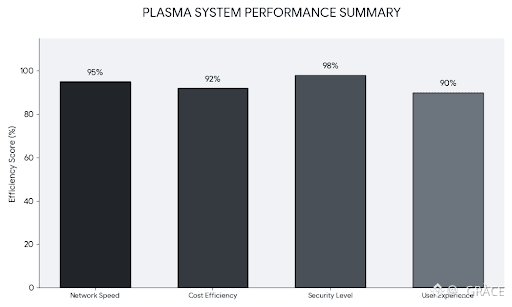
Plasma is structured in a way that maintains trust. Child chains are linked to the main chain through cryptographic proofs. If a child chain tries to act dishonestly or record incorrect data, the main chain provides a mechanism to detect and correct errors. Users also have the ability to exit from child chains safely, moving their assets back to the main chain if needed. This ensures that while transactions happen off-chain for efficiency, the system remains secure and reliable.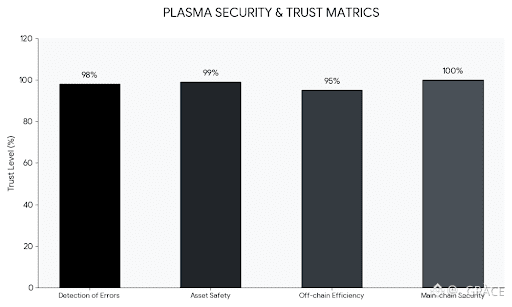
The key points of Plasma highlight why it is so valuable for both users and developers. It allows blockchains to scale, handling more transactions per second than if every action were recorded on the main chain. By processing activity on child chains, fees are significantly reduced, making it feasible to perform microtransactions. Users experience faster transaction confirmations because the bulk of activity is handled off-chain. At the same time, security remains intact, as child chains inherit protection from the main blockchain. The modular design of Plasma allows developers to create scalable applications such as games, marketplaces, and micropayment systems without overloading the network. Its layered approach also encourages efficiency, distributing complexity across multiple chains rather than burdening the main chain.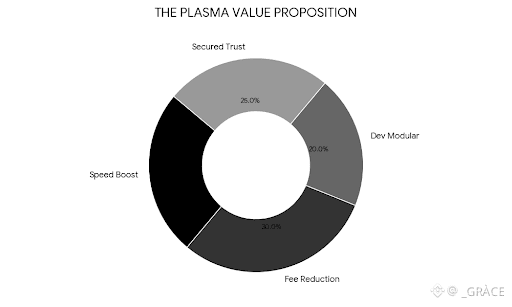
Plasma serves several important functions that make it a versatile solution. It processes the majority of transactions off-chain, which reduces congestion and improves speed. Transactions are batched together and periodically submitted as summaries to the main chain, saving space and lowering costs. Security is enforced through cryptographic proofs and challenge mechanisms, ensuring that malicious or incorrect behavior can be detected and corrected. Developers can build high-performance applications without compromising the integrity of the main blockchain. Plasma also allows users to withdraw assets safely from child chains, providing flexibility and trust. Its layered processing model supports real-world usability, enabling networks to remain resilient even during periods of high demand.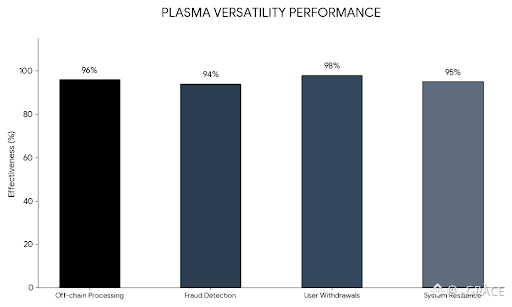
The practical applications of Plasma are wide-ranging. Decentralized exchanges benefit from reduced transaction costs and faster trade confirmations. Blockchain-based games can support thousands of microtransactions without lag, improving the user experience. Micropayment systems and token transfers become feasible on a large scale. Even though newer technologies like rollups have gained popularity, Plasma remains relevant due to its balance of scalability, security, and flexibility. It demonstrates that innovation does not need to be flashy to be effective. By quietly improving the efficiency of blockchain networks, Plasma allows both developers and users to benefit from smoother, more reliable interactions.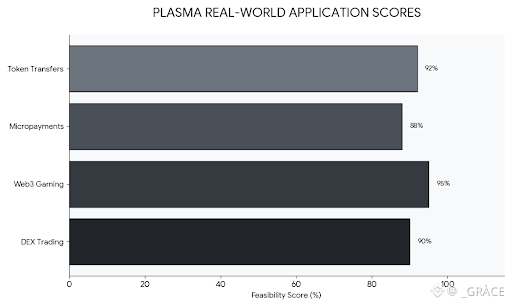
Ultimately, Plasma represents a philosophy of blockchain design that values layered processing, security, and practical usability. It is not a solution that relies on hype or marketing; it focuses on addressing real-world challenges. Users benefit from lower fees, faster confirmations, and smoother applications. Developers gain a framework that allows scalable projects without compromising trust. By distributing the workload across child chains and anchoring results to the main chain, Plasma ensures that blockchains can grow sustainably. It shows that thoughtful engineering can quietly enable networks to handle more users and activity without sacrificing the principles that make blockchain technology valuable.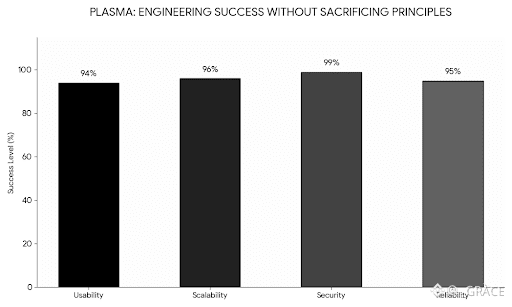
Plasma also teaches an important lesson for the blockchain ecosystem. Meaningful improvements are not always loud or attention-grabbing. Some of the most impactful innovations happen quietly, behind the scenes, yet they influence how the entire network functions. Plasma improves usability, efficiency, and resilience, all of which are crucial for real-world adoption. Its layered design, exit mechanisms, and modular structure make it a tool that is both practical and forward-looking, supporting a wide range of applications from marketplaces to gaming platforms.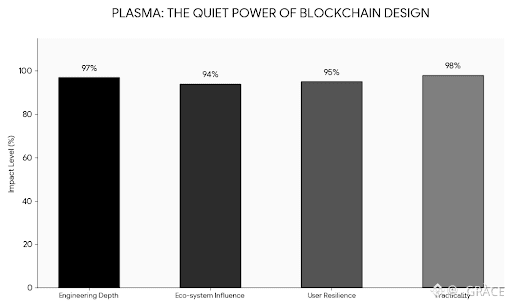
Even as new Layer 2 solutions continue to emerge, Plasma remains a cornerstone for those seeking a balance between security and scalability. By handling routine transactions on child chains while keeping the main chain light and efficient, it provides a blueprint for building practical blockchain networks. It allows networks to grow without compromising the principles of decentralization, security, or trust. In doing so, Plasma quietly underpins the usability of many blockchain applications, proving that efficiency, security, and scalability can coexist.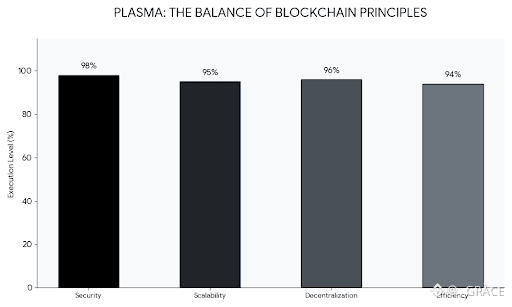
In conclusion, Plasma is not just a technical framework; it is a design philosophy that emphasizes practicality, security, and scalability. By creating child chains, batching transactions, and enforcing security through cryptographic proofs, it enables blockchains to handle higher volumes of activity without slowing down or becoming prohibitively expensive. Its layered approach allows both users and developers to interact with the network confidently, while supporting a wide range of real-world applications. Plasma demonstrates that innovation does not always need to be flashy to matter. By focusing on efficiency and reliability, it provides a solid foundation for blockchain networks, ensuring they remain functional, secure, and usable as they continue to grow and evolve.