

Web3 games are often judged by how they perform after launch. Far less attention is paid to how difficult they are to build in the first place.
For many studios, the biggest obstacle isn’t player adoption or infrastructure costs it’s development friction. Compared to traditional game development, building a Web3 game still involves more tools, more failure points and more time spent solving problems that have nothing to do with gameplay.
In Web2, developers work inside mature engines and pipelines. Assets, logic, servers and analytics are tightly integrated. In Web3, teams must bridge game engines with wallets, smart contracts, asset standards and external infrastructure. Each integration adds complexity, slows iteration and increases the risk of bugs.
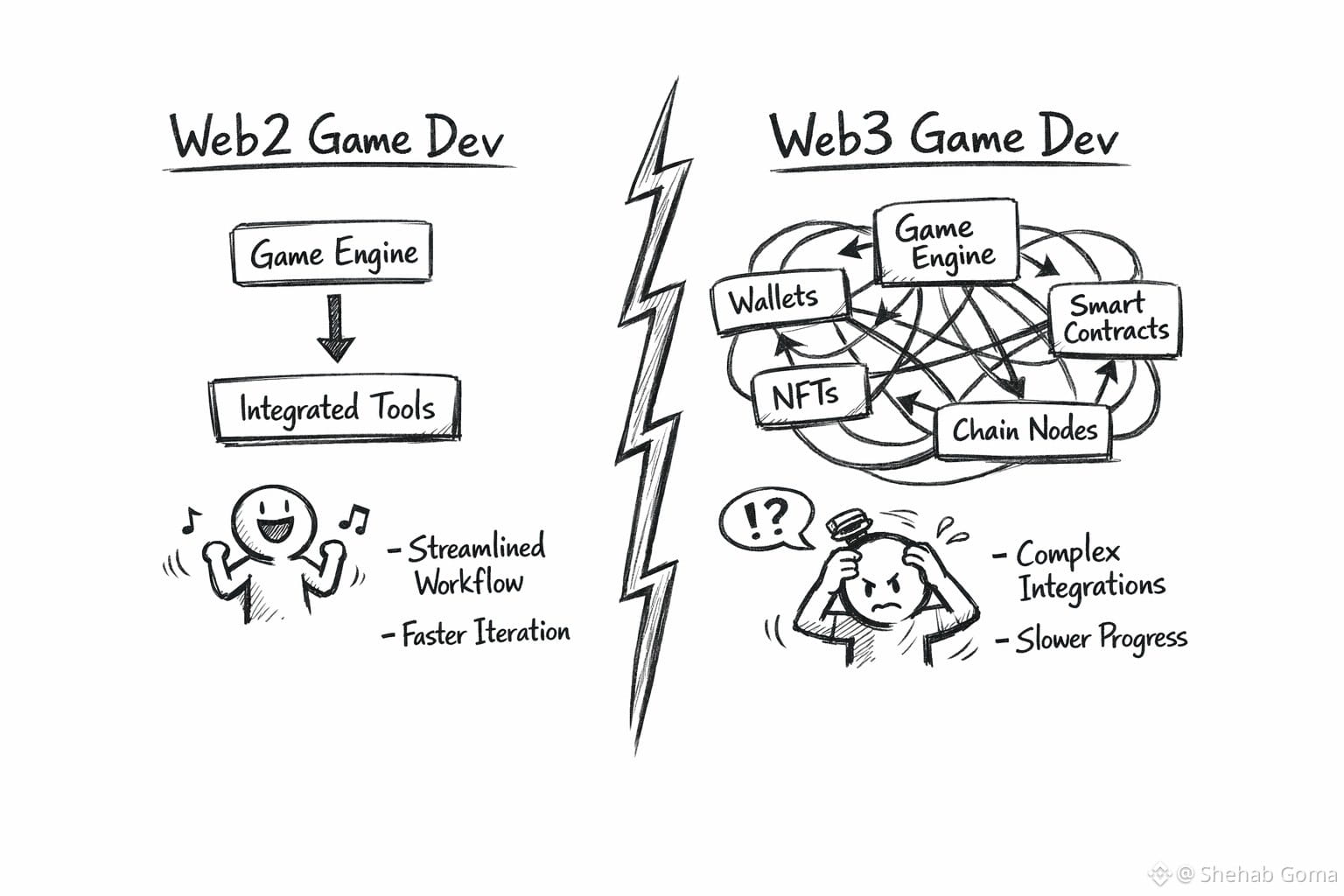
This friction has real consequences. Slower development cycles mean fewer updates, delayed fixes and limited experimentation. Over time, this affects player retention more than any technical metric.
General-purpose blockchains were not designed with game development workflows in mind. Developers often need to adapt their design to fit the chain, rather than the other way around. Simple gameplay changes can require contract updates, migrations or backend work that would be trivial in a traditional environment.
This is where gaming-native infrastructure begins to matter. Networks like VanarChain aim to reduce the gap between how games are built and how blockchains operate. Instead of forcing developers to work around blockchain limitations, the goal is to make blockchain components feel like a natural extension of the game stack.
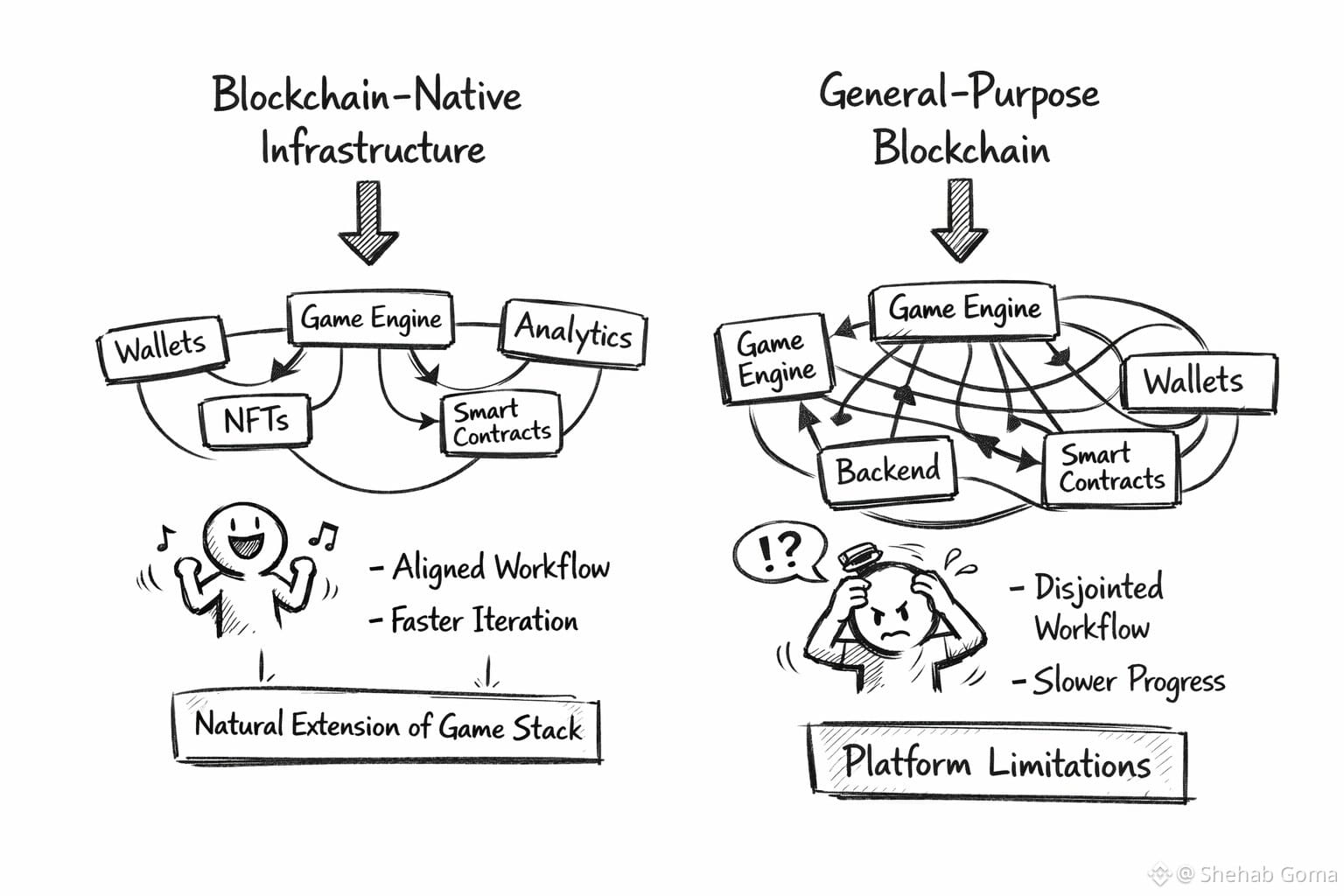
Lowering development friction doesn’t mean removing decentralization. It means abstracting complexity where it doesn’t add value to gameplay. Faster iteration, clearer tooling and predictable behavior allow studios to focus on what actually matters: designing engaging experiences.
As Web3 gaming matures, infrastructure will be judged not only by performance but by how quickly teams can build, test and improve their games. The chains that make development easier without compromising core principles may end up shaping the next generation of Web3 titles.
In the long run, better tools might matter just as much as better technology.
