

People love to argue about blockchain governance. Honestly, most of it’s just noise. On a lot of chains, governance turns into a kind of performance art—DAOs everywhere, proposals flying around, votes for the sake of voting. From the outside, it looks busy and democratic, but inside? It just slows everything down. Nothing gets built. Nothing meaningful moves forward. Vanar Chain isn’t interested in that game. The whole point here is building stuff that actually works in the real world—games, metaverse projects, AI, big mainstream apps. That’s what matters. Not endless drama. Not voting marathons.
Vanar doesn’t care about showing off on-chain participation stats. The goal is to make life easier for builders. Cut out the distractions. Focus on the mission.
Governance That Actually Works
On Vanar, governance isn’t some afterthought. It’s baked in. The network is built for serious, large-scale apps that need a stable foundation—rules you can rely on, not a system that shifts every time someone gets bored or restless. When things keep changing, developers pay the price. Imagine building a game or a digital economy, only to wake up one day and find the ground’s shifted under your feet.
So Vanar skips the circus. Not every decision needs a poll. The team is focused on stability, strong engineering, and predictability.
A Smarter Setup
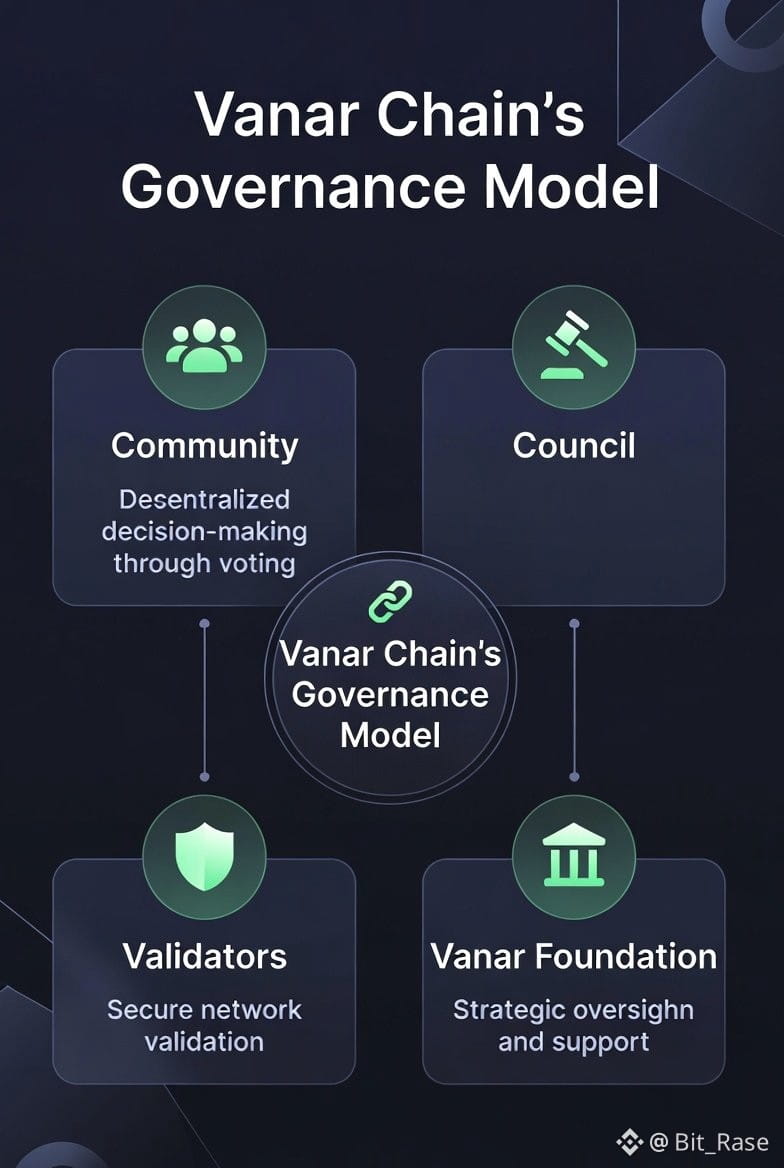
Vanar’s governance isn’t just one big, messy pot. It’s layered. Different groups handle different jobs.
1. Core Protocol Governance
Big changes—think consensus updates or major upgrades—go through a careful process. The team and main contributors, the folks who know the tech inside out, take the lead here. They test updates, look out for the network’s long-term health, and tune out the hype. No chasing fads.
Builders can actually relax, knowing the apps they’re working on won’t break overnight. Studios and businesses need that peace of mind.
2. Validator and Network Operations Governance
Validators keep things running smoothly and securely. They help with upgrades and offer feedback, but they’re not running the show. Their main job is to keep the network steady, not get caught up in power struggles.
This stops big staking groups from taking over.
3. Ecosystem and App-Level Governance
Here’s where you get real innovation. Projects on Vanar can launch their own DAOs, hold NFT votes, experiment to their heart’s content. They can try new things without putting the whole chain at risk.
So the real action happens inside the apps and communities—not by constantly messing with the foundation everyone relies on.
Token Power—With Limits
The Vanar token matters. You need it for fees, staking, rewards. But just holding tokens doesn’t give you the keys to the kingdom.
That’s on purpose. If you let whales or early investors run everything, you kill real decentralization. By limiting token-based governance at the protocol level, Vanar keeps the network safe from reckless decisions and short-term thinking.
Actually Built for Builders
Here’s the bottom line: Vanar is for creators, for real businesses. Studios and brands want stability. They can’t have the rules of the game changing every time there’s a Twitter spat or a dramatic vote.
Vanar delivers what they need. It tells builders: This isn’t an experiment that’s going to swerve off the rails every week. The chain is steady. You can trust it with your games, digital worlds, AI services—anything you want to build and keep running for the long haul.
Change—But No Chaos
Vanar’s governance isn’t rigid. The network can adapt and get better, but changes happen with care, step by step. Not because of some knee-jerk reaction. Here, governance is about guiding growth without wrecking the stable ground everyone depends on.