

Let’s be honest: there’s not going to be just one blockchain to rule them all. Instead, we’re heading for a world with dozens, maybe hundreds, of chains—each doing their own thing. Some chains are all about speed. Others focus on compliance, gaming, AI, or finance. So the real question isn’t “Which chain wins?” anymore. It’s “Which infrastructure will actually work no matter how many chains show up?” That’s where WAL, or Walrus, steps in. It’s not another execution layer trying to beat the rest. It’s about being a core piece that fits into a world full of different chains.
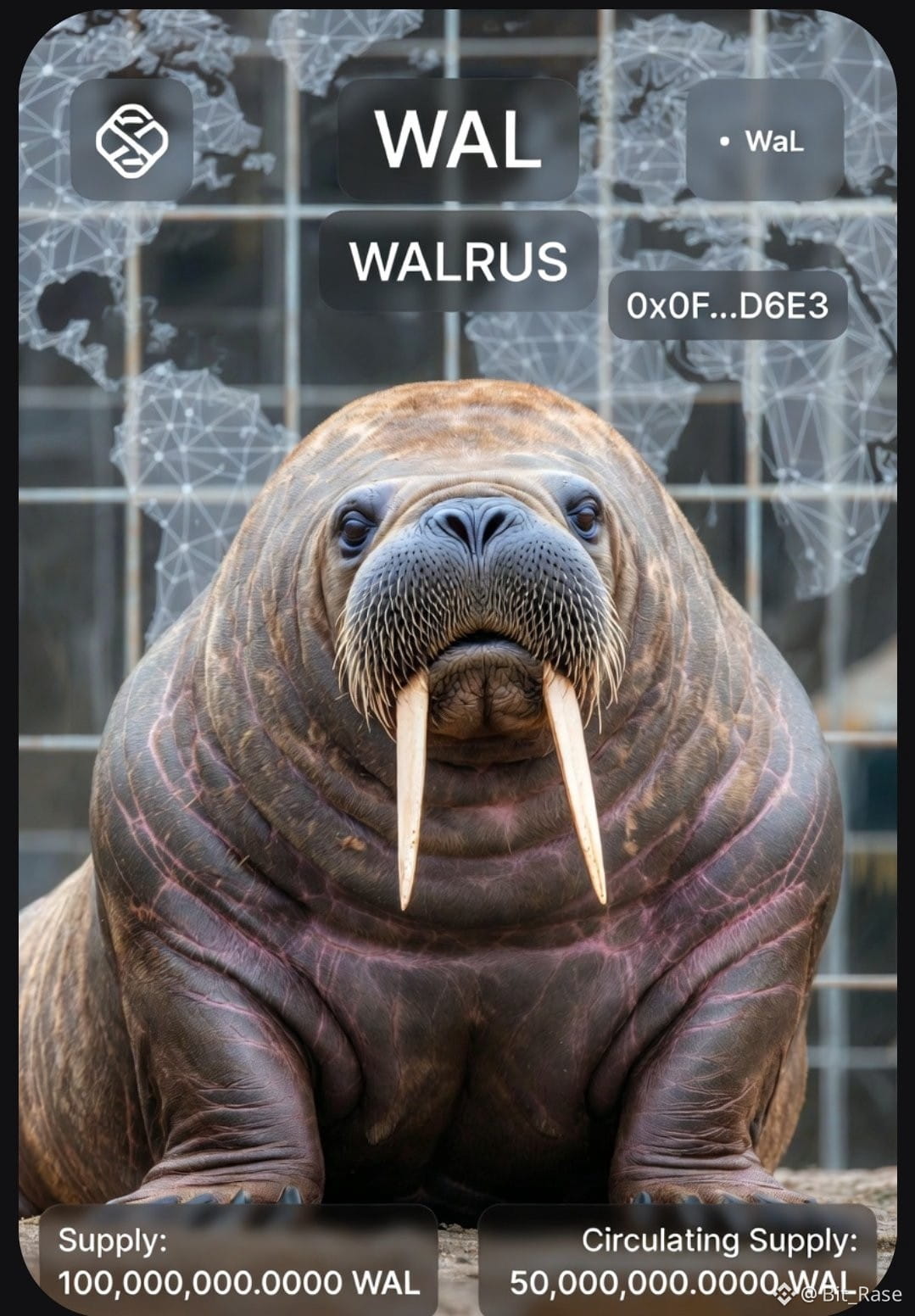
Here’s what matters: Walrus solves a problem most people don’t even mention in Web3—storing huge amounts of data. Blockchains are great for consensus and settling transactions, but once you need to handle big data, they fall short. As Web3 apps grow—AI, games, NFTs, new social stuff—the data starts piling up way beyond what a single chain can handle. With so many chains, the problem just gets worse. Data ends up all over the place. WAL steps in as a decentralized, chain-agnostic storage layer. Any blockchain can tap into it.
The idea behind Walrus is to untangle things. In the early days, blockchains bundled execution, consensus, and storage together. That works fine at first, but it just doesn’t scale. Walrus breaks storage out of the bundle. Chains can focus on processing and updating states, while Walrus takes care of the heavy data work. Think about how the internet evolved: we stopped using one-size-fits-all servers and moved to specialized cloud storage and computing. Same vibe here.
One of WAL’s biggest strengths is its neutrality. It doesn’t care which Layer 1 you’re on, which virtual machine you picked, or what ecosystem you’re loyal to. WAL isn’t chasing DeFi volume or trying to steal users. It just wants to connect with any chain that needs storage. Whether you’re building something for finance, gaming, AI, or compliance, WAL can be your data backbone. In Web3, that kind of neutrality really matters. If infrastructure picks sides, it never becomes the standard.
Developers get a big break, too. Without a shared storage layer, you have to keep your data synced across lots of chains or trust some centralized service. Walrus gives you one dependable place for big, persistent data. That means your app can run on multiple chains and always point to the same data source. Real cross-chain experiences become possible, not just isolated copies. This changes the game for NFTs, gaming items, decentralized identities—anywhere you need data to stick around and stay consistent, no matter where things are happening.
Now, AI is where Walrus really stands out. AI needs tons of data—model checkpoints, training sets, logs, even memories for autonomous agents. Storing all that is messy and expensive, especially if your AI lives on several chains at once. WAL becomes a decentralized memory bank for these agents. The data stays open, verifiable, and can’t be censored—so you’re not forced back to big cloud providers. Without something like Walrus, “decentralized AI” is just hype, not reality.
Here’s the kicker: as the blockchain world splinters into more chains, WAL just gets more useful. Every new chain that connects to Walrus increases the demand for data storage and retrieval. Its value comes from real activity—actual data that people and apps need—not just speculation. In a space where most chains are fighting to survive, the infrastructure that fits in everywhere is the one that sticks around. WAL isn’t betting on one winner; it wins if lots of ecosystems keep popping up.