
@Vanarchain The most important systems in our lives rarely introduce themselves. They don’t flash notifications asking for praise or explain how hard they are working. They simply exist, quietly doing what they were built to do, day after day. When they succeed, nothing happens. When they fail, everything suddenly matters. Building this kind of infrastructure requires a mindset that runs counter to hype, speed, and visibility. It demands patience, restraint, and an unusual comfort with being unseen.
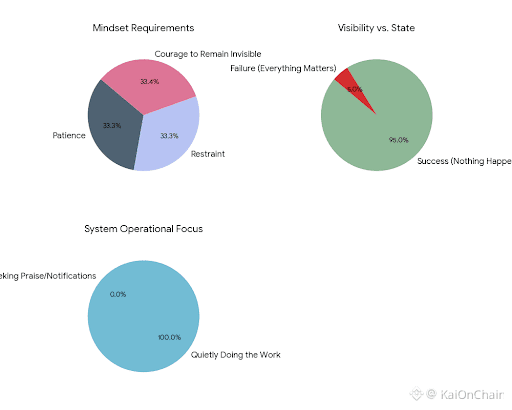
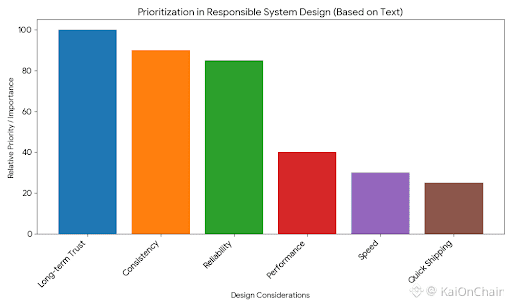
When a system is meant to carry real value, protect personal data, or support activity people depend on, responsibility becomes the central design constraint. Every choice is heavier. Performance matters, but consistency matters more. The question shifts from how fast something can move to how reliably it behaves when conditions are imperfect. Engineers stop asking what can be shipped quickly and start asking what can be trusted years from now. That shift alone changes how technology is written, reviewed, and maintained.
Privacy in these systems is not a slogan or a checkbox. It is an everyday practice. It shows up in small decisions about what not to collect, what not to store, and what not to expose. It requires accepting that just because data can be accessed does not mean it should be. This kind of restraint is rarely visible to users, but it is felt in the long run through the absence of harm, surprise, or misuse. True privacy work leaves no trace, and that is precisely the point.
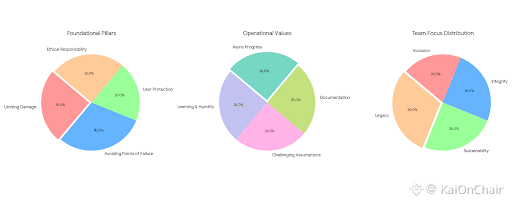
Decentralization, when treated seriously, grows out of the same sense of responsibility. It is not about ideology or novelty, but about limiting damage. No single system, team, or individual should have the power to silently change the rules or become a point of failure. Distributing control is a practical acknowledgment of human fallibility. It assumes mistakes will happen and designs around them, protecting users not through promises, but through structure.
This philosophy also reshapes how teams work together. Building long-lived infrastructure favors learning over certainty and humility over confidence. Assumptions are challenged early because unexamined beliefs become liabilities at scale. Documentation is written with care, not for today’s deadlines but for future contributors who will inherit decisions without context. Work happens asynchronously, giving ideas room to breathe and decisions time to mature. Progress may feel slower, but it is steadier, and steadiness compounds.
In environments like this, trust is never claimed outright. It is earned quietly through repetition. Through systems that behave the same way on bad days as they do on good ones. Through teams that take responsibility when things go wrong and design so that failures are contained rather than catastrophic. Over time, reliability becomes a form of communication, a signal that users do not need to think about what is happening behind the scenes.
Projects built with real-world adoption in mind, such as Vanar, reflect this quieter ambition. When infrastructure is meant to support games, digital environments, brands, and everyday interaction, its success depends on fading into the background. Users should not have to understand the architecture to benefit from it. The technology’s highest achievement is enabling activity without drawing attention to itself.
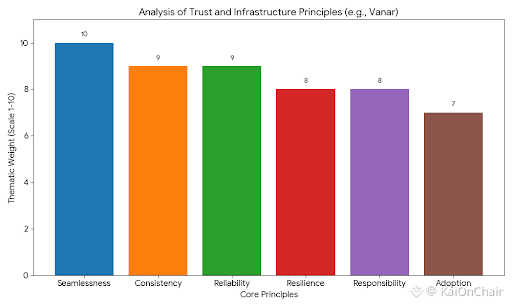
@Vanarchain Infrastructure worth relying on is never the result of a single moment or a clever launch. It is shaped by countless small decisions layered over time, each one guided by the question of what happens if this fails. The answer to that question is what separates systems built for attention from systems built for trust. In the end, the work that matters most is often the work that refuses applause, content to remain invisible as long as it continues to hold everything else together.
