@Dusk The systems that matter most are often the ones you never notice. They do not seek attention, they do not celebrate themselves, and they rarely make noise. Yet they carry a weight that is impossible to ignore—the quiet responsibility of keeping data private, value moving, and trust intact. To build something like this is to embrace a philosophy of patience, humility, and careful deliberation. Every choice matters, because the cost of error is never theoretical. It is immediate, personal, and sometimes irreversible.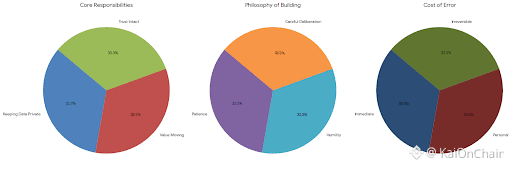
In spaces where privacy and financial integrity intersect, decisions take on a gravity that cannot be hurried. When a system handles sensitive information or moves real-world value, every line of code, every architectural design, every operational procedure becomes a moral decision. Speed and visibility are distractions, tempting but shallow. The true work is invisible, unfolding quietly over time, layer by layer, with a meticulous attention to consistency and reliability. Trust is not something you announce; it is something you demonstrate through daily fidelity, through a system that behaves the same way today as it did yesterday, and that will continue to behave the same way tomorrow.
This discipline shapes everything. It guides how teams communicate across time zones and asynchronous schedules. It informs how assumptions are questioned, failures anticipated, and documentation written not for immediate recognition but for the people who will come after. Decentralization, often spoken of as a buzzword, is in practice a safeguard, a way to protect users from single points of failure and sudden loss of control. Privacy is not a feature—it is the backbone of every interaction, embedded by design so that sensitive information remains secure even as the system continues to operate seamlessly.
Building in this way requires a culture that values learning over pride, reflection over reaction, and accountability over applause. Every technical choice is an ethical one, every process a reflection of care for the people who rely on it. Redundancy, modularity, and auditability are not strategies for show; they are commitments to reliability, to protecting the integrity of a system that others must trust without seeing. Failures are expected, but the goal is to anticipate them, to design so that the impact is contained, and to ensure that lessons are captured and shared.
The horizon matters more than the next release. Infrastructure worth relying on is not born from hype or speed. It is cultivated slowly, through deliberate, thoughtful decisions that accumulate over time. Every line of code, every protocol, every procedural step is a statement of responsibility. It is a quiet assertion that some work is too important to be rushed, too consequential to be left to chance. In this patience lies its strength, and in its consistency lies its trustworthiness.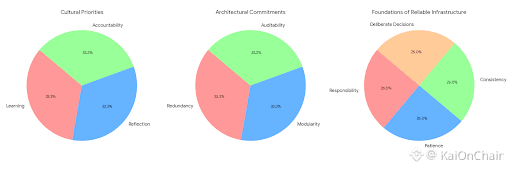
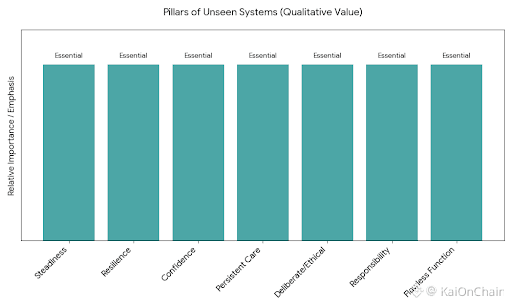
@Dusk the value of unseen systems is measured not in applause or attention, but in their steadiness, their resilience, and the confidence they inspire. They remind us that the most important work is often invisible, that trust is earned through persistent care, and that the systems we build today shape the lives and freedoms of those who will rely on them tomorrow. In choosing to move deliberately, thoughtfully, and ethically, the builders of these systems honor the immense responsibility they carry, knowing that their work is only visible in its absence—when it continues to function flawlessly, quietly beneath the surface.