
Most tokens in crypto are built to be traded first and understood later. Price becomes the product, narratives follow the chart, and usage is often something promised for the future. Over time, this creates a familiar pattern. Activity spikes when speculation is strong and fades when attention moves elsewhere. What remains is usually a thin layer of real usage that struggles to justify the value that once existed on paper.
@Vanarchain is approaching this problem from a different direction. Instead of asking how to make a token attractive to traders, it starts with a quieter question. What does the network actually do every day, and how does the token fit into that behavior in a way that cannot be easily replaced. This difference in starting point is why $VANRY behaves less like a speculative chip and more like an operational asset tied to usage.
To understand this, it helps to separate two ideas that are often blurred in crypto. One is demand driven by belief. The other is demand driven by necessity. Belief-based demand is powerful but fragile. It depends on sentiment, momentum, and external narratives. Necessity-based demand grows more slowly, but it compounds because it is linked to actions that must continue regardless of market mood. VANAR is designed around the second category.
The VANAR network is built to support environments where computation, data, and enforcement matter more than raw transaction speed. In practical terms, this means applications that involve AI logic, persistent data, validation rules, and ongoing execution rather than one-off interactions. These systems are not switched on and off depending on price cycles. Once deployed, they tend to run continuously.
This is where $VANRY enters the picture. The token is not positioned as a passive store of belief, but as an active component in how the network operates. When developers deploy applications, when AI-driven processes execute onchain logic, when data is stored, verified, or enforced, the token becomes part of the cost structure of doing business on VANAR. This creates demand that is directly proportional to usage rather than hype.
In speculative systems, transaction volume often explodes during bull markets because users are trading with each other. The same assets move back and forth, creating the illusion of activity. On VANAR, activity is tied to execution. An AI agent performing inference checks, validating data states, or enforcing policy rules consumes network resources. Those resources are paid for using $VANRY. Even if there is no trader watching a chart, the token is still being used.
This distinction matters because execution-based demand behaves differently over time. It is more stable. It grows as applications scale, not as narratives trend. If an application processes ten thousand operations per day and grows to one hundred thousand, token usage increases by an order of magnitude without any need for speculative participation. That growth is organic and difficult to fake.
Another important aspect is how VANAR treats memory and data persistence. Many blockchains are optimized for ephemeral interactions. Once a transaction is confirmed, the network moves on. VANAR places emphasis on state, memory, and continuity. Applications that rely on historical data, long-term rules, or evolving models benefit from this design. However, persistent systems require persistent costs. Storing, validating, and interacting with data over time is not free. VANRY is the mechanism through which these costs are paid.
This creates a feedback loop that is fundamentally different from speculative token models. As more applications rely on VANAR for long-running processes, token demand becomes embedded in their operational budgets. Developers and organizations plan around this. They acquire tokens not to flip them, but to ensure continuity of service. This shifts the holder base from short-term traders to long-term users.
There is also an important behavioral effect here. When a token is primarily used for speculation, price volatility becomes a feature. When a token is primarily used for operations, volatility becomes a risk. VANAR’s design implicitly discourages extreme volatility because it would undermine the very applications that drive usage. This does not mean the token will never fluctuate, but it does mean there is structural pressure toward stability as usage grows.
Another layer that reinforces this dynamic is enforcement. VANAR is not just a passive execution layer. It is designed to support systems where rules matter and outcomes must be enforced. Whether this involves AI agents executing policies, applications validating constraints, or systems coordinating actions across participants, enforcement requires stake and accountability. VANRY plays a role in aligning incentives so that actors who participate in enforcement have something at risk.
In speculative ecosystems, enforcement is often weak because participants are transient. On VANAR, the expectation is that participants remain because they are tied to ongoing systems. This makes enforcement meaningful. Validators, operators, and application builders are economically exposed to the health of the network. Their incentives align with long-term reliability rather than short-term extraction.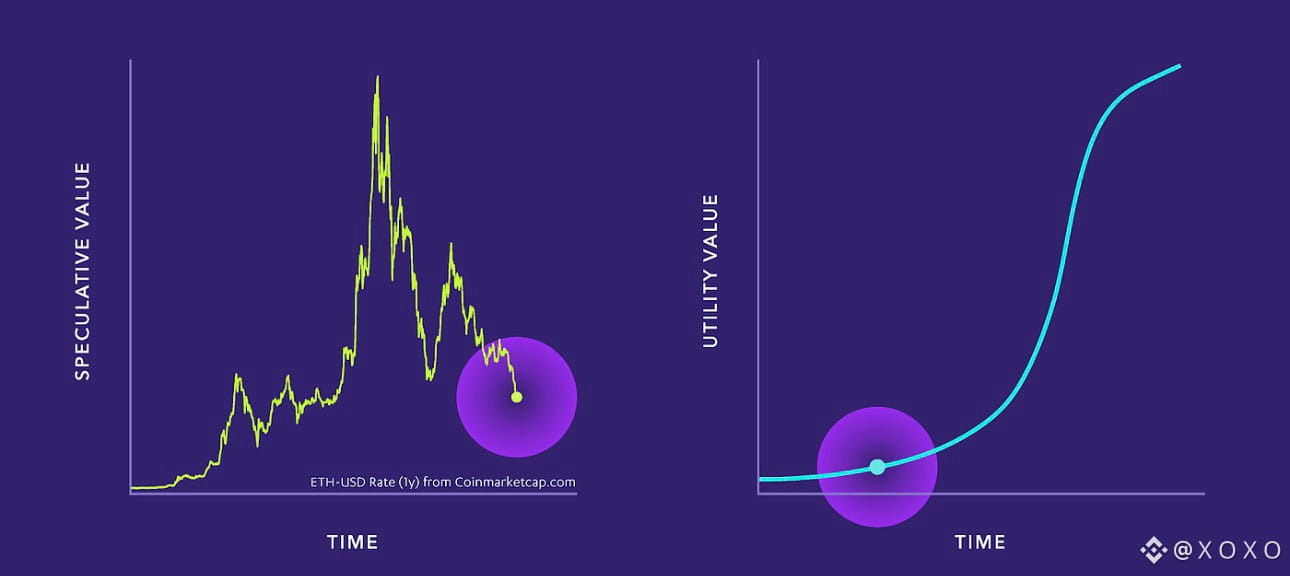
It is also worth examining how value accrues over time. In many networks, value is front-loaded. Early excitement drives high valuations before meaningful usage exists. Later, networks struggle to justify those valuations through fees or adoption. VANAR’s approach is slower but more grounded. Value accrues as usage grows. If the network processes more AI-driven workloads, manages more data, and enforces more logic, token demand increases naturally.
This does not produce dramatic spikes overnight. Instead, it creates a gradual tightening between network relevance and token utility. Over time, this can lead to a situation where removing the token from the system would meaningfully disrupt operations. That is a strong form of value capture because it is based on dependency rather than belief.
Another important angle is how this affects developer behavior. Developers building on VANAR are incentivized to design efficient systems because their operational costs are real. They are not subsidized by speculative excess. This leads to applications that are more thoughtful about resource usage and scalability. As these applications mature, they become less likely to migrate elsewhere because their logic is deeply integrated with VANAR’s architecture.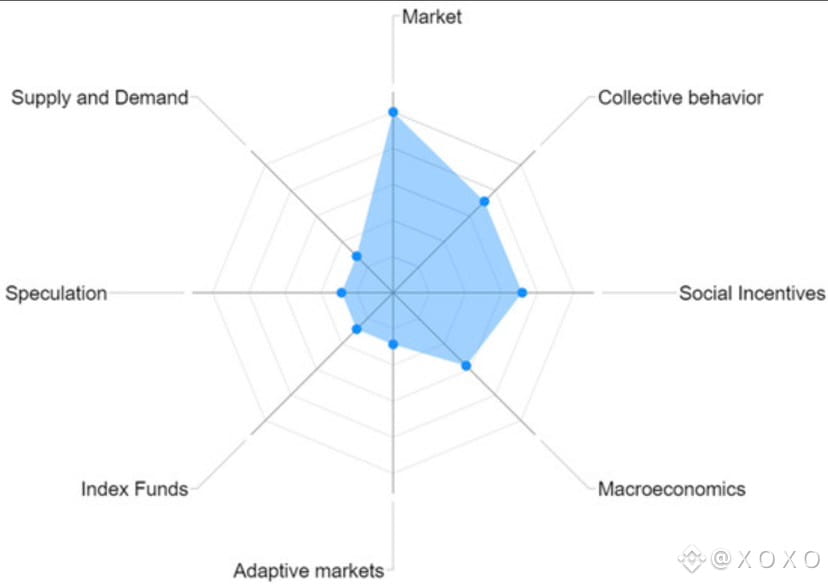
From a user perspective, this creates trust. When users interact with applications that feel stable and predictable, they are more likely to continue using them. That usage feeds back into token demand. This loop is subtle but powerful. It does not rely on marketing. It relies on consistency.
There is also a macro perspective worth considering. As AI systems become more autonomous, the need for verifiable execution environments increases. Systems that can remember, reason, and enforce outcomes over time require infrastructure that does not reset with every transaction. VANAR positions itself as such infrastructure. If this vision materialises, the demand for VANRY grows not because people want exposure to AI narratives, but because AI-driven systems require it to function.
This is where the difference between reflective value and speculative value becomes clear. Speculative value reflects what people think might happen. Reflective value reflects what is already happening. VANRY reflects usage because it is consumed by activity that exists today and is designed to scale tomorrow.
My take on this is that VANAR is deliberately choosing a harder path. It is slower, less flashy, and less forgiving of empty narratives. However, it builds something that is easier to defend over time. When a token is woven into the daily operation of systems that cannot simply stop, its value becomes less about persuasion and more about necessity. If VANAR succeeds in becoming the execution layer for persistent, intelligent systems, then VANRY will not need speculation to justify itself. Its value will already be visible in how often it is used and how difficult it would be to replace.
