
In the fast-evolving landscape of decentralized infrastructure, Walrus stands out with a compelling milestone: over 23 petabytes of real data stored since its mainnet debut in March 2025. This isn't just volume—it's a strong signal of developer trust and practical utility, positioning Walrus as a go-to primitive for data-heavy applications on Sui.
Walrus's Core Innovation: Erasure Coding Meets Decentralized Scale
At its heart, Walrus leverages advanced erasure coding combined with distributed scheduling to deliver storage that's both resilient and cost-effective. By reducing the replication factor to around 4.5 times—far leaner than traditional setups—it withstands over two-thirds of nodes failing without data loss. This design choice is hard to fake, enabling costs that hover at 1.3 to 1.9 times those of centralized giants like AWS S3.
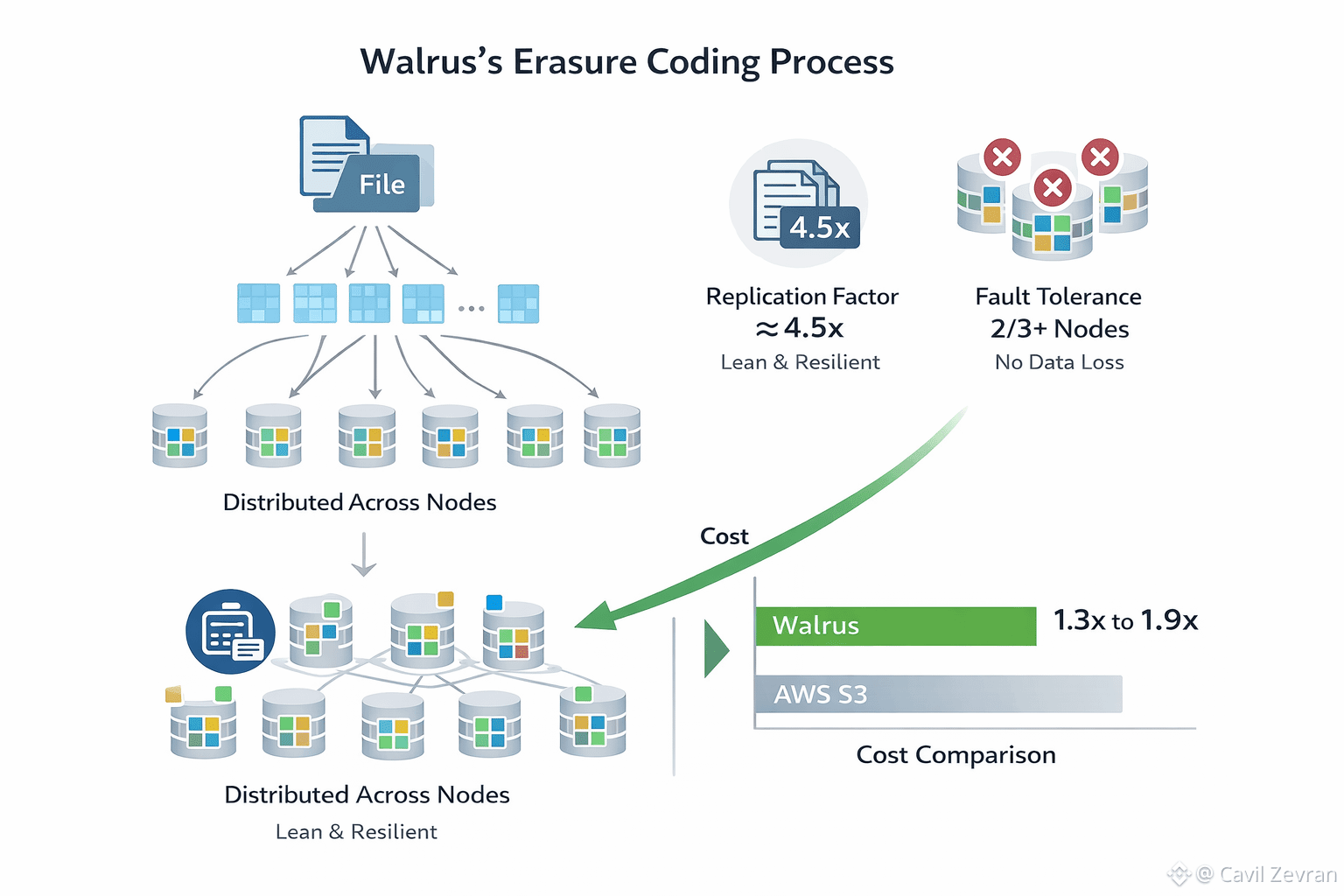
Such efficiency isn't theoretical. On-chain, it translates to verifiable blobs treated as full Move objects on Sui, allowing seamless programmability. Developers can script logic directly onto stored data, from versioning to access controls, fostering composable apps that scale without bottlenecks.
Decoding the Growth: Key On-Chain Metrics in Early 2026
Diving into the numbers, Walrus's accumulation of 23PB by January 2026 reflects accelerating adoption. This growth trajectory—spanning files, datasets, and models—highlights its role in data availability for rollups and beyond. Transaction volumes tied to storage operations show consistent upticks, with cryptographic integrity ensuring every blob is tamper-evident and content-addressed.
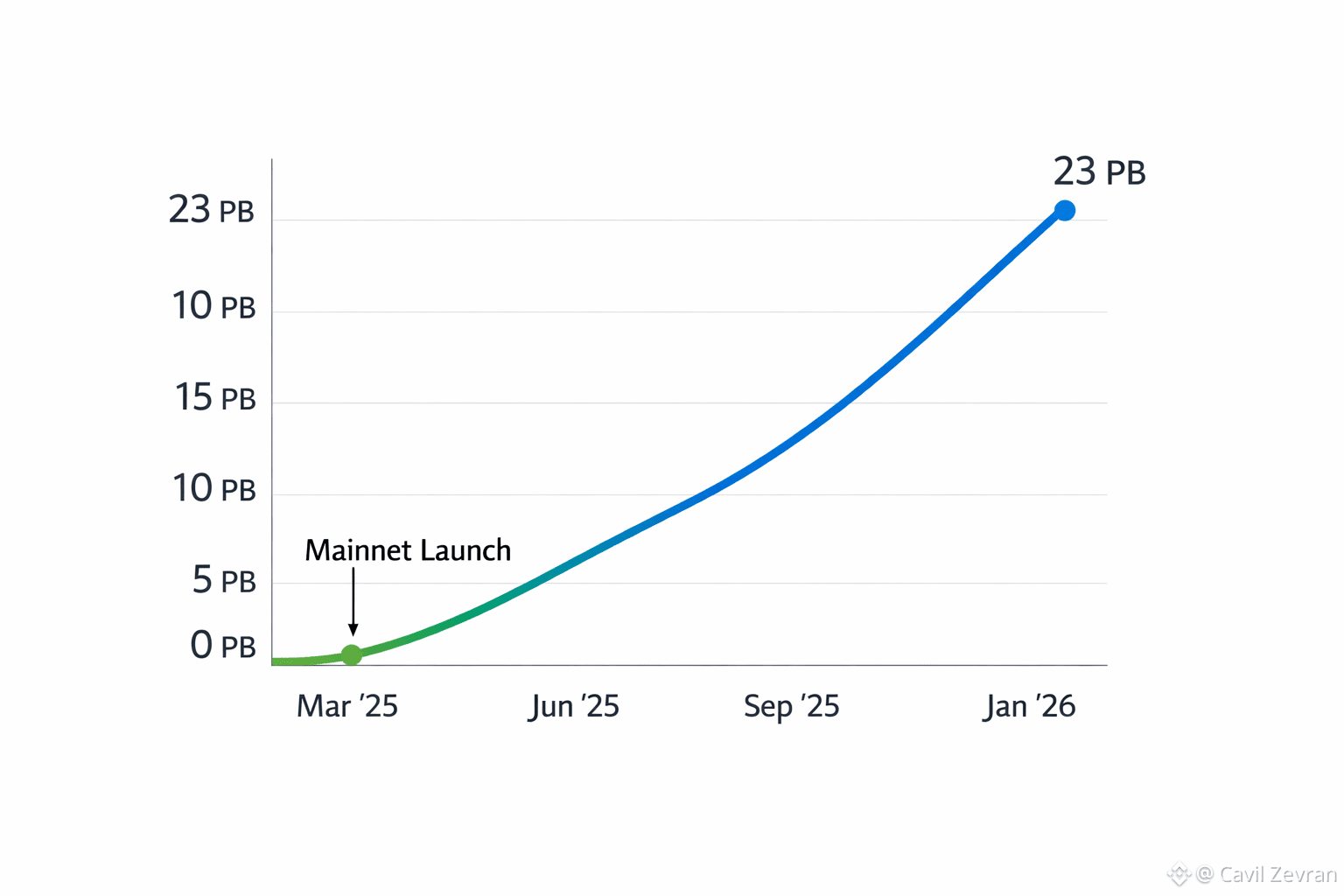
These metrics aren't isolated; they tie into Sui's broader stack, where Walrus complements execution layers for end-to-end verifiability. For instance, partnerships like those with Itheum for data tokenization amplify this, turning raw storage into a marketplace for verifiable assets.
Why Sui Integration Gives Walrus a Clear Edge
Built natively on Sui, Walrus benefits from the chain's object model and high-throughput design. Unlike bolted-on solutions in other ecosystems, this integration enables dynamic resource allocation, where storage nodes compete on pricing via the WAL token's deflationary mechanics—burning 0.5% of payments to counterbalance rewards.
This setup creates a flywheel: as usage climbs, scarcity builds, rewarding long-term participants. In practice, it means AI agents or DeFi protocols can reference off-chain data on-chain without trusting centralized providers, a high-leverage shift for 2026's data-driven economy.
Macro Ties: Walrus in the Era of Verifiable AI and Privacy
Looking broader, 2026's macro trends—rising AI demands and privacy regulations—play to Walrus's strengths. With decentralized storage as a foundational layer, it addresses scalability gaps in Web3, supporting everything from media distribution to model training datasets. The protocol's focus on integrity positions it smartly amid growing scrutiny on data provenance.
Recent updates, like Q1 2026 plans for enhanced large-file handling and price stabilization, underscore this forward momentum. It's the kind of infrastructure that scales with ecosystem needs, quietly enabling innovations without the hype.
Future Outlook: Building Toward Developer-Friendly Horizons
Walrus's roadmap emphasizes usability, with tools for easier integration and cost predictability. As Sui's ecosystem matures, expect Walrus to anchor more complex apps, from content platforms to AI marketplaces. This isn't about overnight dominance but sustained value creation through proven tech.
Discussion
1. How might Walrus's erasure coding approach influence the cost structures of emerging AI applications on Sui?
2. What on-chain metrics beyond storage volume could best indicate Walrus's long-term adoption potential?