

I’ve spent a lot of time talking to traditional fund managers about blockchain, and they all share one specific nightmare: a transaction being reversed after it was "confirmed." In the crypto world, we call this a fork or a re-org. In the banking world, we call it a systemic failure.
Most Layer-1 networks are built on "probabilistic finality." You send a payment, wait for a few blocks, and hope it’s permanent. That works for retail speculation, but it’s a non-starter for the €300M in tokenized securities that DuskTrade and NPEX are preparing to move on-chain.
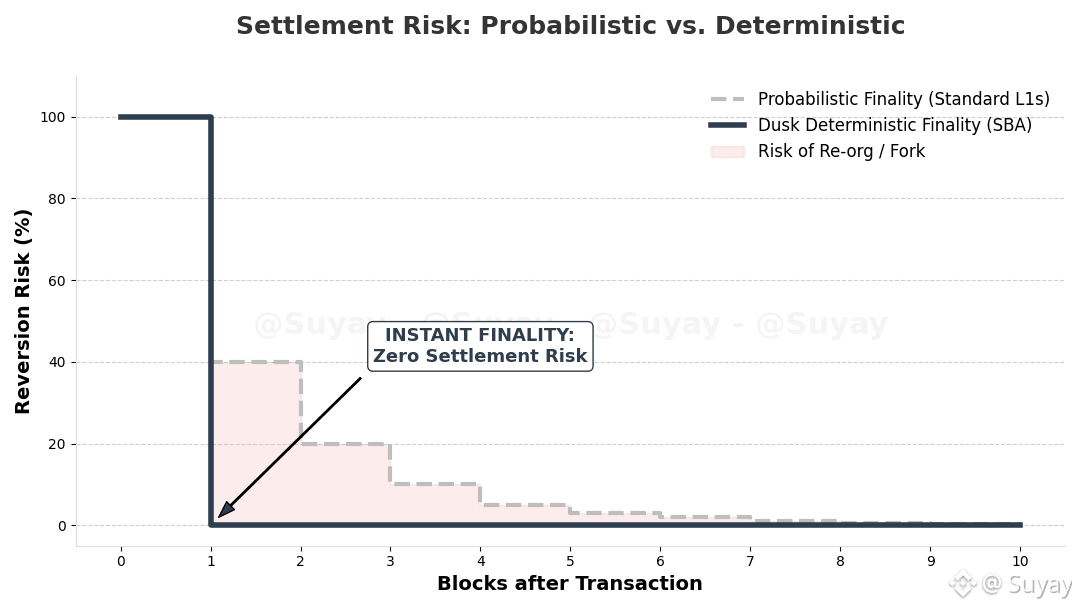
This is where my perspective on @Dusk shifted. Dusk didn't build just another fast chain; they built an institutional settlement layer. Through the SBA (Segregated Byzantine Agreement) consensus, Dusk provides instant, deterministic finality. Once a Provisioner validates a block, it is law. Period. No forks. No "waiting for 20 confirmations."
Being a Provisioner—which requires a 1,000 $DUSK stake—isn't about "getting rewards." It's about being the backbone of a network that behaves like a clearing house, not a casino. We are securing an infrastructure where assets like bonds and stocks require absolute certainty from the millisecond they are traded.
As we approach the Mainnet launch this January, the conversation needs to move beyond "how fast" to "how sure." If the settlement isn't final, the asset isn't real. Dusk is building for the day when institutions stop "experimenting" and start migrating their core books to the blockchain.
Are we ready for a network that is as boringly reliable as a central bank? I think that’s exactly what the market is starving for. #Dusk
