
I’ve been around blockchains for a while now. Some trading, some holding, mostly watching which infrastructure might actually survive. Lately though, whenever I try to use stablecoins for anything practical, I get annoyed. Not angry. Just that low-level frustration that makes you stop for a second. It’s not crashes or hype cycles. It’s the basic stuff. You start wondering if this is really ready for normal people or businesses without having to think so hard every time.
Last month was a good example. I was paying a freelancer overseas using USDC on Ethereum. Nothing complex. Convert fiat, send, done. But while doing it, I realized how exposed everything is. The sender, the amount, the timing. Anyone can see it. Yeah, it’s pseudonymous, but with analytics tools everywhere, it doesn’t feel private. Especially if one side is a business dealing with tax reporting or compliance. The client mentioned they had to manually log it for accounting, and that stuck with me. I remember thinking there should be a way where this stays private by default, but you can prove details only if needed. It wasn’t a problem in the moment, but it left that uneasy feeling. Like this could turn into extra work later. Fees were fine that day, but the uncertainty hangs around.
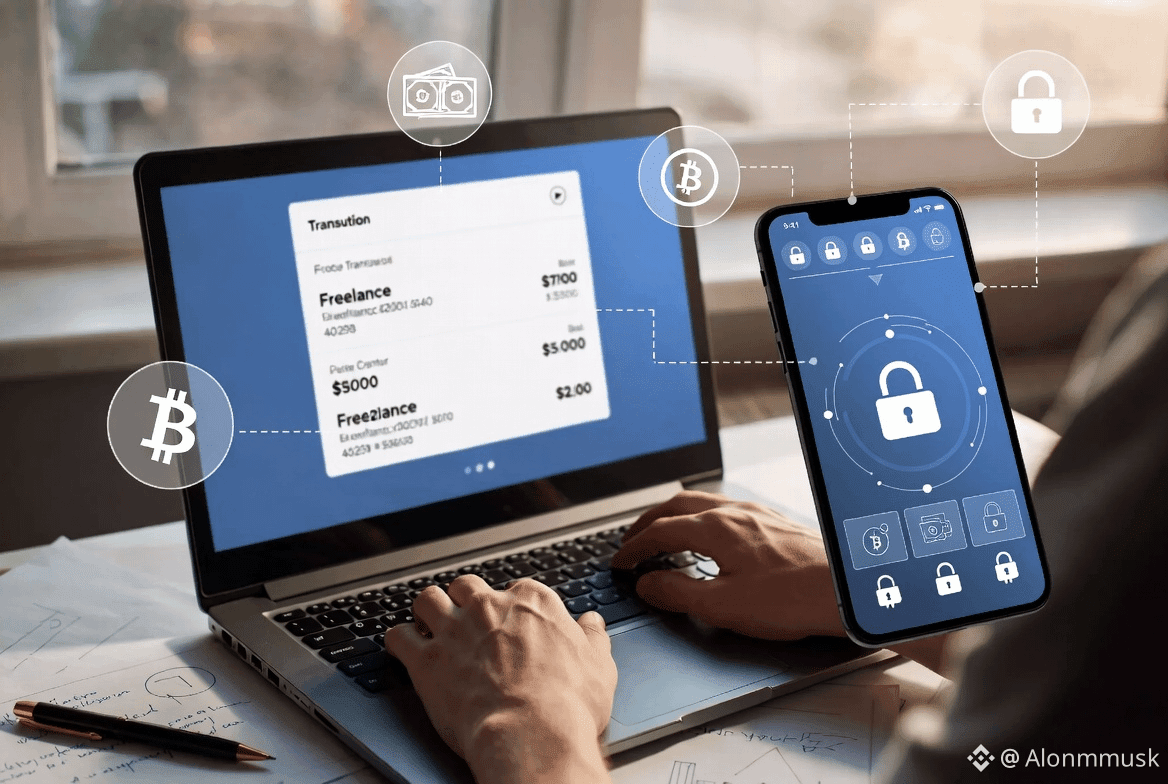
That kind of thing points to a bigger issue. Most blockchains sit at extremes. Full transparency or heavy anonymity. Real world finance lives somewhere in the middle, and that middle is mostly ignored. So users pay the cost in time and trust. Transactions are too open for sensitive payments, but there are no native tools for selective disclosure that regulators actually want. People stack mixers or off chain solutions, and that just adds more risk. Liquidity issues, compliance gaps, extra steps. Reliability suffers because you are always choosing the lesser problem. For stablecoins, which are supposed to feel like everyday money, this keeps them trapped in DeFi loops instead of becoming normal tools for payroll or invoices.
It’s like mailing a check. You seal the envelope. Strangers don’t get to read it. But if there’s an audit or dispute, the bank can still verify what matters. That balance feels obvious. Without it, people avoid the system even if it’s technically efficient.
This is where Dusk Network fits in, at least conceptually. It behaves like a Layer 1 built for financial use where privacy and compliance are part of the base, not something added later. It’s not trying to do everything. The focus is confidential smart contracts that let transactions happen without exposing sensitive data publicly, while still allowing selective disclosure when required. Since the mainnet launch on January 7, 2026, this has been usable in practice. Transactions are private by default using zero knowledge proofs, but auditable when needed. You can prove ownership or transaction details to authorized parties without opening the whole ledger. It deliberately avoids full anonymity because that shuts out regulated use cases. Instead, it aligns with things like MiCA in Europe, which actually matters if you want real institutions to use it. That design removes a lot of friction for developers too, because privacy and compliance are handled at the protocol level instead of being duct-taped on later.
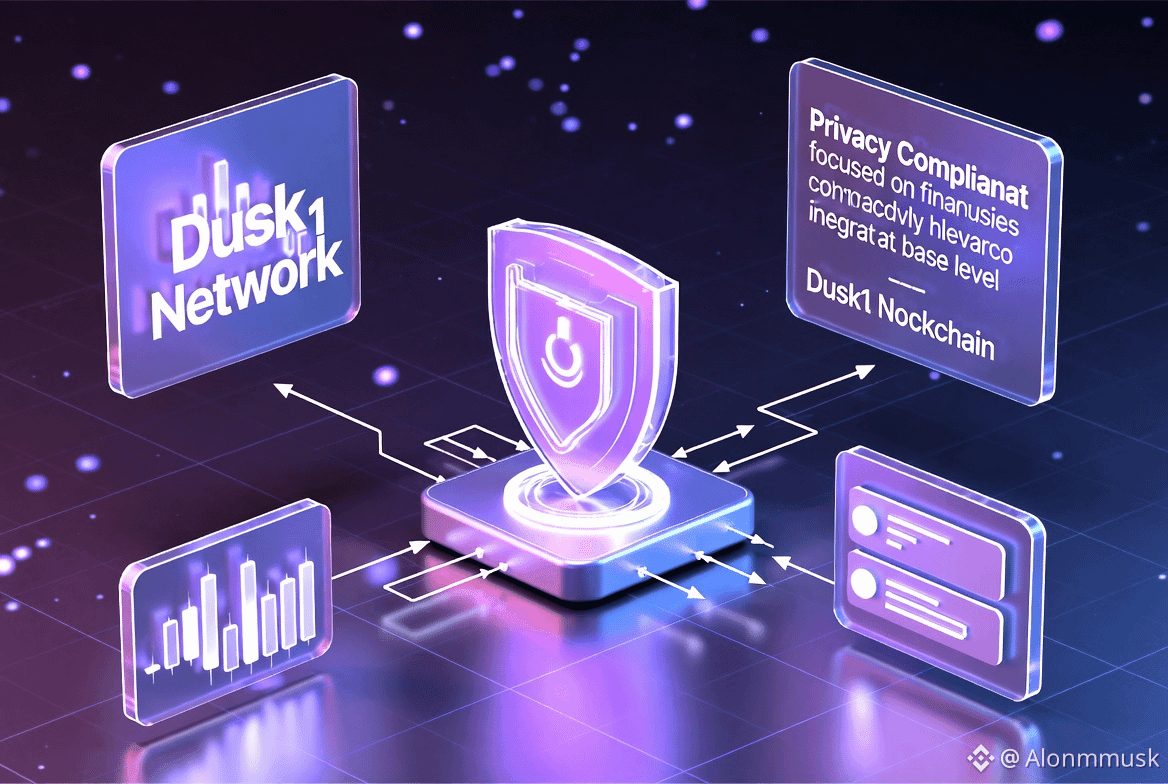
Under the hood, Dusk runs a proof of stake system called Succinct Attestation. In practice, blocks finalize in about two seconds based on early mainnet data. That matters if you’re dealing with financial apps where finality needs to be clear. The agreement process is split into phases, which reduces communication overhead and keeps things moving without weakening security. For tokenized securities, this is important. Once something settles, it’s settled. No waiting around. On the execution side, Dusk uses a modular stack with Phoenix, its zero knowledge friendly VM. Privacy is enforced directly there. Heavy operations are constrained to keep costs predictable. That limits flexibility, but it also avoids surprises. Dusk is not chasing huge TPS numbers for games or memes. It’s aiming for steady behavior in regulated environments, like the NPEX partnership where hundreds of millions in SME securities are being tokenized.
The DUSK token itself is simple. It pays fees. It’s staked to secure the network. Around 200 million DUSK is currently staked, roughly a third of the circulating supply, which helps security. Settlement uses DUSK as the native gas token, including future cross chain plans with Chainlink CCIP later in 2026. Governance uses DUSK weighted voting. Slashing exists if validators misbehave. That’s it. No extra mechanics layered on.
For context, market cap sits around 55 million dollars as of early February 2026, with daily volume near 20 million. Circulating supply is about 500 million tokens, basically the full supply. Usage is picking up slowly after mainnet. Staking participation around 36 percent is a decent early signal. Dusk Pay, their MiCA compliant payment rollout, is live but still ramping.
Short term trading is always noisy. Listings, hype, quick pumps. That kind of volatility doesn’t build trust. The bridge pause in January 2026 showed that. Prices dipped when activity was halted due to unusual wallet behavior, but the focus stayed on fixing operations instead of marketing. Long term value comes from habits. If stablecoins on Dusk become something people use for payroll or remittances without thinking twice, the infrastructure fades into the background.
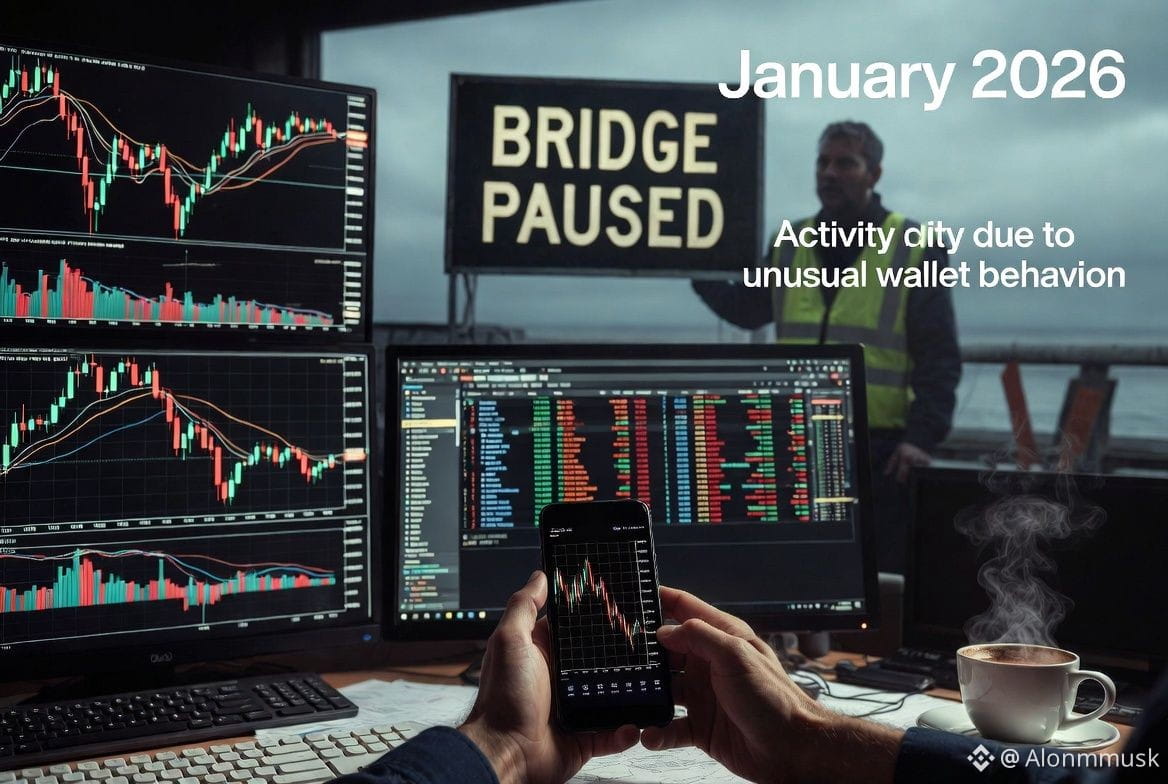
There are risks. The bridge incident shows how liquidity issues can cause temporary halts. That can hurt confidence, especially with regulators watching. Competition from Polygon or permissioned bank chains is real. And whether auditable privacy actually scales for large stablecoin volumes is still an open question.
In the end, it’s the boring test. The second transaction. Then the third. If those feel easy, people stay. If not, they move on. That’s usually how this stuff gets decided.
@Dusk #Dusk $DUSK