
I remember this one time last year, around the holidays, when I had to move some USDT across chains to cover a quick payment for family overseas. It was not a big amount, maybe a couple hundred dollars, but the fees on the network I was using ate up close to ten percent. Then the confirmation dragged on. It was probably ten minutes, but in that moment it felt longer because someone was waiting on the other side. I kept checking if it would go through or if a gas spike would mess it up. That was the point where it really clicked how these small frictions stack up. Stablecoins are supposed to feel like money. Instead, you hesitate before sending because reliability is not guaranteed. You expect it to work like flipping a switch, but instead you get congestion, variable costs, and uncertainty.
That small hassle pushed me to think more broadly about how digital dollars actually move. The issue is not stablecoins themselves. They do their job. The issue is the rails underneath. Most blockchains were never designed with stablecoin payments as the primary use case. They are general purpose systems trying to handle everything at once. DeFi trades, NFTs, experiments, all competing for the same block space. Stablecoin transfers get caught in that noise. Fees rise because the network has to price in complex execution. Reliability drops when blocks fill up. Finality becomes unpredictable. UX adds friction with gas tokens, bridges, and extra steps that feel unnecessary when all you want to do tends to be send money. The cost is not just fees. It is the mental overhead of watching confirmations and worrying about delays. That is not ideal for remittances or merchant settlements where predictability matters most.
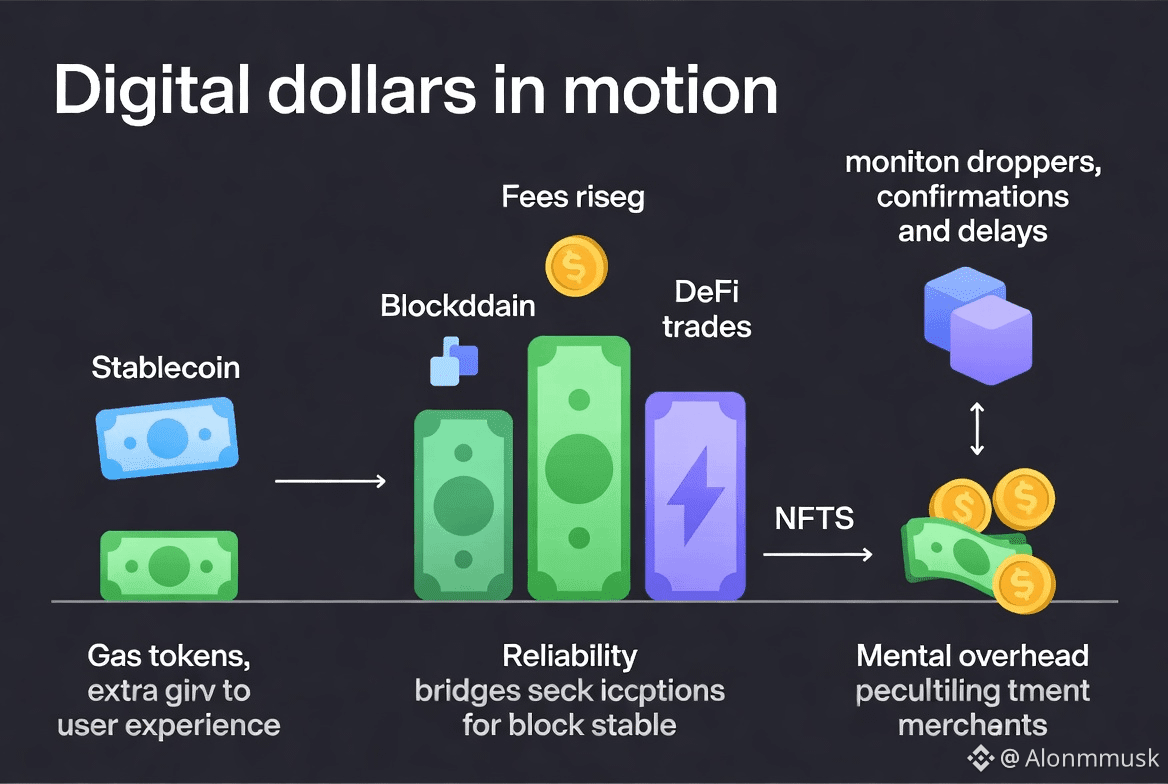
It feels like trying to commute every day on a freight train. It can move a lot, but it is not built for quick, smooth trips. Stops take longer. The system feels heavy. That mismatch turns something simple into work.
This is where @Plasma started to make sense to me. Not as a solution to everything, but as a deliberate attempt to rebuild those rails around stablecoins specifically. Plasma behaves like a dedicated Layer 1 chain that puts stablecoin throughput first instead of trying to be universal. At the center of that is PlasmaBFT, their take on Byzantine Fault Tolerance built on Fast HotStuff ideas. One concrete detail tends to be committee based consensus. The reason for this is that instead of having every validator participate in every round, a subset is selected to run consensus. The pattern is consistent. That keeps performance high as the validator set grows.Proposals are pipelined so the next block can start forming before the previous one is fully finalized. That is how they aim for sub second finality, which they have been pushing since the mainnet beta in September 2025.
Plasma also makes stablecoins the first class citizen. Zero fee USDT transfers are built into the protocol using custom gas logic. Users can pay fees in stablecoins directly, and for basic transfers the protocol subsidizes the cost. That removes the need to juggle native tokens just to send money. EVM support is there for compatibility, but the architecture limits general compute so stablecoin transactions do not get crowded out by heavy DeFi execution. Stablecoin transfers are prioritized at the protocol level. That matters because it changes behavior. When sending USDT is fast and predictable every time, people stop thinking about it. That is how habits form. That is also why this design targets institutional payment rails instead of retail hype.
XPL fits into this in a very functional way. It is used for fees on non stablecoin transactions, with base fees burned through an EIP 1559 style mechanism to manage inflation. Validators stake XPL under proof of stake to secure the network. Rewards start around five percent annually and taper toward three percent over time. Governance is validator driven for now, covering things like reward schedules and protocol changes as delegation expands. XPL is not positioned as a narrative asset. It is there to secure the system and align incentives around uptime.
For context, #Plasma market cap is around 230 million dollars in early 2026, with daily volume near 133 million. There is over two billion dollars in stablecoin liquidity across integrations like Aave and Ethena. Usage metrics show tens of millions of stablecoin transactions processed monthly, which gives a sense of real throughput rather than just theoretical capacity.
I keep comparing this to how crypto is usually approached. Short term focus chases narratives. Partnerships. Price spikes. Volatility. That scares off real users. Long term infrastructure value comes from reliability and repetition. A network wins when people come back for the tenth transaction because it worked the first nine times. Plasma’s bet is that stablecoin rails can become boring in the best way possible.
There are risks. One obvious failure mode is liquidity stress. If stablecoin withdrawals spike and gas subsidies are overwhelmed, even prioritized transfers could slow down. That would damage trust in sub second finality. Competition is real too. Tron already dominates USDT habits. Ethereum Layer 2s are optimizing payments. Plasma has to carve out its niche quickly. There is also uncertainty around Bitcoin anchoring and whether it meaningfully offsets centralization risks as validator committees scale. Recent improvements like faster USDT0 settlement back to Ethereum help, but stress tests will tell the real story.
In the end, it comes down to time. Not announcements. Not launches. Whether users come back again and again because friction is gone. Watching integrations like Rain cards pushing USDT on Plasma into everyday merchant use across 2026 is probably the clearest signal to watch.
That personal frustration did not come from one transfer. It built up over months. Ethereum is powerful, but gas spikes make it impractical for simple payments. Solana is fast, but outages introduce doubt. Tron works for USDT, but tooling and compatibility feel limited. Plasma is trying to thread that needle. I waited through the beta to see if it stabilized.
The core issue stays the same. Finality uncertainty. Cost variability. UX breakdowns from bridges. Plasma defines itself by pushing stablecoin priority down into the protocol itself.
That freight train versus subway analogy still holds. Same destination. Very different experience.
Technically, PlasmaBFT pipelines proposals to reduce latency. Committee selection uses stake weighted randomness to avoid predictability. Settlement anchors to Bitcoin for additional security. Trade offs are intentional. Payments first. Complex dApps second.
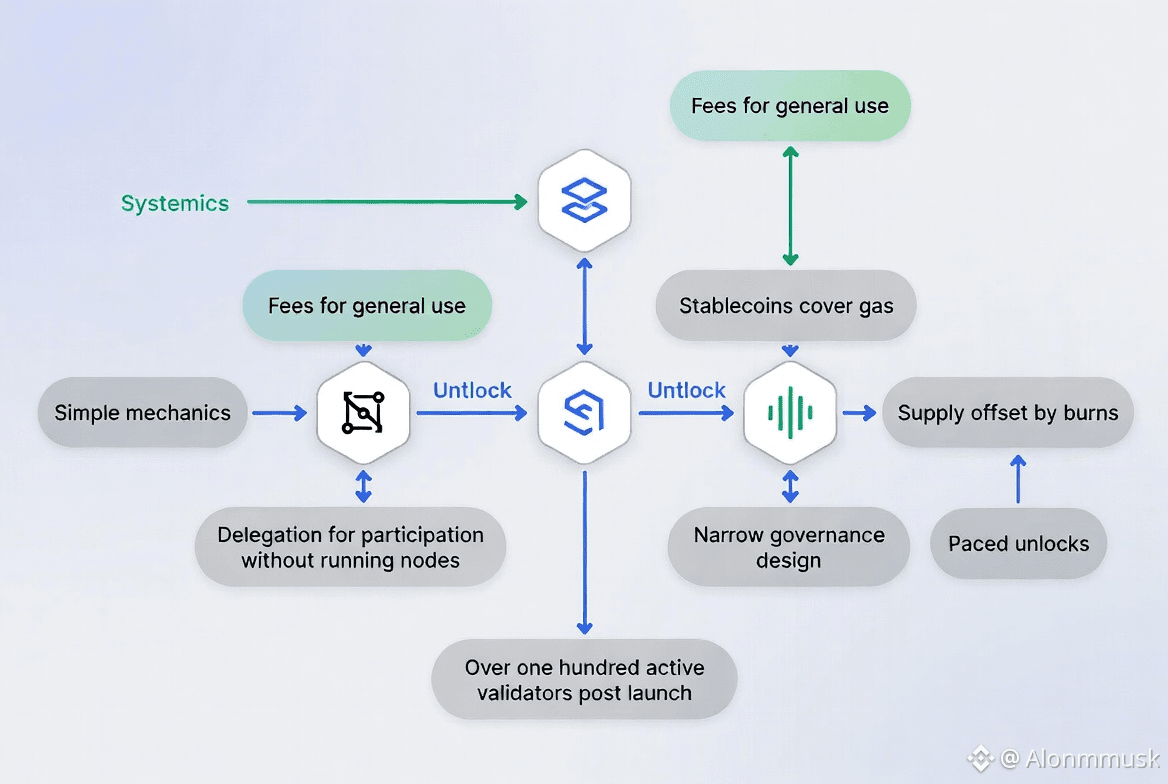
$XPL mechanics stay simple. Fees for general use. Stablecoins can cover gas. Burns offset supply. Delegation allows participation without running nodes. Governance is narrow by design. Unlocks are paced. Over one hundred validators are active post launch. Throughput has crossed one thousand TPS in testing.
Short term price action around things like CreatorPad listings in January 2026 is noise. Long term value comes from usage patterns. Integrations like Confirmo processing tens of millions monthly matter more.
There are still open risks. Validator concentration. Regulatory pressure. Whether payment focused chains win against more flexible systems. None of that is settled.
It really comes back to time in the saddle. Does the second transaction feel as smooth as the first, or do old frictions creep back in. That is what will decide whether Plasma becomes infrastructure or just another chain people tried once.
@Plasma #Plasma $XPL