
Penyelesaian waktu nyata terdengar seperti peningkatan teknis, tetapi pada intinya ini adalah harapan manusia ketika Anda mengirim uang, Anda mengasumsikan itu telah tiba. Selama beberapa dekade, keuangan telah beroperasi dengan penundaan yang diterima antara niat dan penyelesaian. Penundaan itu terasa normal ketika pasar ditutup semalaman dan akhir pekan bertindak sebagai penyangga alami. Hari ini penyangga itu telah hilang.
Peralihan ke penyelesaian T+1 di AS pada Mei 2024 mengungkapkan betapa rapuhnya ritme lama telah menjadi. Memadatkan garis waktu pasca-trade tidak hanya mempercepat segalanya tetapi juga memperbesar setiap ketidakefisienan. Batas waktu yang terlewat, pemeriksaan manual, dan eksposur semalaman tiba-tiba menjadi lebih penting. Pada saat yang sama, infrastruktur keuangan sedang meregang menuju operasi kontinu. Rumah kliring sedang mempersiapkan jadwal hampir 24 jam, dan bursa sedang menjelajahi sekuritas tertoken dengan penyelesaian di rantai yang didanai oleh stablecoin. Arah ini tidak dapat disangkal: penundaan penyelesaian semakin sulit untuk dipertahankan di pasar yang tidak pernah tidur.
Ini bukan hanya tentang teknologi. Ini tentang perilaku. Orang-orang sudah terbiasa dengan sistem yang selalu tersedia, selalu responsif. Ketika pembayaran terhenti untuk akhir pekan atau jendela pemrosesan, sekarang terasa seperti cacat daripada fitur.
@Plasma memasuki gambar dengan fokus yang sempit tetapi disengaja. Ini tidak mencoba untuk membuat semua aktivitas keuangan diselesaikan secara instan. Sebaliknya, ia menargetkan area di mana penundaan sebagian besar memperkenalkan risiko, pekerjaan rekonsiliasi, dan kebingungan pengguna. Stablecoin berada di pusat strategi itu. Mereka sudah berfungsi sebagai uang digital dan beroperasi secara terus-menerus. Plasma dibangun di sekitar kenyataan itu, memperlakukan penyelesaian stablecoin sebagai pekerjaan utama jaringan daripada tambahan.
Peran XPL menjadi lebih jelas dalam konteks ini. Banyak blockchain mengharuskan pengguna untuk mengelola token terpisah hanya untuk membayar biaya, yang mempersulit operasi keuangan rutin. Model Plasma mengalihkan beban itu dari pengguna akhir. Transfer stablecoin tertentu dirancang untuk terasa tanpa biaya, dengan mekanisme tingkat jaringan yang menutupi biaya eksekusi pada saat itu. Pengalaman ini lebih dekat dengan infrastruktur daripada aktivitas perdagangan.
Itu tidak berarti biaya menghilang. Mereka hanya dipindahkan ke lapisan insentif. XPL diposisikan sebagai aset yang mengamankan jaringan dan mengkompensasi validator yang memberikan waktu aktif, verifikasi, dan integritas operasional. Stablecoin tetap menjadi instrumen pertukaran yang terlihat, sementara XPL mendukung sistem dengan tenang di latar belakang. Pemisahan ini mencerminkan bagaimana tim keuangan sebenarnya berpikir: meminimalkan paparan terhadap volatilitas dalam operasi sehari-hari sambil membayar untuk keandalan melalui struktur yang dapat diprediksi.
Sekali dibingkai dengan cara ini, #plasma kasus penggunaan menjadi praktis daripada teoretis. Penggajian yang tiba pada hari yang sama di seluruh batas. Penyelesaian pedagang tanpa penundaan batch. Pergerakan kas yang tidak menciptakan risiko semalaman karena batas waktu terlewat. Ini adalah area di mana kecepatan tidak menambah spekulasi, tetapi menghilangkan gesekan.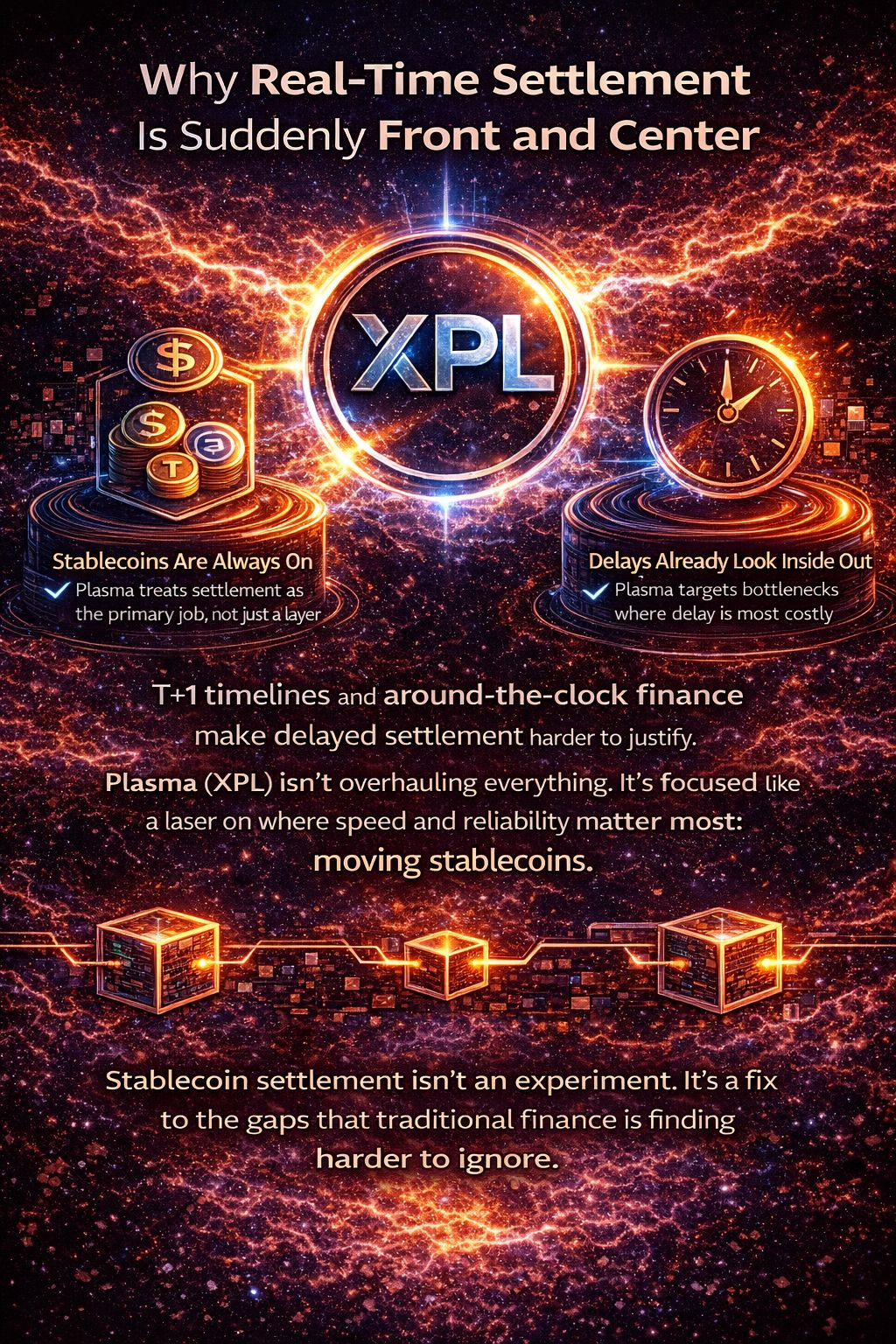
Peralihan yang lebih luas dalam infrastruktur pasar memperkuat pendekatan ini. Sistem tradisional memperpanjang jam dan memperketat jendela penyelesaian, sementara regulator dan lembaga mengeksplorasi bagaimana penyelesaian tokenisasi dapat berdampingan dengan kerangka kerja yang ada. Percakapan telah berpindah dari 'jika' ke 'bagaimana.'
Penyelesaian instan tidak selalu optimal secara universal. Netting tetap berharga, dan finalitas yang segera dapat meningkatkan permintaan pendanaan. Masa depan yang mungkin adalah campuran: rel waktu nyata di mana penundaan sebagian besar merugikan, dan proses batch di mana efisiensi tetap penting. Plasma, dengan XPL mendukung lapisan eksekusi yang mengutamakan stablecoin, cocok dengan rute tengah itu.
Ini bukan upaya untuk merombak keuangan dalam semalam. Ini adalah upaya untuk membuat bagian yang seharusnya terasa langsung benar-benar terasa demikian dengan tenang, dapat diprediksi, dan tanpa memaksa pengguna untuk memikirkan mesin di bawahnya.$XPL
