
By early 2026, when a16z points to privacy as the last moat in crypto, Walrus will be special with its erasure-coded storage that protects data without any issue with complete AI integrations. This is not merely an additional layer, but a form of infrastructure currently driving verifiable AI agents and RWA datasets, which is an indication of a strong base to the growth of Sui.
The Macro Shift Infrastructure-oriented Privacy.
Privacy is no longer a buzzword but the obstacle to mass adoption of blockchain. The recent reports on industry prognostication suggest that ground-level protocols that build confidentiality develop sticky ecosystems in which users get committed in the long run. Walrus is an ideal match to Sui who is cryptographically split to guarantee privacy of data but only accessible by authorized parties. This design option deals with one of the fundamental issues of decentralized networks, the need to trade off openness versus protection against exploit. Today, when AI-related transactions require secrecy like there is no tomorrow, the behavior by Walrus appears to be a calculated advantage that might speed up the process of the developer switching to Sui.
The difference between Walrus and other trends is that it follows the general trends. Traditional storage does not match the cost and speed of the AI models and autonomous apps which are increasing in volume. Walrus achieves this with the same level of efficiency improvements over legacy alternatives (up to 80 percent), and is viable enough to support high-stakes applications (such as real-time DeFi verification or content monetization). The fact that the protocol deals with verifiable information instead of opaque data, which is difficult to manipulate, brings yet another element of trust, which is necessary when venturing into Web3 by businesses.
Analysis of the Mechanics of Walrus.
Fundamentally, Walrus uses erasure coding, which divides the information into fragments on nodes to be redundant with no storage bloat. This encoding is also referred to as Red Stuff because it encodes large blobs such as datasets or models at high throughput rates on the high-throughput chain of Sui. The developers receive content-based addressing, i.e. data is referenced by hashes, which ensures integrity - no longer using a centralized provider, who will slack down or be blocked down.
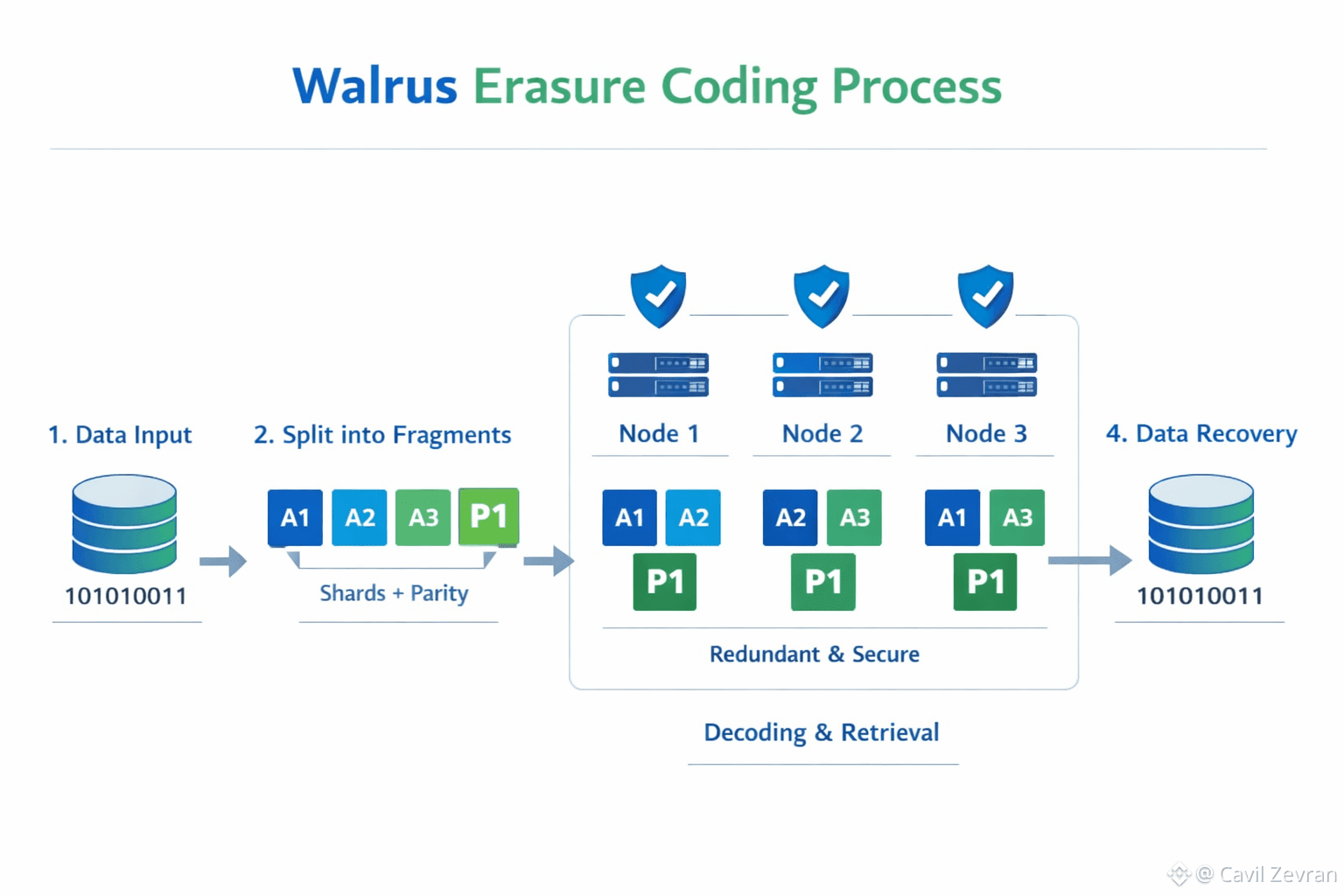
This set of technology is not theoretical, it is alive and in progress. The latest additions involve the programmable storage through the WAL token, and this gives the ability to the user to gate access, and also, monetize assets directly. To builders of AI this implies on-chain training of models using provable inputs, which limits the risks of manipulated outputs. The deployment with the Sui object model makes the work even more simpler and allows composable apps where the data is a citizen. It is the type of primitive that has network effects, whereby the more it is used, the better it performs and the less it costs.
Chain Footprints Disclosing Momentum.
The traction of Tracking Walrus is to track the ecosystem metrics of Sui as proxies, as the storage interactions are used as the inputs to the activity. In recent months, the aggregated value locked by Sui has soared to over 2 billion dollars, at least in part due to the data-intensive applications. On-air speech and volume of transaction in Sui give hints--spikes are usually associated with uploads to Walrus of blobs, in DeFi and game industries.
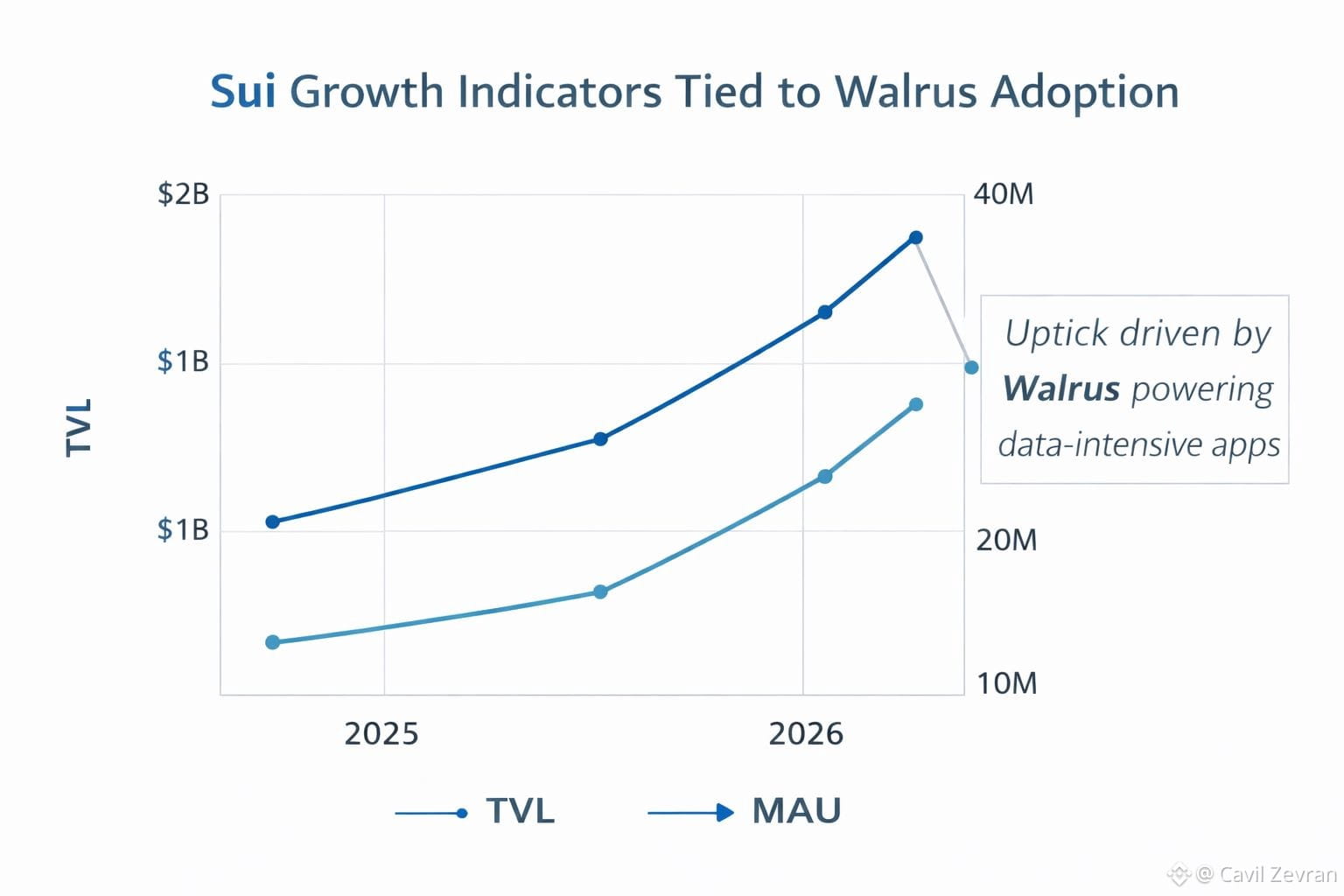
Educational lens: To examine flows, educational tools, such as Sui Explorer, may be used to filter on Walrus-related contracts, which display events of creating blobs and accruals in storage funds. Numbers such as monthly active users on Sui, which is approximately 40 million, are indirect indicators of Walrus contributing to dApps that consume a lot of bandwidth. Swarm Network, where the AI can be verified or Pipe, where the prediction time is reduced, become partners, which are reflected in on-chain calls and grow with time. These signs represent a scenario of gradual adoption, and Walrus is processing RWA data on behalf of Plume and media on such outlets as Decrypt-actual indicators of utility, not hype.
The Major Integrations that Build up the Utility.
Walrus is not an island; its power is in the connection with the ecosystem. The Talus alliance makes AI agents run on solid data layers and Itheum data tokenization protocol builds on the monetization paths. Front-running and leaks are eliminated with privacy, which then helps NFT and content creators gain publicity, such as Pudgy Penguins.
Under DePIN, Walrus to complement Sui parallel execution allows decentralized CDNs that compete with Web2 speed. The complexity of these links produces next-generation-type effects: the more projects are based on Walrus, the higher the data interoperability, which attracts new capital and talent. It is a virtuous cycle that makes Walrus a node around its desire to be a Sui lynchpin in taking over high-frequency applications.
Relating Walrus to the AI- Data Macro Wave.
In a macro environmental analysis, 2026 will have a preference of protocols such as Walrus. Due to the close incursion of AI into prediction markets and autonomous economies, the reliant data storage can no longer be optional. This is consistent with the privacy capabilities of Walrus, which provide a moat against data breaches that centralized counterparts suffer. This trajectory is confirmed by such institutional nods as the emphasis on privacy-locked ecosystems, as proposed by a16z.
Furthermore, since the Web3 gaming is booming with more than 70 games on the Sui, the wallets are managed by Walrus, which is efficient, thus keeping the costs low. This is connected with the international trends of data sovereignty, where users need to have access to control without compromising performance. The design decisions made by Walrus in this case are prophetic in the sense that it creates places where innovation can prosper on trusted primitives.
What metrics on the chain can indicate Walrus entering the mainstream adoption, e.g. volume of the blobs reaching some levels? How would the changing privacy standards affect the programmable capabilities of Walrus in the next few quarters? How can AI integrations make Walrus more than just a storage organization to an active data governance organization?