
Plasma is becoming a force in transactions of stablecoins in the changing environment of blockchain technology, as its TVL has already reached more than 3 billion dollars in several months since the launch in September 2025. This expansion is a pointer to a new trend of specialization of networks, which are more efficient and secure in dealing with digital dollars. Plasma with its architecture on the support of on-chain data is becoming indispensable in high volume, low-cost payment.
Core Innovations of Stablecoin Handling of Plasma.
Plasma is an EVM-compatible Layer 1 blockchain, and a combination of the strong security of Bitcoin and Ethereum with smart contracts. Its strongest attribute: zero fee transfers of USDT, which are sponsored on the protocol level. This removes limitations to normal users allowing micro-transactions to be facilitated without challenges of gas costs that traditional blockchains can face.
In addition to fees, custom PlasmaBFT consensus by Plasma offers sub-second block times (meaning 1 second on average) and a thousand TPS. Blockchain explorers such as Plasmascan show that 147 million transactions are completed, and the present pace of operations is 1.1 TPS, indicating a stable level of adoption in the bigger market movement.
The Bitcoin-based bridge in the network enables BTC to operate in smart contracts, a combination of traditional and new DeFi. Such a hybrid business model not only improves security but it also draws institutional attention, as seen with over 100 DeFi protocols such as Aave and Ethena.
Watching Growth Using On-Chain Metrics.
Analyzing the data of DefiLlama as of February 2026, the TVL of Plasma is now 3.005 billion, which is almost twice the amount at the time of its launch (2 billion). This growth accounts to bridged assets of 6.876 billion and native assets of 4.665 billion which indicates great liquidity inflows.
Plasma market cap on Stablecoins is 1.805 billion topped by USDT at 80.69. The volume of DEX has also increased by 12.35 percent every week to 105.22 million, which is an indicator of rich trading ecosystems. The daily rates are not too high and amount to $599, which means that the emphasis of the protocol is made on the accessibility instead of revenue generation.
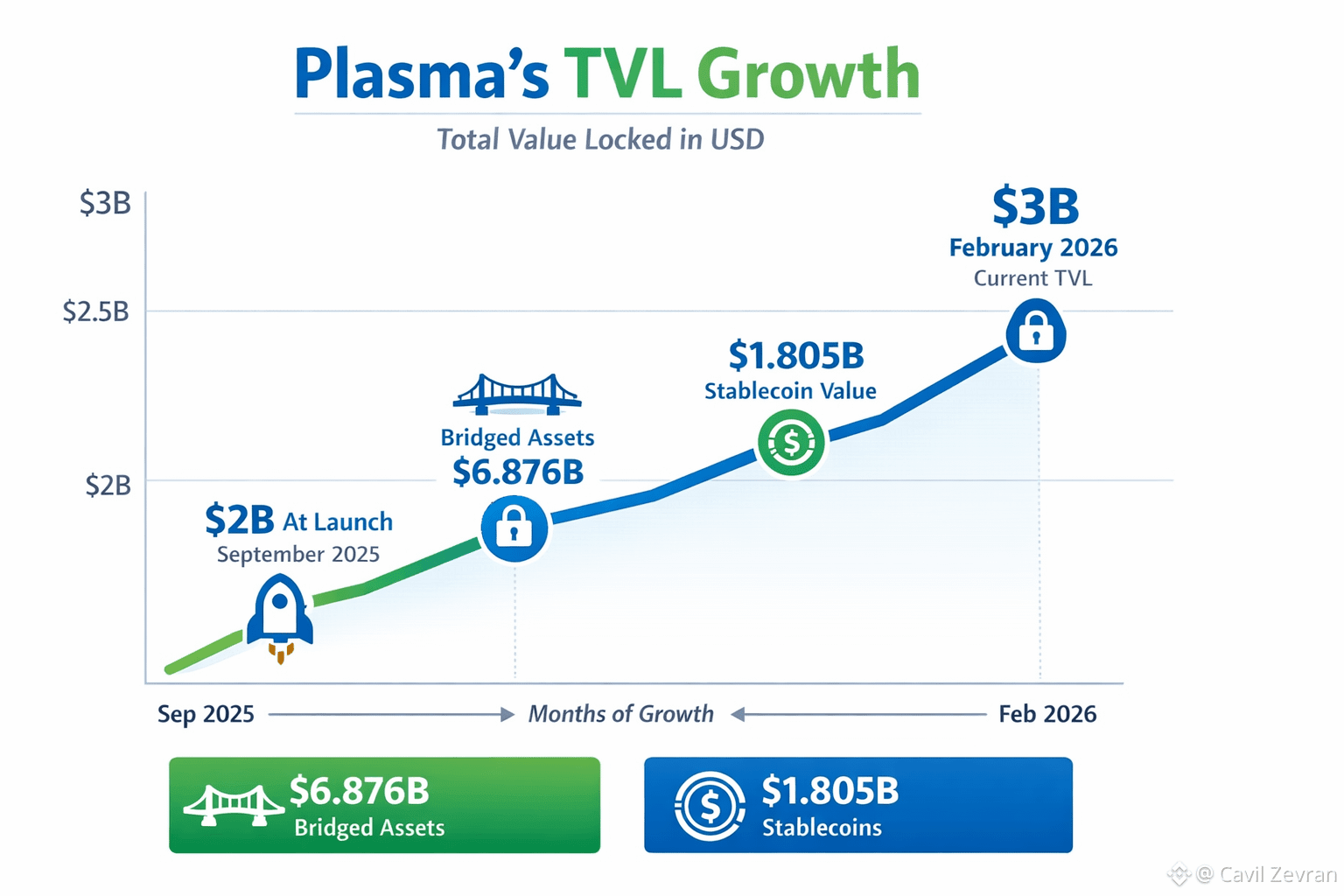
More information is available using active addresses and the number of transactions. TPS is middle-range, but the cumulative number of transactions the chain conducted is 147 million, which means that the chain is resilient, and cross-chain interoperability through bridged TVL can highlight that.
Educational Lens: Reading All-Important On-Chain Signals.
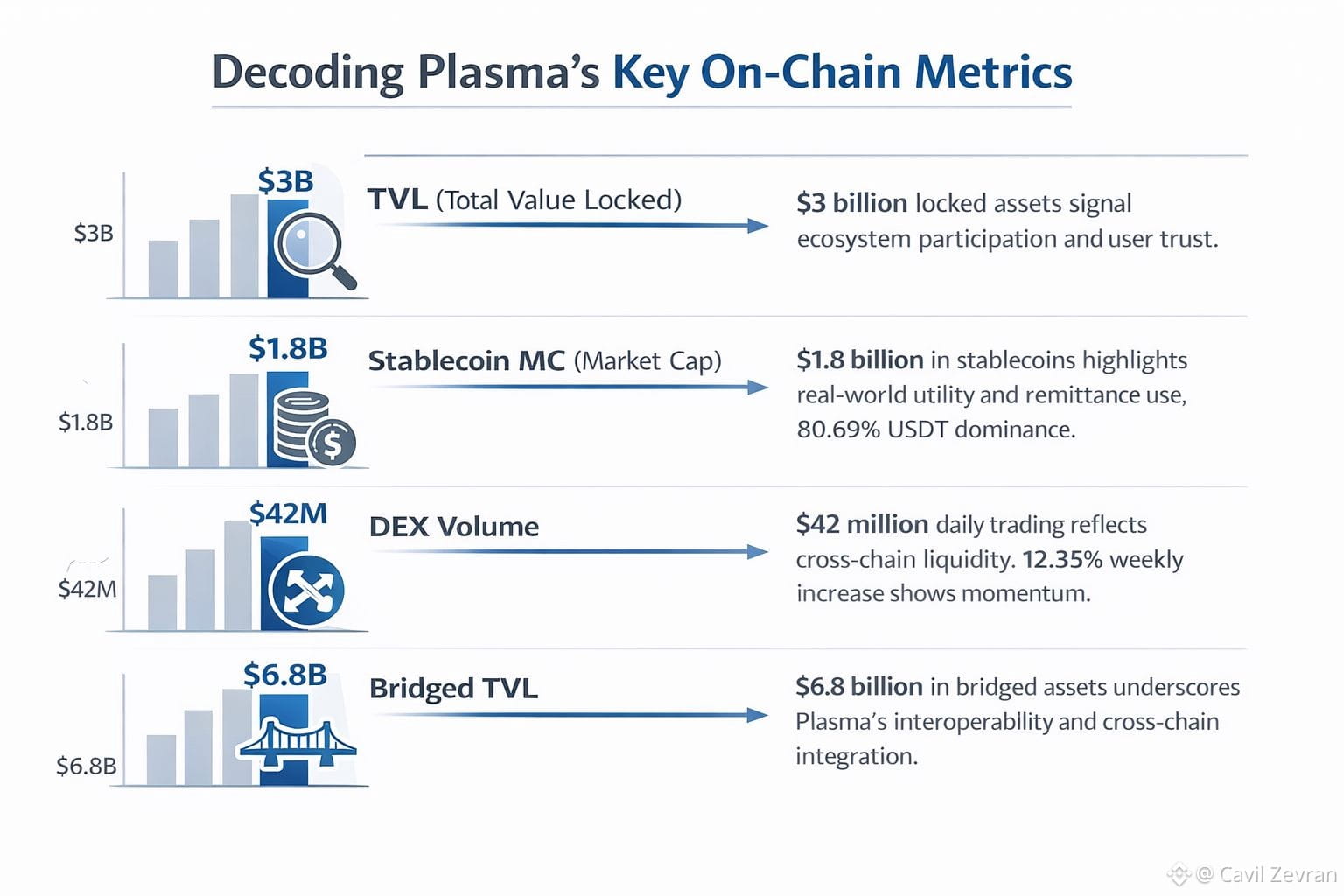
TVL (total value locked) is a measure of user trust that should be used to comprehend Plasma health. The presence of a $3 billion TVL is indicative of a strong ecosystem.
Then, the power of stablecoins: Plasma has the largest stablecoins with a total of $1.805 million and supports real-life functionality such as remittances. Monitor this through explorers; increasing numbers like adoption.
The volume of DEX stands at $42.47 million per day and it measures the trading volume. Learning trick: To track week-by-week improvement ( +12.35%), an online tool such as DefiLlama helps create a chart.
Lastly, bridged TVL at 6.876 billion billion brings out integration with other chains. To the people tracking the real time market forces, the trade widget gives them a full picture of how XPL helped in securing the network.
Macro Ties: In the Global Financial Shift Plasma.
Stablecoins, according to DefiLlama, have surpassed over 305 billion all over the world, owing to the necessity of payment without boundaries. Plasma has been linked to this macro trend to maximize USD-pegged assets, which could cause distruption of the market of remittances estimated to be between 700 billion USD per year.
Zero-fee transfers may also drive the process of dollarization in emerging economies, with on-chain data indicating that the USDT flows are rising. In the context of changes in geopolitics, the security of Bitcoin provided by Plasma provides a hedge, which fits with the directions of decentralized finance.
More recent integrations, such as NEAR Intents, add functionality, which encourages on-chain yield strategies that keep TVL stable despite volatility.
What would be the contribution of special chains such as Plasma in changing international remittances? What is the best on-chain indicator of long-term sustainability of blockchain?