
When I first thought about integrating storage into Web3 apps, I expected it would be straight forward upload large files like videos or datasets and assume reliable, low cost access across decentralized networks. But the reality hits differently: high replication costs on chains like Sui, where full validator replication can exceed 100x overhead, make storing unstructured blobs inefficient and expensive for developers building real applications.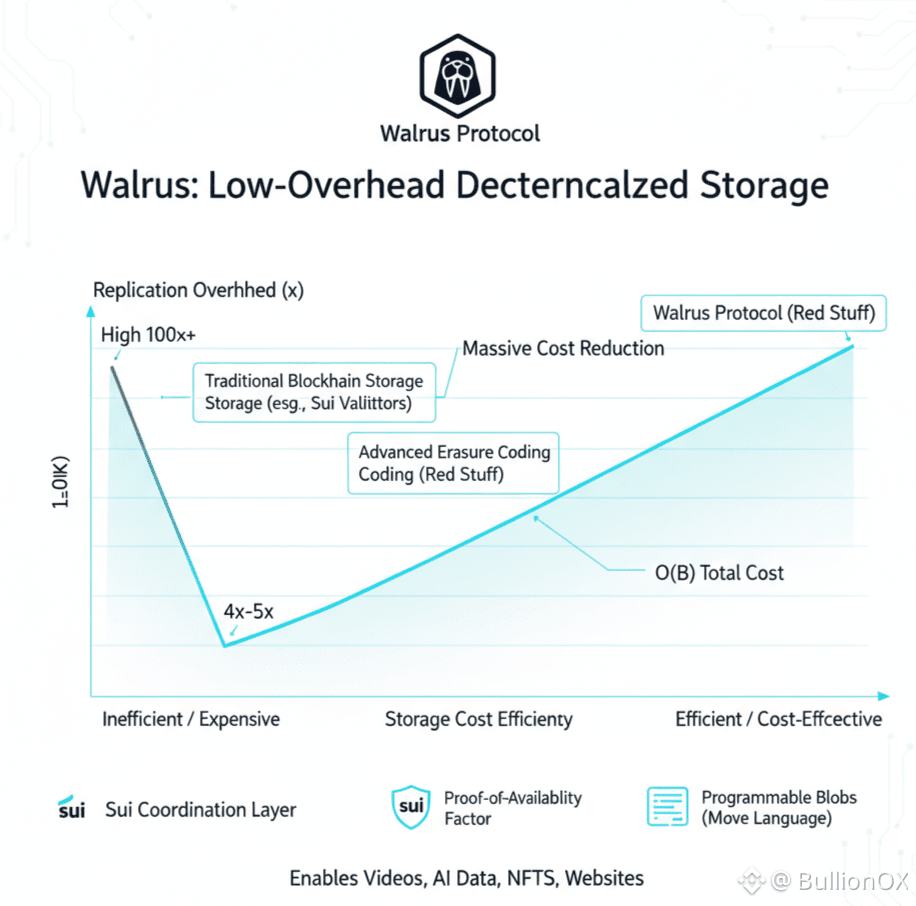
That's where @Walrus 🦭/acc changes the equation. As a decentralized storage protocol built on the Sui blockchain by Mysten Labs (now advancing under the Walrus Foundation), Walrus serves as a specialized foundational layer for Web3 development. It focuses on handling large binary objects blobs such as images, videos, AI datasets, NFTs, and even full websites with exceptional efficiency.
The key innovation lies in its architecture: instead of full replication, Walrus employs advanced erasure coding (via the Red Stuff algorithm) to split blobs into slivers distributed across a network of independent storage nodes. This achieves high data availability and robustness with a minimal replication factor of just 4x-5x, far lower than traditional blockchain storage. Sui acts as the secure coordination layer, managing metadata, payments, node incentives, and issuing on chain Proof of Availability certificates to verify blobs remain accessible.
What makes it truly foundational is programmability. Blobs and storage resources become native Sui objects in the Move language, allowing smart contracts to interact directly checking availability, extending storage periods, automating logic based on data presence, or even enabling composable data in dApps. This turns passive storage into an active, programmable component. Real use cases are emerging: projects like Talus AI use Walrus to let agents store, retrieve, and process onchain data scalably, while others leverage it for NFTs, game assets, or AI training datasets. 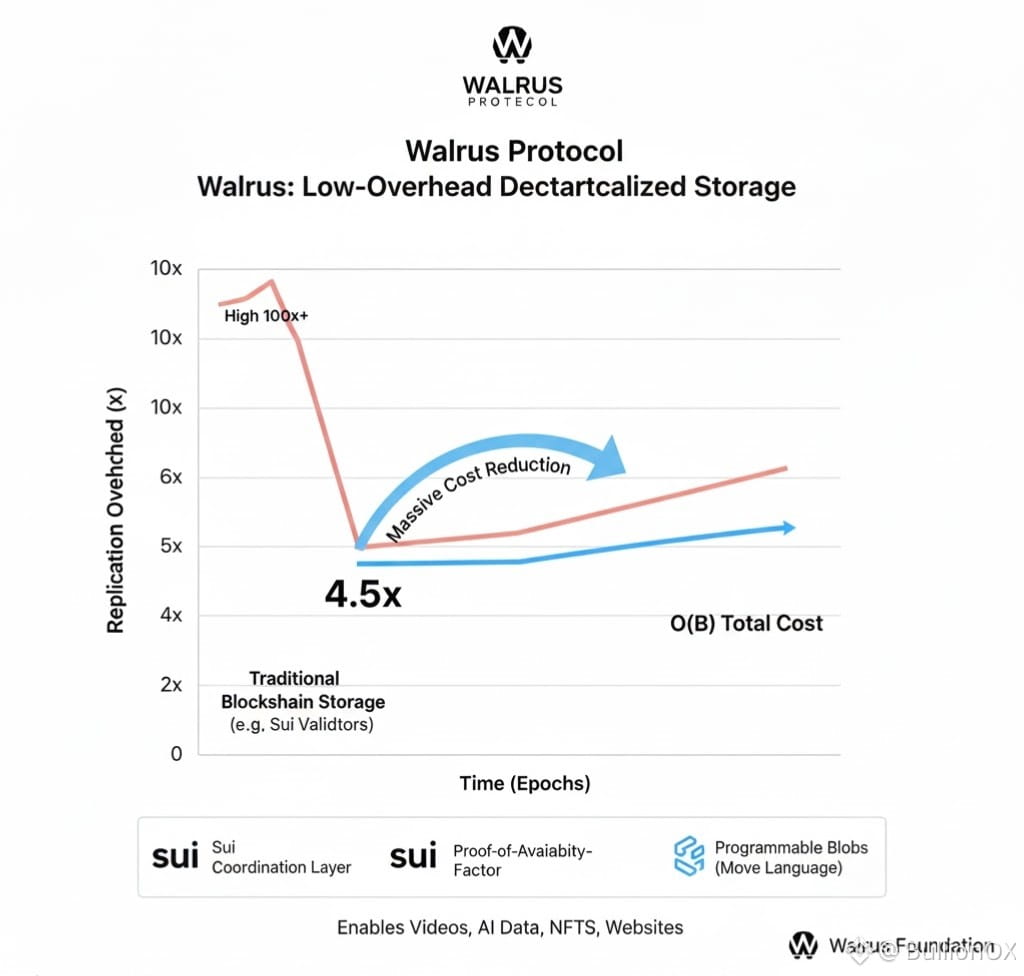
I slow down on how this bridges the gap between decentralization's ideals and practical developer needs. That low overhead yet resilient design sticks with me, showing a thoughtful evolution beyond brute force replication. I kept wondering if such efficiency could maintain true permissionless security at scale, but the horizontal scaling to thousands of nodes, combined with Byzantine fault tolerance, addresses that convincingly.
I'm left thinking about the broader impact: Walrus could make building data intensive Web3 apps as intuitive and cost effective as centralized alternatives, unlocking more innovation in AI, media, and beyond.