
Vanar Chain comes out a leader in the year 2026 when AI converges with blockchain to transform digital economies with its modular Layer 1 architecture being intelligent and application-specific. It is not just an AI-assisted infrastructure, which keeps the data but makes it readable and usable on-chain, establishing a new standard in the management of the real-world object such as invoices or house deeds.
De-coding the Modular Foundation of Vanar Chain.
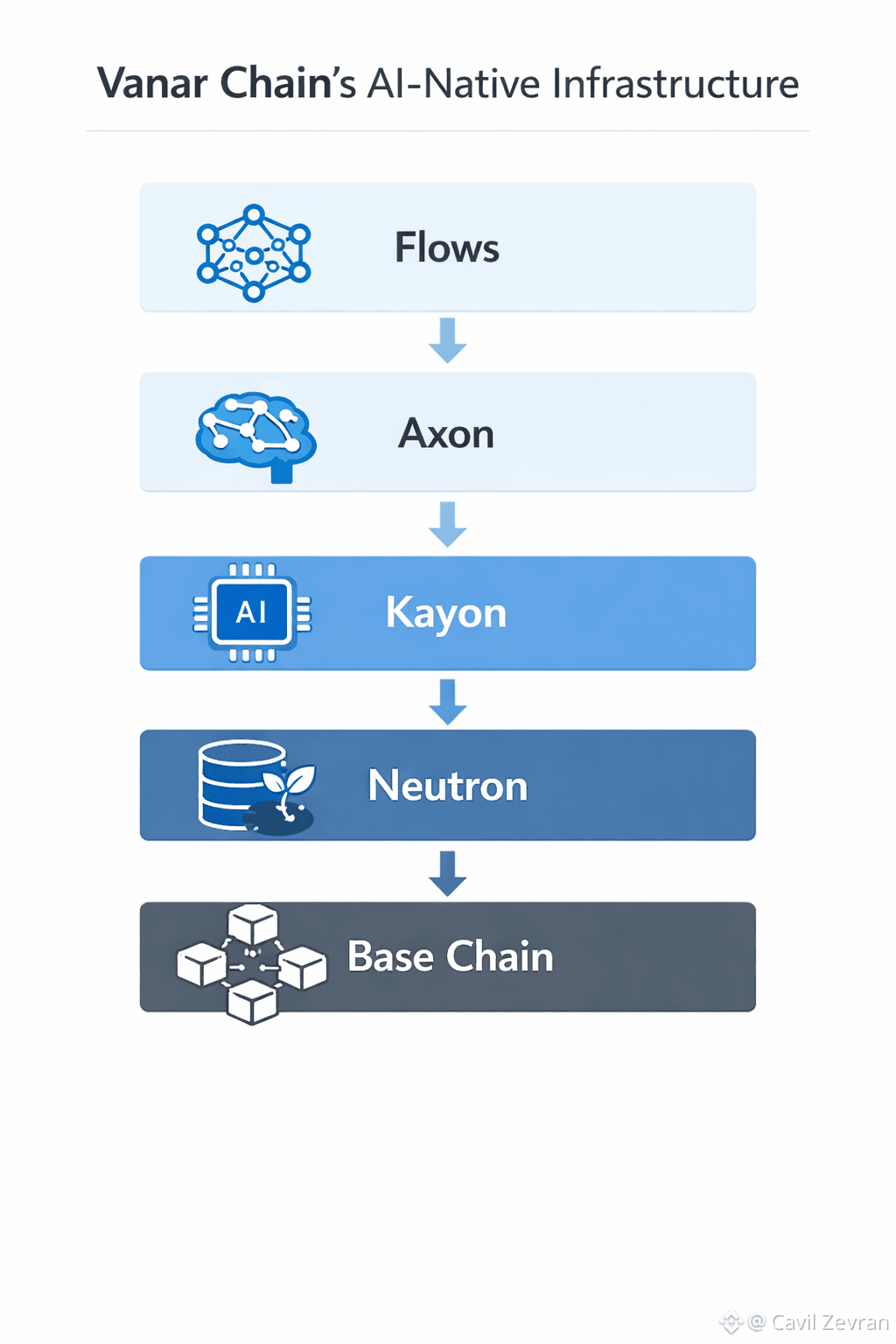
Vanar Chain is a scalable base layer that is optimized to perform high throughput and security which is designed to run AI workloads without undermining decentralization. In contrast to traditional blockchains that use off-chain oracles to perform their complicated tasks, Vanar implements AI throughout its stack, and developers who develop in PayFi and tokenized assets interact seamlessly with them. This strategy eliminates links, which minimizes possible failure points and increases the resilience of the network in general.
The five layers of the ecosystem begin with the core chain, which has to deal with consensus and execution and progress to specialized AI components. This enables upgrades to be done specifically, such as V23 protocol renewal that was finished in late 2025 and added to token economics and governance to be more community-orientated.
The Neutron in Semantic Data Optimization.
The center stage of the benefit of Vanar is Neutron, which condenses raw information into small and AI-understandable Seeds of semantic memory. These Seeds convert unproductive files, i.e. legal documents, financial records, etc., into programmable objects on-chain. This compression does not only reduce storage costs, but it also makes contextual querying possible, which allows the data to become dynamic and answer the logic provided by AI.
As an example, in the real-world asset tokenization, Neutron provides automated compliance checks without any external software, and simplifies procedures that otherwise can cripple other networks. This tangible advantage over the platforms such as Ethereum is due to the fact that Vanar is oriented on data efficiency with Seeds being able to make sub-second inferences, rendering it to be the perfect fit in high-volume applications in finance and beyond.
On-Chain Reasoning in Empowering Decisions with Kayon.
Kayon, the decentralized AI engine of Vanar, goes a step further and authenticates and processes data in real-time, which is on-chain. It avoids the usage of the middleware by implementing the logic directly in the blockchain, which allows smart contracts to read between the lines and perform functions independently. More recent extensions in 2026, such as more powerful querying, make Kayon one of the sources of agentic payments, in which transactions are responsive to the intent of the user.
The integration which this layer creates encourages an ecosystem of verifiable transparency in the operation of AI agents, a move further than competitors which depend on centralized compute. EVM compatibility is ideal to developers who can use familiar code and utilize these advanced features to create complex dApps.
Monitoring the On-Chain Performance Metrics of Vanar Chain.
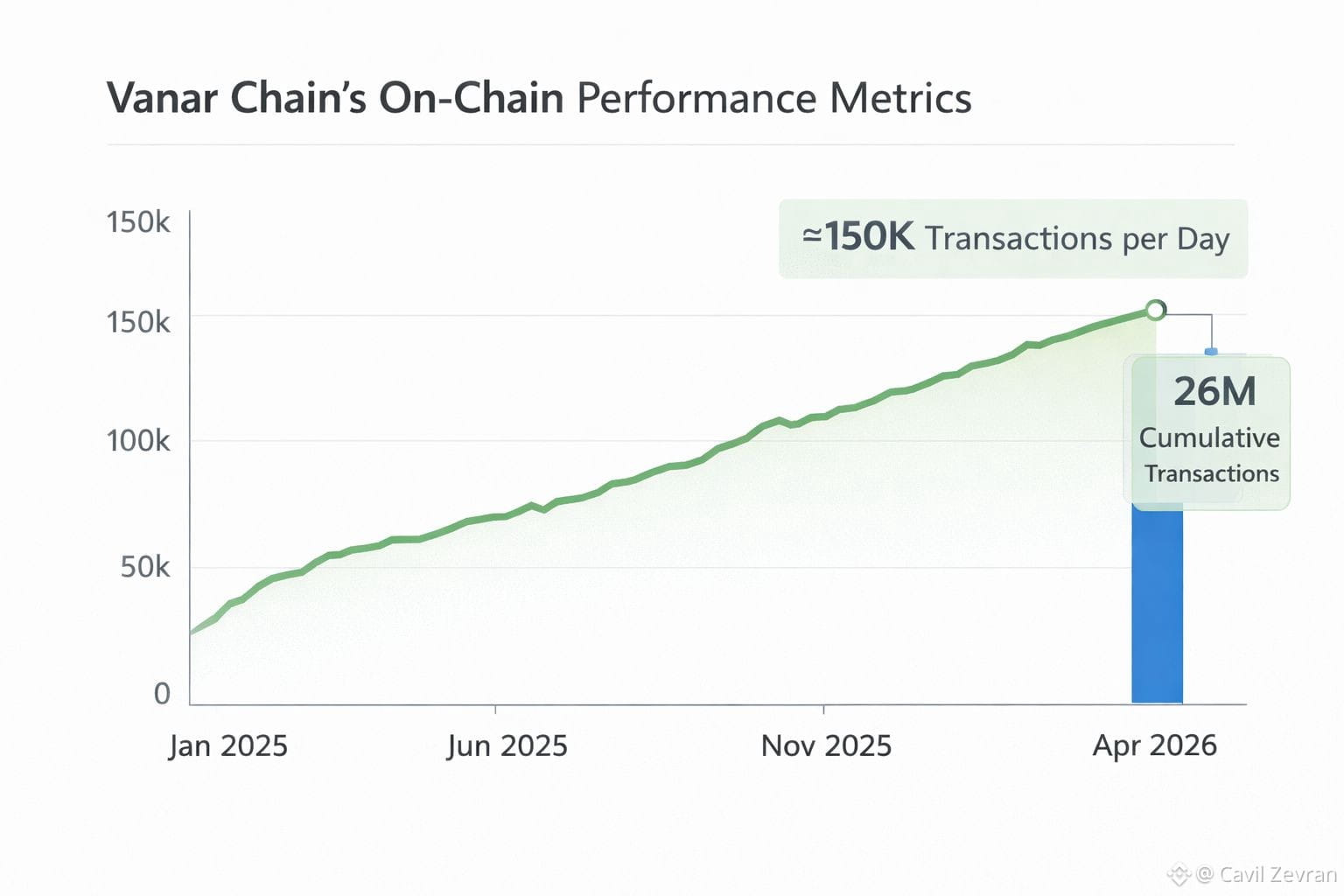
On-chain analysis of Vanar shows strong growth indicators in terms of education. Daily operations are approximately at 150,000, and there is strong usage of AI-native tools, cumulative volumes in the world are over 26 million. Measures such as transaction costs which is only 0.0005 on average highlight the efficiency of the network which is enhanced by the optimized consensus schemes that the upgrade to V23 brought about.
The tools such as blockchain explorers can be used to monitor active addresses and gas usage patterns to analyze them. As an example, Neutron Seed spikes indicate the increased interest in asset data compression, as it will provide data about ecosystem health. This kind of data tracking can inform users about the use of low latency flows to maintain the sustained network activity.
Connecting Vanar with Broader Macro Shifts.
Vanar Chain fits perfectly into the macro trends of 2026, where the use of AI in conventional finance will drive the adoption of blockchain. Its PayFi division covers crypto-lent to real-world payments, such as the one it has with Worldpay on agentic systems. This intersection increases the usefulness of Vanar in a world where the decentralized identity and sustainable models are highly valued, including the following tool subscription system which will relate on-chain value to usage.
To provide market background, the trade widget gives one an insight into how VANRY fits in this dynamic landscape.
Future Directions of AI-Blockchain Synergy.
With Vanar implementing governance 2.0 and expanding its AI stack, it will open wider Web3 realization. The core tool subscription model planned to be in effect in 2026 will be able to generate organic activity since it will reward real utility.
Which types of real-world assets will benefit the most in the coming year by Neutron being able to semantically compress? What could the on-chain logic used by Kayon mean to the future of developing autonomous agents in decentralized finance?