

When I sit with Vanar today and look at it again with fresh eyes, I still don’t frame it as a blockchain in the way the industry usually means that word. I frame it as infrastructure built by people who seem unusually aware of how little patience real users have for systems that demand understanding. That framing matters to me because most of the world does not arrive at technology with curiosity or ideological interest. People arrive with intent. They want to play, explore, create, or engage, and they expect the system underneath to stay out of the way. Vanar only starts to make sense when I judge it against that reality rather than against abstract technical ideals.
What continues to stand out is the set of assumptions the project appears to make about everyday behavior. Users do not want to manage complexity, and they certainly don’t want to think about infrastructure while they’re inside an experience. They don’t want to worry about wallets, confirmations, or whether something lives on-chain or off-chain. They want continuity. They want reliability. They want the feeling that the system remembers them and responds consistently. The fact that Vanar Chain comes from a team with deep exposure to games, entertainment, and brands is not a marketing footnote to me. It’s a signal about what kinds of mistakes they are trying not to repeat.
When you build for games or large consumer platforms, you learn quickly that friction compounds. One extra step in onboarding doesn’t just reduce conversion slightly; it breaks momentum entirely. One moment of confusion doesn’t invite curiosity; it creates abandonment. Vanar’s design choices feel shaped by that understanding. Instead of asking users to adapt to blockchain mechanics, the system seems structured to internalize those mechanics so the surface experience remains simple. That isn’t a trivial design preference. It’s an architectural commitment that influences everything downstream.
Looking at the kinds of applications Vanar is built to support, the focus on multiple mainstream verticals feels less like expansion and more like realism. Gaming, metaverse environments, AI-enabled applications, and brand experiences all share a difficult operating environment. Usage is uneven. Traffic spikes are unpredictable. The audience includes people who will never tolerate instability or delay. Infrastructure that can survive those conditions has to prioritize boring things like consistency and performance. It has to behave predictably under stress, not just under ideal conditions. From what I can observe, Vanar’s architecture is oriented toward that kind of resilience rather than toward showcasing novel mechanics.
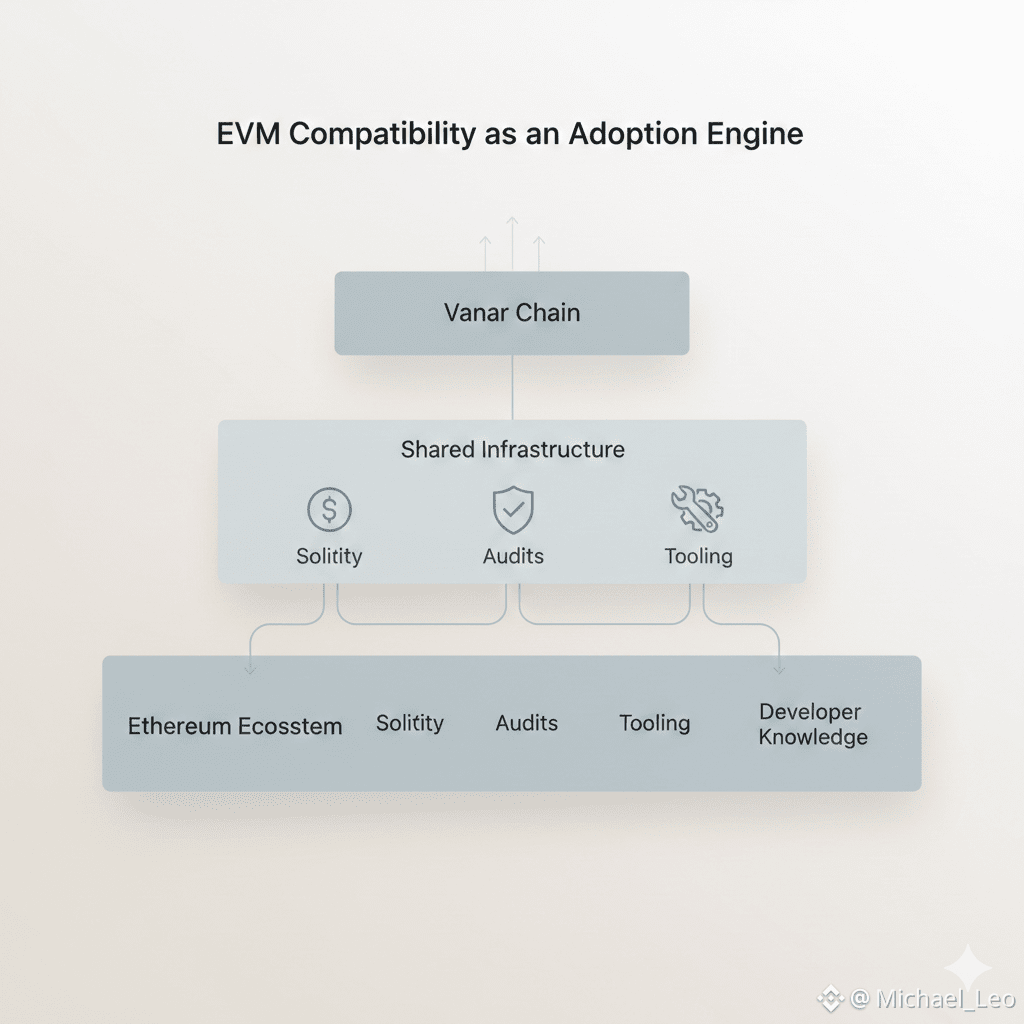 What I find particularly telling is how the system treats complexity as something to be hidden rather than highlighted. In much of this industry, complexity is worn like a badge of honor. The more intricate the design, the more it’s emphasized. Vanar appears to move in the opposite direction. Complexity exists, but it is pushed inward. The system absorbs it so that users and even many builders don’t have to develop an opinion about it. From experience, that kind of restraint usually indicates confidence. It suggests the team is more interested in outcomes than in being admired for the process.
Real products built on top of the network reinforce this impression. Consumer-facing environments are not forgiving places for infrastructure to fail quietly. Latency, instability, or awkward interactions surface immediately through behavior. People don’t file bug reports; they disengage. Seeing Vanar support products like Virtua Metaverse or the VGN games network reads to me as exposure to real-world pressure rather than theoretical readiness. These are environments where the cost of failure is measured in lost attention, not in forum debates. That kind of pressure is difficult to simulate and valuable to endure.
I’m naturally skeptical of platforms that try to do everything at once. Breadth can become dilution if there isn’t a coherent philosophy underneath. What tempers that skepticism here is the consistency of the underlying goal. The common thread across Vanar’s verticals is not novelty but reduction of friction. Whether someone is playing a game, interacting with a digital environment, or engaging with a branded experience, the expectation is the same: the system should work without explanation. If that expectation is met reliably, supporting diverse applications becomes a consequence of flexibility rather than a sign of overreach.
The token, VANRY, only becomes interesting to me in this same practical context. I don’t find value in tokens that exist primarily as abstractions. A token earns relevance when it quietly aligns incentives and supports usage without demanding attention. In Vanar’s case, the token’s role is tied to network function, participation, and coordination rather than spectacle. When a token integrates naturally into everyday activity, it stops being something users think about explicitly. It becomes part of the background machinery. That’s usually a sign that the surrounding system is functioning as intended.
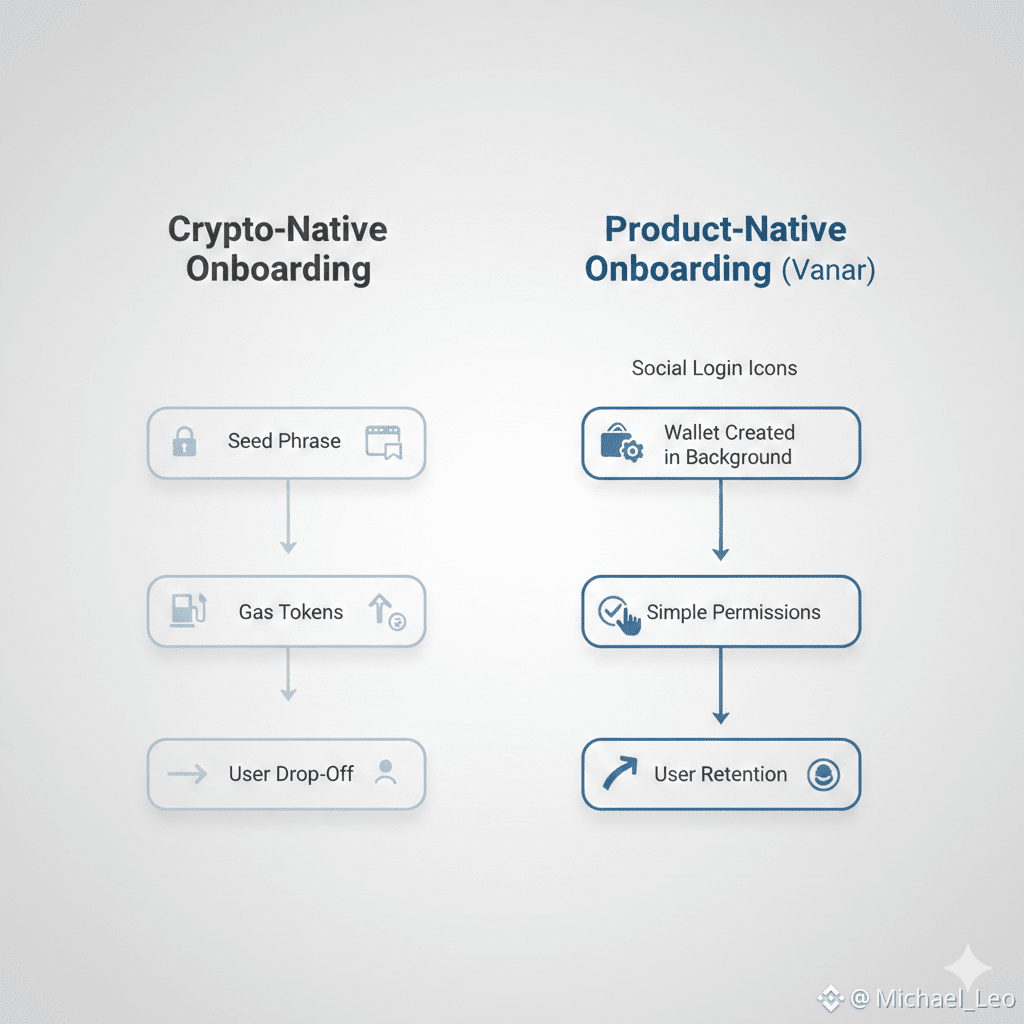 Another aspect I keep returning to is what Vanar does not seem obsessed with. It does not appear designed to impress insiders or to win theoretical arguments. It feels designed to survive contact with ordinary users. That often leads to decisions that are less exciting to talk about but far more durable over time. Reliability, predictable performance, and smooth integration are rarely celebrated, yet they are the qualities that allow systems to scale quietly. From what I can see, Vanar prioritizes those qualities even when they don’t generate attention.
There is also a subtle humility in designing infrastructure that aims to disappear. The best consumer systems rarely announce themselves. They become part of routine. People notice them only when they fail. Vanar’s approach suggests an acceptance of that dynamic. Instead of trying to educate users into caring about blockchain, it seems to accept that most users never will. The system adapts to that reality rather than resisting it. From my perspective, that acceptance is one of the clearest indicators of maturity.
Stepping back, what Vanar represents to me is a version of blockchain infrastructure that takes human behavior seriously as a fixed constraint. It doesn’t assume curiosity, patience, or ideological alignment. It assumes distraction, impatience, and indifference. Designing under those assumptions is uncomfortable, but it’s also honest. If this approach succeeds, it won’t be because users chose Vanar consciously. It will be because they never had to. For someone who values systems that work over systems that impress, that quiet invisibility feels less like a weakness and more like the point.
