

When I think about Plasma after spending time with its design and assumptions, I don’t see it as a new place to build or a new thing to trade. I see it as an attempt to make stablecoin settlement fade into the background of everyday economic activity. That framing matters to me because the infrastructure that truly lasts is rarely the infrastructure people talk about. It’s the infrastructure they rely on without noticing, the kind that becomes part of routine rather than part of identity. Plasma feels like it is deliberately aiming for that quiet role.
What immediately shapes my interpretation is how directly the system seems to respond to how people already use stablecoins. Most users are not experimenting. They are sending money because they need to, often across borders, often under time pressure, and often with very little tolerance for friction. Delays feel like failures. Fees feel personal. Complexity feels like a risk rather than an invitation. Plasma’s emphasis on sub-second finality and gasless USDT transfers reads to me as a recognition of that reality. It suggests a belief that speed and predictability are not luxury features, but baseline expectations once stablecoins move from novelty to habit.
I pay close attention to the decision to treat stablecoins as the center of the system rather than as guests within it. Allowing stablecoins to be used for gas removes an entire layer of cognitive overhead for everyday users. In practice, most people do not want to manage a second asset simply to keep the system running. They want balances to behave intuitively and transactions to fail as rarely as possible. By designing around that behavior instead of arguing against it, Plasma seems to accept that good infrastructure adapts to people, not the other way around. There are compromises involved in that choice, but they are the kind of compromises that favor clarity over purity.
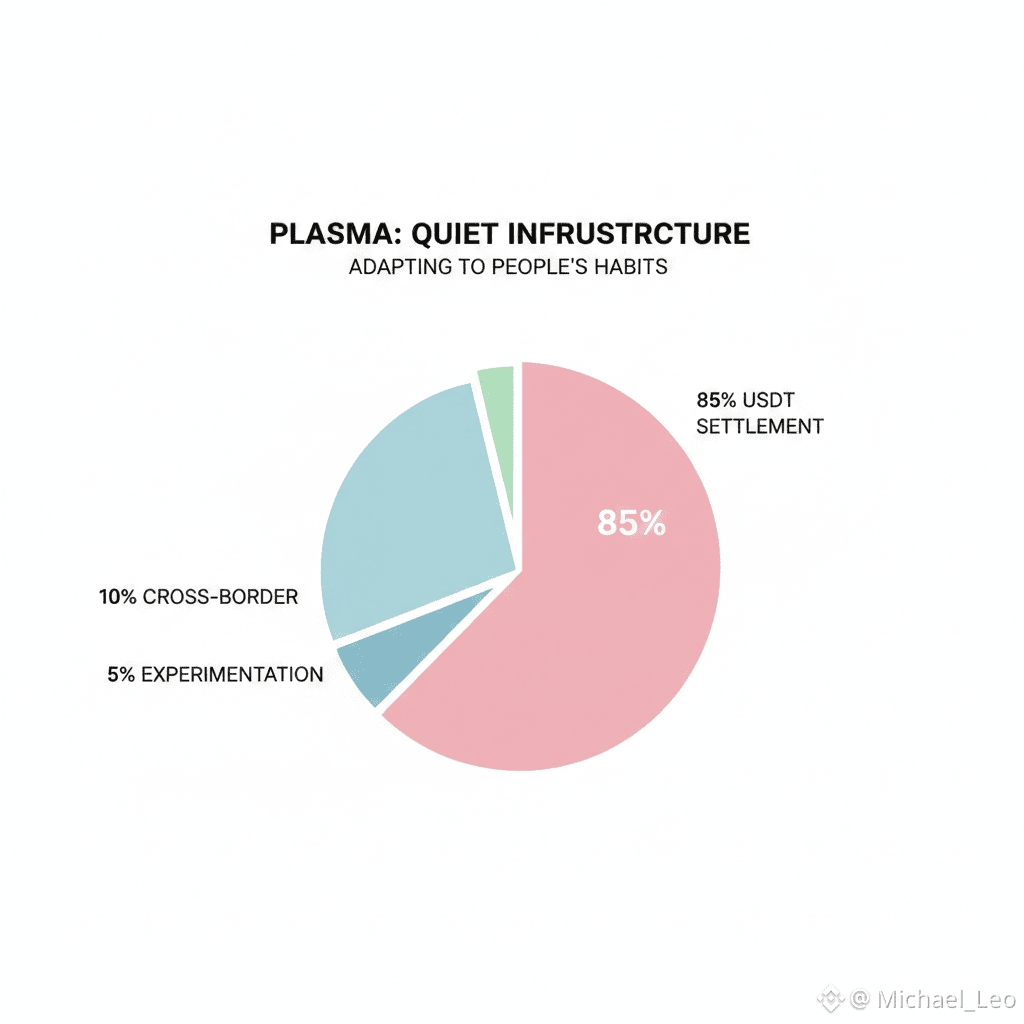 From an architectural perspective, the combination of full EVM compatibility with a purpose-built consensus layer feels grounded rather than aspirational. It suggests a desire to reuse what already works while tightening the parts that matter most for settlement. Sub-second finality is not about technical elegance so much as emotional certainty. When money moves, users want closure. They want to know that what just happened is done, not pending, not probabilistic, not something they need to check again later. Plasma appears to be designed with that emotional requirement in mind, even if the user never learns why it works that way.
What I find quietly compelling is how much effort seems to go into hiding complexity instead of showcasing it. Gasless transfers, stablecoin-first design, and fast confirmation all point toward the same philosophy: remove moments where the system demands attention. That kind of restraint is difficult. It requires saying no to features that would excite insiders but confuse everyone else. Plasma appears willing to make those choices, favoring smoothness and predictability over expressiveness.
The Bitcoin-anchored security component is where my curiosity becomes more careful but still sincere. It signals an awareness that payment systems eventually operate under pressure, not just technical but social and political. Anchoring security to an external reference feels like an attempt to strengthen neutrality and censorship resistance without forcing users to think about it. I don’t read this as a promise of invulnerability, but as a sign that the designers are thinking beyond ideal conditions. That kind of thinking usually only shows its value later, when systems are stressed in ways that documentation never anticipates.
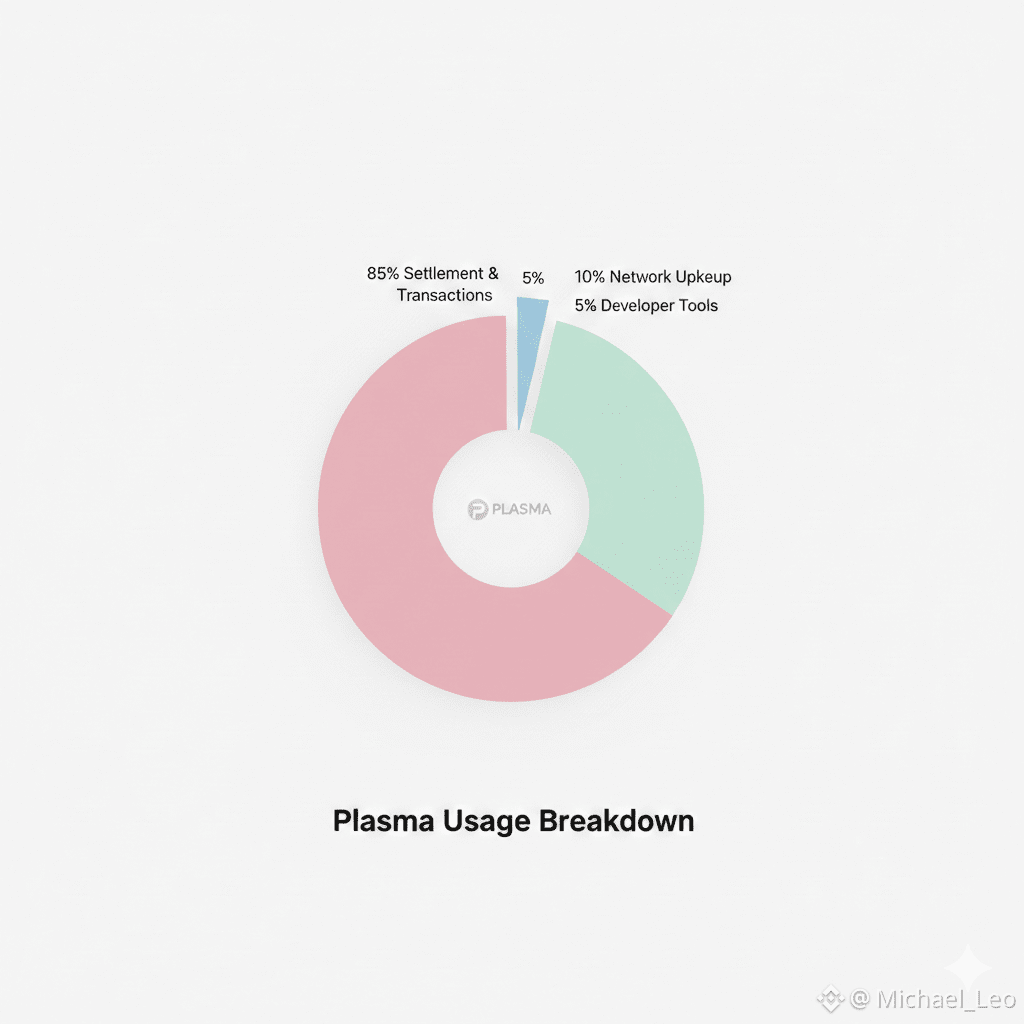 When I imagine Plasma being used in the real world, I don’t picture polished demos or curated success stories. I picture repetitive, unglamorous activity. Retail users in high-adoption regions sending small amounts daily. Businesses settling invoices where timing matters more than elegance. Financial institutions treating stablecoin movement as operational plumbing rather than innovation. These are environments that expose weaknesses quickly. Latency, unpredictability, and unclear costs don’t survive long in them. Plasma feels like it is built to endure that kind of scrutiny rather than perform well in controlled settings.
The token’s role, as I see it, is inseparable from usage. Its value is not in being noticed, but in keeping the system functioning smoothly as activity grows. It aligns incentives, supports settlement, and absorbs operational responsibilities so that the user experience remains stable. If it succeeds, most users will never think about it directly. That invisibility is not a flaw. It is consistent with the rest of the system’s priorities.
Stepping back, Plasma suggests a broader shift in how consumer-focused blockchain infrastructure is being approached. Instead of asking users to learn new mental models, it adapts itself to existing ones. Instead of emphasizing how different it is, it emphasizes how little difference a user should feel. Stablecoins are treated as everyday money, not as abstractions. Complexity is internalized rather than exported. If this approach continues, it points toward a future where blockchain systems are judged less by how impressive they look and more by how reliably they disappear into normal life. That, to me, is a sign of maturity rather than ambition.

