
The first time I saw a Web3 app lose a user for good, it wasn't due to high transaction fees or network outages, but because an image wouldn't load. The NFT page displayed correctly, the wallet was linked, and the transaction history was intact, but the underlying asset itself was broken. That's when you truly understand the significance of infrastructure: users evaluate a product based on whether its various components consistently function reliably (even under pressure). This is the simplest form of the user retention problem. Users don't abandon an application because the development plan is imperfect; they abandon it because they feel it's unstable.
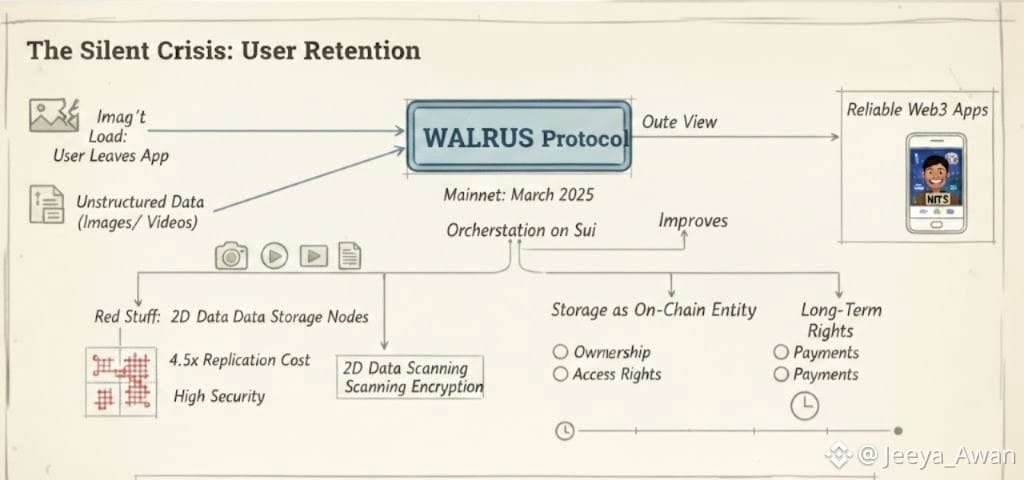
This is the framework I designed for Walrus: "decentralized storage" isn't just a theoretical term, but a data layer dedicated to improving the reliability of Web3 products to retain users. Walrus, launching its mainnet in late March 2025, is a productivity network managed by decentralized storage nodes, with its storage and coordination on the Sui platform. This application is designed to handle unstructured data—images, videos, and resources—the core content of the products most users need.
The key to success isn't the storage itself, but how it's stored. Walrus is based on a cryptographic system called Red Stuff, a two-dimensional data scanning encryption design. Research shows that this system can increase replication costs by approximately 4.5 times while maintaining high security and providing an effective recovery mechanism in the event of node changes. This is not just theoretical; it's an engineering solution addressing practical trade-offs: either large-scale replication (extremely costly) or scanning encryption with recovery challenges. Walrus's design fully considers factors such as node changes, network latency, and attacker exploitation of vulnerabilities.
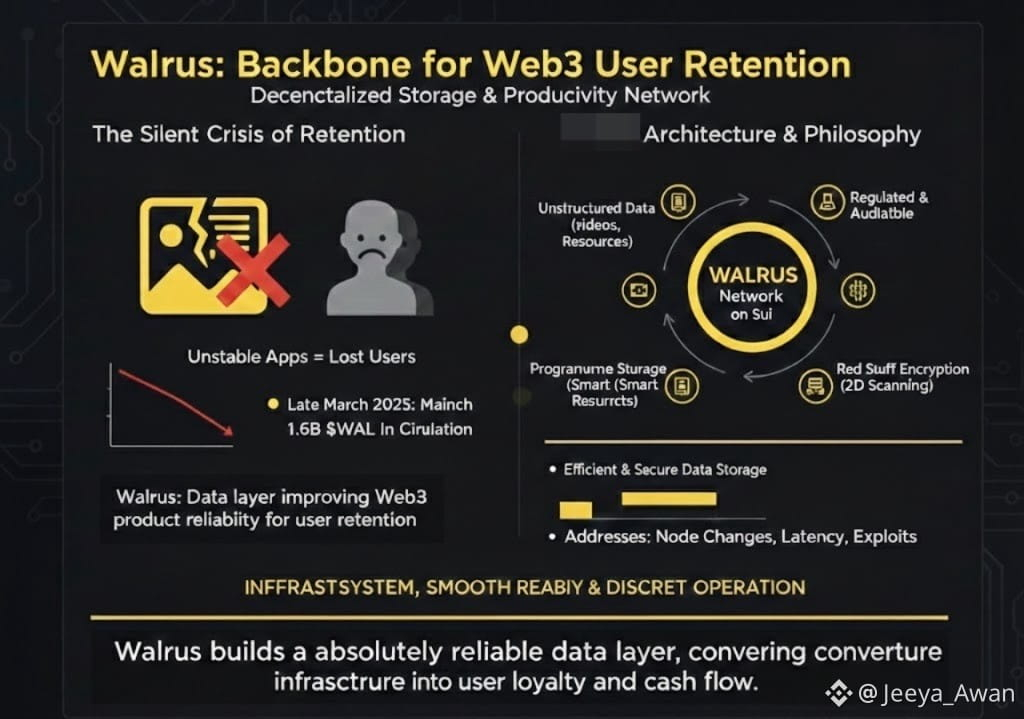
This is crucial because data is not just content, but also a state. It can serve as receipts for AI agents, media for games, and credentials. If these elements are stored in fragile structures outside the blockchain, even if the blockchain itself is flawless, your product becomes unreliable. Walrus treats storage as an entity on the blockchain and interacts with it through smart contracts—ownership, access rights, and payments are all embedded in the application logic. This programmability is at the heart of the project, minimizing downtime.
Of course, some risks exist: tight integration with Sui, storage congestion, decentralized options, and token dynamics (the total token supply is capped at 5 billion, and as of early February 2026, approximately 1.6 billion tokens were in circulation). However, its core investment philosophy revolves around product reliability. A resilient data layer can eliminate a major source of hidden data leaks.
Don't set price targets at the outset; validate first. Read the documentation. Store and retrieve large binary data (BLOBs). Track changes in on-chain supply and usage. If Walrus can build an absolutely reliable Web3 application, it will not only gain market share but also user loyalty. Only then can the advantages of its infrastructure translate into cash flow; otherwise, they will gradually disappear.

