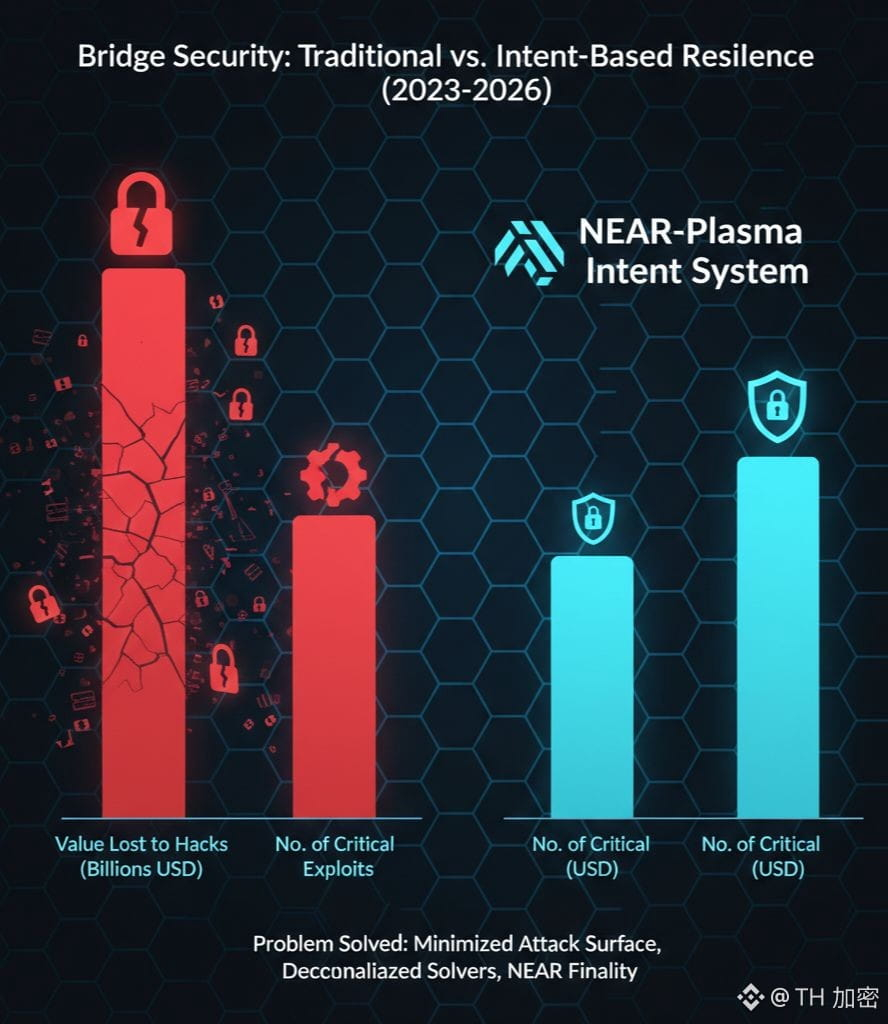
The thing, about Near and plasma is that they work well together. When you use chains and they can talk to each other it makes a big difference. This is helping to solve an issue that we have been having with bridges. The Near plasma synergy is really changing the way we think about -chain intents. It is making it easier for them to work together. That is helping to liquidate the bridge problem.
* The Near plasma synergy is a deal because it helps different chains work together seamlessly
* Cross-chain intents are becoming more liquid. That is solving a lot of problems
* The bridge problem is an issue but the Near plasma synergy is helping to fix it
The Near plasma synergy and cross-chain intents are really making a difference and helping to liquidate the bridge problem.
The blockchain landscape is a vibrant, interconnected web, yet the very bridges that connect these disparate chains often become points of vulnerability and friction. The "bridge problem" characterized by security risks, high fees, and complex user experiences has long plagued the vision of seamless cross-chain interoperability. However, a potent synergy between NEAR Protocol's robust infrastructure and the innovative concept of Plasma-inspired cross-chain intents is emerging as a powerful solution, promising to liquidate the bridge problem entirely.
The Bridge Problem: A Persistent Hurdle
Historically, bridges have acted as the conduits for assets and data between different blockchains. While essential, their design often necessitates locking assets on one chain and minting wrapped versions on another. This approach introduces several critical challenges:
Security Vulnerabilities: Centralized or multi-signature bridge designs create honeypots, making them prime targets for sophisticated hacks. Billions have been lost due to bridge exploits.
High Transaction Costs: Moving assets across bridges often involves multiple transactions on both chains, incurring significant gas fees and making smaller transfers uneconomical.
User Experience Complexity: The process of bridging can be daunting for average users, involving multiple steps, different wallets, and a lack of clear visibility into transaction status.
Liquidity Fragmentation: Assets become fragmented across various chains, leading to inefficient capital utilization and hindering true composability.
NEAR Protocol: A Foundation for Scalability and Interoperability
NEAR Protocol, with its sharded architecture and emphasis on developer-friendly environments, provides an ideal foundation for addressing these challenges. Key features include:
Scalability: NEAR's sharding allows for parallel processing of transactions, significantly increasing throughput and reducing congestion, which is crucial for handling cross-chain operations efficiently.
Low Transaction Costs: The predictable and low transaction fees on NEAR make it economically viable for a wide range of applications, including frequent cross-chain interactions.
Developer Experience: NEAR's developer-friendly tools and Rust-based smart contract environment simplify the creation of complex decentralized applications (dApps) and interoperable solutions.
Doomslug and Nightshade: These consensus mechanisms contribute to NEAR's fast finality and robust security, instilling confidence in cross-chain asset transfers.
Cross-Chain Intents: A Paradigm Shift
The idea of -chain intents is a big change from the old way of doing things. Now people do not have to follow a set of steps that are already decided. They just say what they want to do like "I want to trade 1 ETH on Ethereum for 200 NEAR on NEAR Protocol". Then a group of computers called solvers work together to make this happen in the best and safest way they can. These cross-chain intents are really important because they make it easier for people to use blockchain systems, like Ethereum and NEAR Protocol. The cross-chain intents system is a network that helps people achieve their goals like swapping one type of money for another. It does this by using these solvers to find the best way to do it.
This way of doing things is centered around what people want to achieve. It takes ideas from Plasmas principles. Plasma has two ideas: doing calculations outside of the main chain and resolving disagreements. This approach has good things, about it:
Enhanced Security: By not requiring assets to be locked in a single bridge contract, intents reduce the attack surface. Solvers operate in a competitive market, incentivized to provide secure and efficient execution.
Improved User Experience: Users simply state their desired outcome, abstracting away the underlying complexities of chain-specific transactions, gas fees, and bridge mechanisms.
Optimized Liquidity: Solvers can tap into diverse liquidity sources across multiple chains, ensuring better pricing and more efficient routing of assets.
Flexibility and Composability: Intents allow for more complex cross-chain operations beyond simple asset transfers, enabling sophisticated dApp interactions and value flows.
The NEAR-Plasma Synergy: Liquidating the Bridge Problem
When you bring together the NEAR Protocol and ideas that work across chains that is when the real power of the NEAR Protocol shows up. Here is how the NEAR Protocol and cross-chain ideas fix the issue with bridges:
NEAR as the Settlement Layer for Intents: NEAR's high throughput and low costs make it an ideal settlement layer for intent-based transactions. Solvers can efficiently coordinate and settle atomic swaps or complex multi-chain operations on NEAR, minimizing execution costs.
The security of Plasma is really cool. It has a way to keep things safe. This way is used in something that is not exactly Plasma but it is similar. The main idea is to check if something is valid, outside of the system and then only use the main system, which is called NEAR to make sure everything is okay and to solve any problems that come up. This means we do not have to trust the people in the middle who help move things from one place to another much as we used to. Plasma-Inspired Security Guarantees are what make this possible.
Flowchart of Cross-Chain Intent Resolution on NEAR:
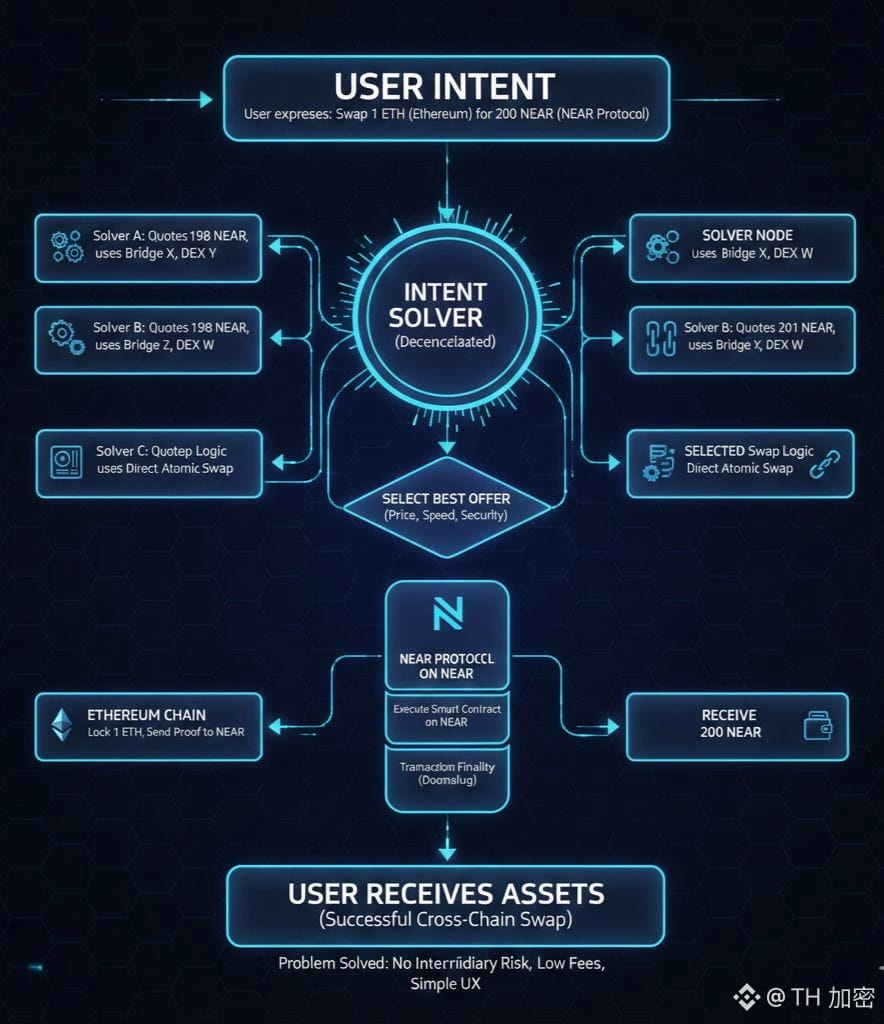
Description: This is a picture that shows what happens when a user wants to do something with their money on chains like swapping Ethereum for NEAR. The user says what they want to do. Then lots of decentralized solvers try to find the best deal for the user. These solvers compete with each other to find the offer, for swapping Ethereum for NEAR. When they find the offer it gets done and finalized on the NEAR Protocol. In the end the user gets the assets they wanted which's the NEAR they asked for.
Bar Chart of Bridge Security Incidents vs. Intent-Based System Resilience (Conceptual):
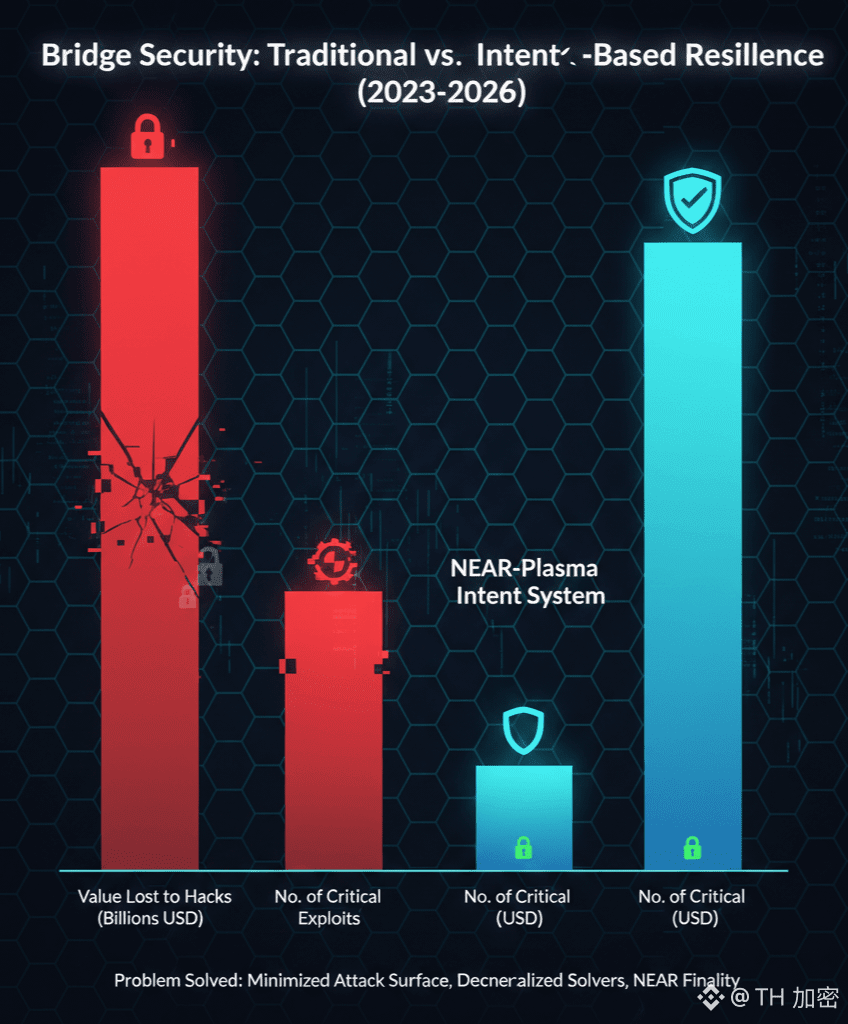 The NEAR system is a place for cross-chain liquidity to happen. As more people start using intent systems the NEAR system can be a place where people who solve problems can come together and manage money that is moving between different chains. This makes it easier to move assets from one chain to another without having to rely on middlemen that can be hacked. The NEAR system is important, for -chain liquidity.
The future of interoperability is about being driven by intent. This means that interoperability is going to be shaped by what we want to achieve. Interoperability is going to be the key, to making things work together seamlessly. The future of interoperability is really going to be intent-driven. We are talking about interoperability. How it will be driven by what we intend to do with it. Interoperability is the way and it is going to be driven by our intentions.
The NEAR Protocol has a foundation and the idea of cross-chain intents is really innovative. This combination gives us an idea of what the future of interoperability could look like.
The blockchain system can finally solve the bridge problem" by changing from a step-, by-step bridging process to a model that focuses on what people want to do.
The NEAR Protocol and cross-chain intents work well together to make things better. This will make the blockchain ecosystem more secure and cheaper to use. It will also make it easier for people to use, which will make it possible for people to move things easily from one chain to another.
The NEAR Protocol and cross-chain intents will make cross-chain interactions really smooth and easy.
The liquidation of the bridge problem is not just a technical upgrade; it's a fundamental step towards a more secure, efficient, and user-friendly decentralized future, with NEAR Protocol at its core.