When I first try to understand a project like Dusk, I do not start with features or tech terms. I start with a simple question. Why would anyone actually need this to exist.
Crypto has spent years proving that money can move without permission. That part worked. What it has not solved is how real financial activity behaves once you leave theory and touch reality. Real finance is messy. It has rules. It has privacy. It has reporting obligations. It has people who cannot afford to experiment with their balance sheet just to make a philosophical point.
Dusk exists because most blockchains were never designed for that world.
What Dusk Feels Like, Not Just What It Is
On paper, Dusk is a layer 1 blockchain. In practice, it feels more like plumbing for finance.
It is not trying to attract attention or chase trends. It is trying to quietly solve a problem that everyone avoids because it is uncomfortable. Transparency is great until it breaks confidentiality. Decentralization is powerful until no one can legally use it.
Dusk starts from the assumption that privacy is normal. That not every transaction should be visible. That rules are not enemies of decentralization, they are part of how coordination works at scale.
Instead of asking institutions to accept public ledgers where everything is exposed, Dusk asks a different question. What if the blockchain adapted to finance instead of the other way around.
Why This Problem Actually Matters
Most crypto activity today still lives in a bubble. Tokens trade against tokens, protocols talk to protocols, but very little of it touches the real economy in a serious way.
The reason is not lack of interest. It is lack of fit.
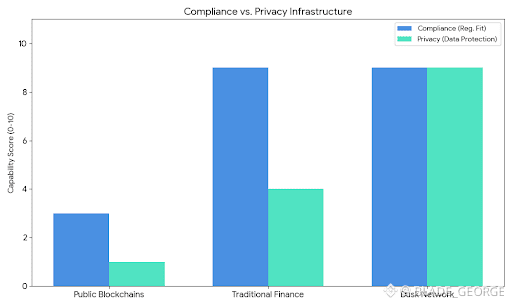
You cannot put regulated assets on a fully transparent chain and pretend it is fine. You cannot expect companies to reveal positions in real time. You cannot expect regulators to trust systems that cannot selectively explain themselves.
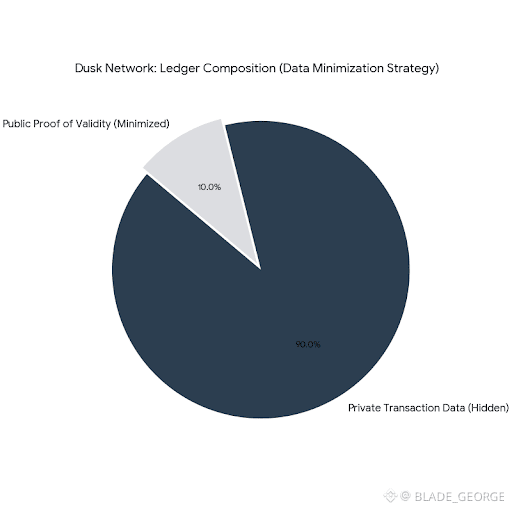
Dusk is trying to create a middle ground. A system where transactions can stay private, but correctness can still be proven. Where compliance is not handled by humans after the fact, but by code from the start.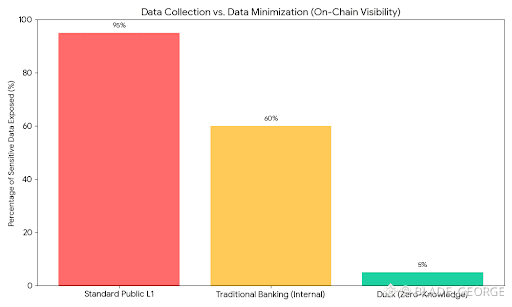
If this works, it unlocks a very different kind of on chain activity. Slower, heavier, but far more real.
How Dusk Actually Approaches This
The technical side of Dusk is built around the idea that you can prove something happened correctly without showing everything about it. That sounds abstract, but the intuition is simple.
You can say I followed the rules, without showing my homework.
This is done through cryptography that lets the network check validity while keeping details hidden. Smart contracts can define rules publicly, but operate on private data underneath.
That separation is what makes the system usable for finance. Agreements stay enforceable. Data stays protected. Audits are possible without turning the ledger into a surveillance tool.
It is not magic. It is careful engineering with a very specific use case in mind.
The Token, Without the Fantasy
The DUSK token exists because the network needs coordination.
It pays for transactions. It secures the chain through staking. It gives participants a say in how the system evolves. Nothing more, nothing less.
There is no promise that holding the token alone creates value. Value comes from usage. If the network becomes useful for issuing assets, settling trades, or coordinating regulated activity, the token matters. If it does not, the token does not save it.
That honesty is rare in crypto, but it also makes the project harder to sell.
The Kind of Ecosystem This Creates
Dusk does not attract fast money or casual builders. Its ecosystem grows slowly because the problems it addresses are slow.
Projects building on Dusk tend to care about legal clarity, long term operation, and reliability. These are not things you optimize for when chasing users. They are things you optimize for when you expect to still be running years later.
That kind of ecosystem does not explode. It settles.
And once settled, it becomes hard to replace.
Where This Is All Headed
The direction Dusk seems to be moving toward is quiet maturity.
Better tools. Better integration with other systems. Better ways to encode rules so humans do not need to interpret them manually.
The real ambition is not to become the most used chain. It is to become a trusted one.
A system that people rely on without thinking about it. The kind of infrastructure that does its job so well that no one notices it.
The Risks Are Real
None of this is guaranteed.
Privacy systems are complex and hard to communicate. Regulation can change faster than code. Competing systems, especially permissioned ones, can look more attractive to institutions because they feel safer.
Dusk also risks being ignored simply because it does not tell an exciting story. In crypto, attention is currency, and Dusk does not chase it.
How I Personally Frame Dusk
I do not see Dusk as a bet on price or hype. I see it as a bet on direction.
It is a bet that crypto will eventually need to grow up. That blockchains will have to coexist with law, privacy, and responsibility. That coordination matters more than spectacle.
Dusk is trying to build for that future.
Whether it succeeds or not, the problem it is addressing is very real. And sooner or later, every serious financial system on chain will have to confront the same questions Dusk is already asking today.